
Pests
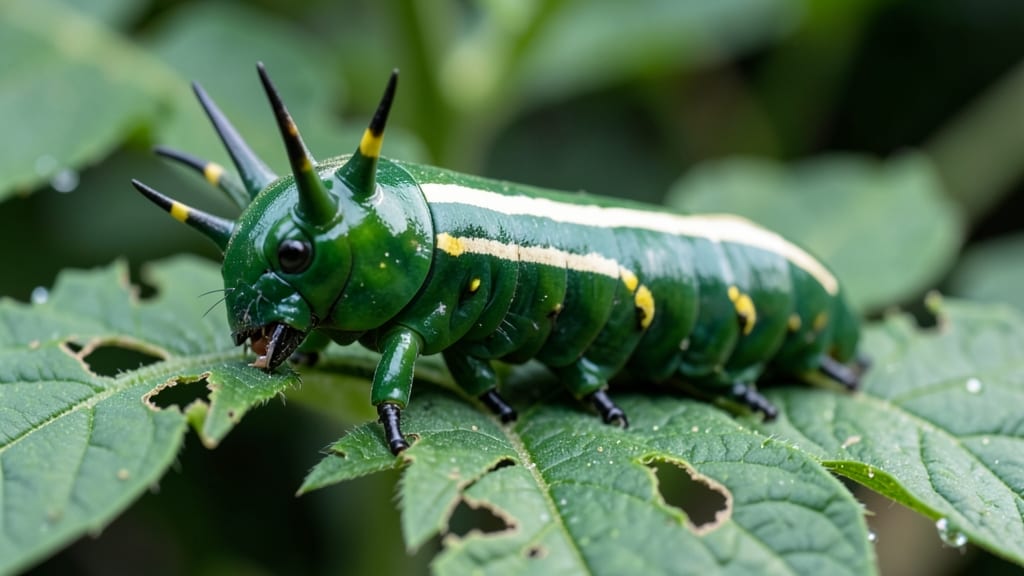
Are horned tomato worms poisonous? They're not lethal to humans but can cause skin irritation or mild allergic reactions from their venomous spines. Their caterpillars contain mild toxins that may irritate pets if ingested, and their urticating hairs can trigger itching or rashes upon contact.
These caterpillars use their venomous spines as a defense mechanism against predators, particularly mammals. 🌿 While their toxins won't kill humans, the spines can break off and lodge in skin, causing localized irritation that may last for hours.
Birds—including their natural predators—are generally unaffected by these toxins, which is why they're often found munching on these caterpillars in gardens. The irritation level varies by person, but those with sensitive skin or allergies should handle them with extra caution.
If you're dealing with an infestation, consider using organic pest control methods like neem oil or introducing natural predators like parasitic wasps. Always wear gloves when removing them to avoid contact with their spines, and dispose of them carefully to prevent accidental pet exposure.
💡 In This Article
- Understanding Horned Tomato Worm Toxicity and Defense Mechanisms
- Safe Removal and Handling Tips for Gardeners
Understanding horned tomato worm toxicity and defense mechanisms
The horned tomato worm's venomous spines are actually specialized hairs called urticating hairs or setae, which contain venom glands at their base. These hairs break off easily when disturbed, injecting a mild toxin that triggers an immune response in mammals.
The venom primarily contains proteins that cause localized inflammation and histamine release, similar to a bee sting but far less potent. 🔥
Scientifically, these toxins are designed to deter mammalian predators like raccoons or opossums, which have sensitive skin. Birds, however, have beaks and feathers that protect them from the venom's effects, which is why they can safely eat these caterpillars.
The spines measure about 0.5-1.5 millimeters long and contain microscopic barbs that anchor into skin upon contact, making removal painful without proper techniques.
Human reactions typically manifest as redness, itching, or swelling at the contact site, but systemic reactions are extremely rare. The venom's potency varies—some individuals experience only mild irritation, while others with allergies may develop more pronounced symptoms.
For comparison, the sting of a hornet delivers about 0.001 milligrams of venom, while a single urticating hair from this caterpillar contains roughly 0.00001 milligrams—a fraction of the amount.
Interestingly, these caterpillars only deploy their venom as a last resort. When threatened, they first arch their body and raise their horns defensively. Only if physically disturbed do they release their urticating hairs, which can remain active for up to 24 hours after the caterpillar's death.
This delayed reaction is why gardeners must handle dead specimens with care.
The toxins also serve as a chemical deterrent for ants and other small insects, which are less likely to attack caterpillars with these spines. This dual-purpose defense system makes the horned tomato worm a formidable survivor in its ecosystem, despite its delicate appearance.
The caterpillar's bright green coloration provides additional camouflage among tomato leaves, further protecting it from predators.
For those curious about the scientific classification, these caterpillars belong to the Sphingidae family (hawk moths) and their venomous hairs are a prime example of aposematic coloration—a warning signal to potential predators. 💫 Unlike venomous snakes or spiders, however, their toxins are not designed to be lethal, but rather to create enough discomfort to deter attack.