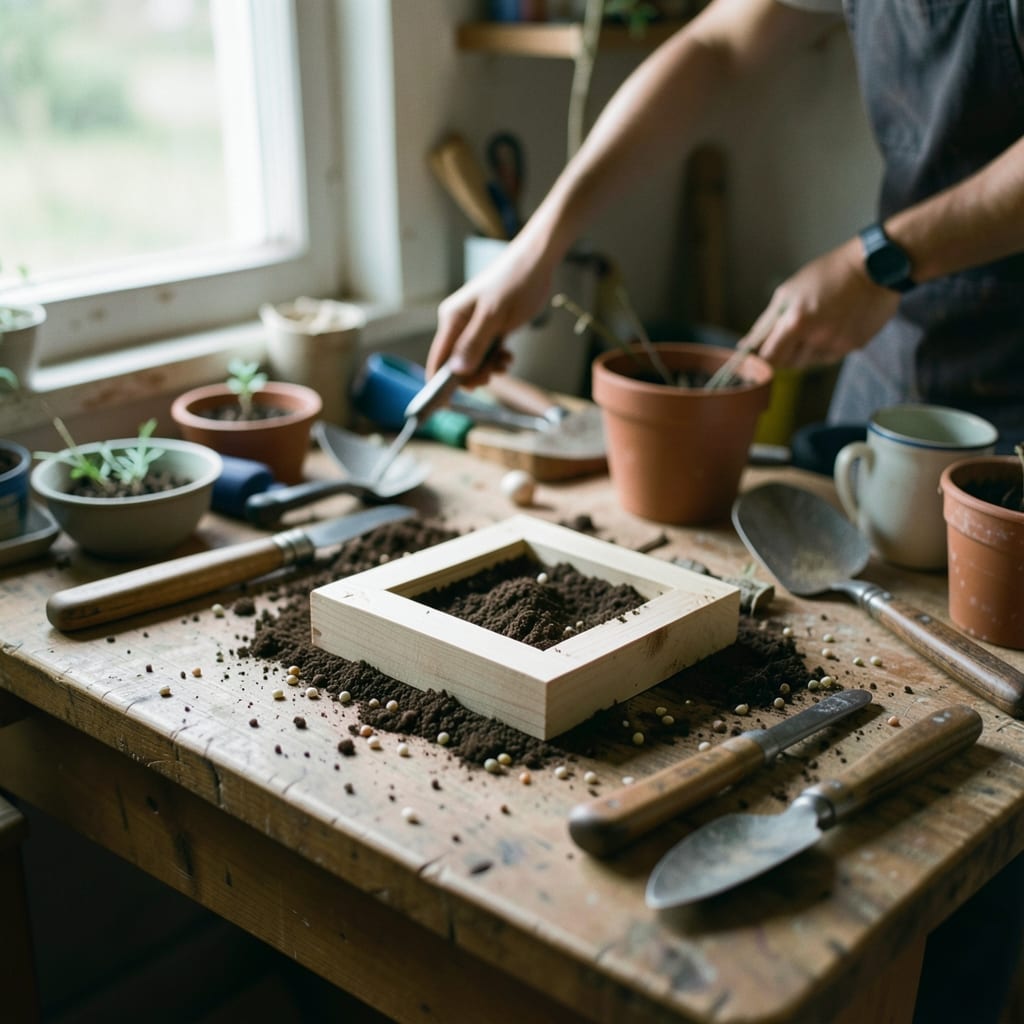
Why I started Tomato Vine
I was twenty-five, kneeling in a rented backyard in Portland with a shovel full of dirt that smelled like wet newspaper and defeat.
The basil I’d planted two months earlier had bolted—turned bitter and woody—while the cherry tomatoes, my pride and joy, had rotted in the soil before they ever ripened. A neighbor leaned over the fence and said, *‘You’re not killing them, you’re just not talking to them.’* That stuck with me.
Not because I knew what she meant, but because I realized no one was writing down the mistakes—the ones that weren’t just bad luck, but bad technique, bad soil, bad timing.
This site is for the rest of us: the gardeners who’ve lost a season to slugs, the beginners who drowned their seedlings, the folks who swear by ‘organic’ but don’t know why their zucchini keep turning yellow.
Here, you’ll find no fluff about ‘passion for plants’ or ‘the joy of gardening.’ Just the hard-won lessons—what worked, what didn’t, and why. And if I can’t explain it in a way that stops another tomato from rotting in the ground, I’ll keep trying until I can.
Meet the founder

I grew up stealing seeds from my parents’ garden—a habit that started when I was six and they caught me pressing dandelion fluff into a crack in the sidewalk.
My dad would sigh, dig up the tiny sprouts, and say, *‘Kid, you’ve got to give ‘em room to breathe.’* Turns out, that’s the first rule of gardening: patience isn’t just waiting. It’s watching.
The soil, the light, the way a plant leans toward the sun like it’s begging for more.
The one tool I still use is a rusted hand trowel my grandmother gave me before she moved to the city. It’s missing a chunk of the blade, and the handle’s splintered, but it’s the only one that digs cleanly into Georgia clay without clumping.
I keep it in a jar of motor oil on my windowsill—just like she did—and every time I use it, I half-expect her to walk in and tell me I’m holding it wrong.
The failure that changed everything was the year I tried growing peppers in containers. I followed every ‘expert’ tip: full sun, well-draining soil, even a fancy fertilizer. They still turned to mush. Turns out, peppers hate being root-bound.
Now, I double the pot size and swear by a mix of compost and sand. The lesson? Rules are guesses until you’ve broken them.
I have a habit of talking to my plants. Out loud. Not the *‘grow, little one’* nonsense—more like *‘You’re wilting because you’re thirsty, not because you’re sad.’* My neighbors think I’ve lost it. Maybe I have. But if it keeps the tomatoes from blighting, I’ll keep doing it.
The best gardeners aren’t the ones with the greenest thumbs—they’re the ones who notice when a leaf turns yellow *before* it falls off.
Roland Kirchner, after losing his first batch of heirloom tomatoes to blight (again)
Meet the mascot

The drawing started on a napkin at a diner in Savannah, where I’d gone to complain about the wilted lettuce in my salad. The first scribble was a tomato vine tangled around a coffee cup—too busy, all stems and no shape.
My waitress, a retired biology teacher, said, *‘Plants don’t look like spaghetti, hon. They’ve got structure.’* So I redrew it: a single vine, thick at the base, with three leaves and one perfect tomato dangling like it was about to drop.
The proper version was done on graph paper, where I could erase the wobbly lines. I added a face—just two dots for eyes and a smudge for a mouth—because I wanted it to look *alive*, not like a botanical illustration.
The tomato got a tiny stem to show it was still attached, and the leaves got veins to make them look real. But the vine itself stayed simple: no flowers, no extra fruit, just the essentials.
It had to work at the size of a browser tab, so I stripped away everything that wasn’t necessary. The face became a single line, the tomato lost its stem highlight, and the leaves turned into three clean shapes.
I named it *Viney*—because it’s stubborn, like a plant that refuses to die. And because it’s the only mascot that’s ever judged me for killing my basil.
What I promise you
You can trust every tip here like it’s coming from someone who’s actually gotten dirt under their nails. No ‘plant in full sun’ without explaining what *full sun* means in your climate.
No ‘harvest when ripe’ without telling you how to spot the difference between a green tomato and one that’s just lazy.
What you can hold me to
- Every plant mentioned has been grown by me—successfully or not—in my own garden (or a rented plot, or a windowsill).
- Soil mixes, fertilizers, and tools are named exactly as I’ve used them, with no ‘premium’ or ‘organic’ buzzwords unless they matter.
- If a method fails, I’ll tell you why—and how I fixed it next time.
- No affiliate links, no sponsored posts. If I recommend a trowel, it’s because I’ve broken three others first.
How I create a growing guide
A guide starts with a season—mine or someone else’s. Last summer, my neighbor’s eggplants grew into the shape of footballs because she pruned them ‘to encourage bushier growth.’ Turns out, eggplants *hate* being pruned.
This site’s guides begin with the plant’s natural shape, not what some seed packet *wishes* it would be.
The first step: soil
I dig a hole twice as wide as the root ball and loosen the soil with my fingers—no shovel, no compacting. If the dirt smells like chemicals, I mix in a handful of compost and a pinch of sulfur (for acidic-loving plants like blueberries).
The rule is simple: if the soil doesn’t crumble when you squeeze it, it’s not ready. I water it first, then wait until the top inch is dry before planting.
The worst sign? Wilting within hours. That means the roots were damaged during transplanting or the soil is too dense.
I fix it by scoring the root ball with a knife before planting—tiny cuts let water and air get in—and never burying the stem deeper than it was in the pot. If the leaves start curling, it’s either too much sun or not enough water.
I check the soil first: if it’s dry two inches down, the plant’s thirsty. If it’s soggy, it’s drowning.
The second step: watching
I set a timer for 10 minutes every morning to check for pests—aphids on the underside of leaves, spider mites as tiny white dots, or the telltale holes of cabbage worms.
If I see something, I act fast: a blast of water for aphids, neem oil for mites, or a handful of diatomaceous earth around the base. The key is catching it before the plant looks stressed. A healthy plant fights back; a struggling one gives up.
The fix for overwatering is simple: stop. If the leaves are yellow and mushy, I pull the plant, rinse the roots, and replant it in fresh soil. If it’s just wilting, I wait. Plants bounce back faster than you’d think—if the roots are still white and firm.
But if they’re black or smelly? That’s a write-off. I learned that the hard way with my first batch of strawberries.
How a page gets onto this site
I scribble notes in a waterproof notebook while I’m still knee-deep in the dirt—soil pH levels, the exact day I planted each seed, what I did wrong when the zucchini turned bitter.
Back at the desk, I type it up while the details are fresh, then let it sit for a week. If I forget why I wrote something, it gets cut.
The pages that stay are the ones that answer *‘How do I fix this?’* not just *‘Here’s what happened.’* And if a method fails again? I rewrite it.
Write to me
I love hearing about your gardening disasters—the ones that made you swear off tomatoes forever, or the time you grew something so weird it looked like a monster.
Send me photos of your weirdest harvests, your most stubborn weeds, or the one plant that refuses to die despite your best efforts. (Yes, I’ll judge your basil. No, I won’t tell you to stop talking to your tomatoes.)
If you’ve got a question about a plant, a soil mix, or why your neighbors’ garden looks better than yours, ask it. And if you’re new to gardening?
Start with the ‘Beginner’s Survival Guide’ and save me from explaining why you shouldn’t plant marigolds next to potatoes.
The guides are grouped by category: Advice, Aphids, Blooming, Companion Plants, Container Gardens and How To.