
How To
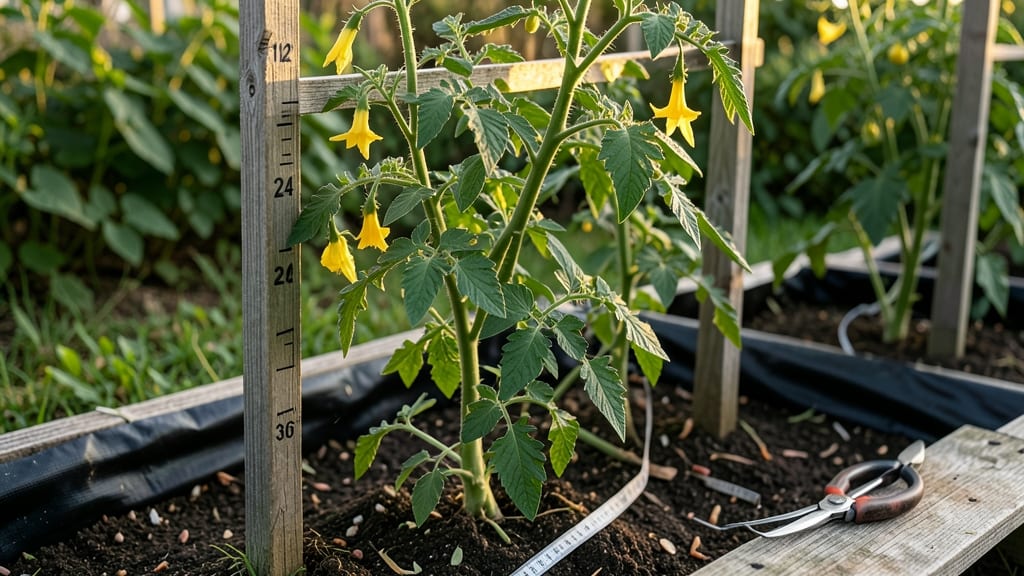
How tall you should let your tomato plants grow depends on their variety: indeterminate types like Roma or Beefsteak can reach 6-10 feet with proper pruning, while determinate varieties such as Cherry or Bush Early Girl naturally max out at 3-4 feet. Prune indeterminate plants to maintain a height of 4-5 feet for optimal fruit production and airflow, and remove suckers regularly.
Tomato plant height isn't just about space—it directly impacts fruit quality and yield. 🌱 Indeterminate varieties grow continuously throughout the season, so controlling their height prevents disease by improving airflow and redirects energy toward larger, healthier tomatoes.
Determinate types, on the other hand, grow to a fixed size and benefit from less aggressive pruning since their bushy structure naturally supports fruit. I've found that staking indeterminate plants at 4-5 feet creates the perfect balance between support and airflow.
For both types, timing matters: prune indeterminate plants in the morning when the soil is dry, and always use clean, sharp pruners to avoid damaging the main stem. The key is consistency—regular pruning keeps plants manageable while encouraging bushier growth lower on the plant, where most fruit develops.
This approach works especially well in containers or small gardens where vertical space is limited.
💡 In This Article
- Tomato Plant Growth Types: Indeterminate vs Determinate
- Pruning Techniques for Optimal Tomato Plant Height
Tomato plant growth types: indeterminate vs determinate
Indeterminate tomato varieties grow continuously throughout the season, producing new leaves, stems, and flowers from the top of the plant. This habit allows them to reach impressive heights—often 6-10 feet—if left unchecked. The biological mechanism involves apical dominance, where the terminal bud (top growth) suppresses lateral buds.
When you prune indeterminate plants, you break this dominance, encouraging bushier growth and redirecting energy to fruit production. Varieties like Beefsteak or Brandywine rely on this continuous growth to develop their massive, flavorful fruits.
Determinate tomato plants, on the other hand, grow to a fixed height—typically 3-4 feet—before flowering and fruiting. Their bushy structure is genetically programmed to stop growing once they reach maturity, making them ideal for containers or small gardens.
The key difference lies in their growth hormones: determinate plants produce a hormone called florigen that signals the plant to stop growing vertically and focus on fruit development. This makes them less prone to sprawling, but they often require more frequent harvesting to prevent overburdening the plant.
The height of your tomato plants directly impacts fruit quality and disease prevention. Tall indeterminate plants need 4-5 feet of vertical space to thrive, supported by stakes or cages.
This height allows for better airflow, reducing humidity around the foliage and preventing fungal diseases like blight. 🌿 In contrast, determinate plants benefit from less aggressive pruning since their compact structure naturally supports fruit.
Over-pruning determinate varieties can actually reduce yield by removing too many leaves, which are essential for photosynthesis.
Consider the environmental conditions when deciding on height. In hot climates, taller indeterminate plants may need additional support to prevent stem breakage from heavy fruit loads. I’ve found that using 5-foot bamboo stakes or cage systems with 4-foot diameters provides the right balance of support and airflow.
For determinate plants, a 3-foot stake or even a sturdy tomato cage is often sufficient, as their natural bushiness helps distribute weight evenly.
Another critical factor is the plant’s energy allocation. Indeterminate varieties invest heavily in vertical growth, which means they need regular pruning to redirect energy toward fruit production.
Removing suckers (the small shoots that form in the leaf axils) every 7-10 days encourages the plant to focus on developing larger, healthier tomatoes. Determinate plants, meanwhile, allocate energy more evenly across their bushy structure, resulting in a single, concentrated harvest rather than a prolonged fruiting season.
For gardeners with limited space, determinate varieties are often the better choice. Their compact size makes them perfect for balconies or small patios, where indeterminate plants would quickly outgrow their containers.
However, if you’re growing in a larger garden or have vertical space to spare, indeterminate varieties offer a longer harvest season and the potential for larger fruits. The key is understanding your plant’s growth habit and adjusting your care routine accordingly.