
Pruning
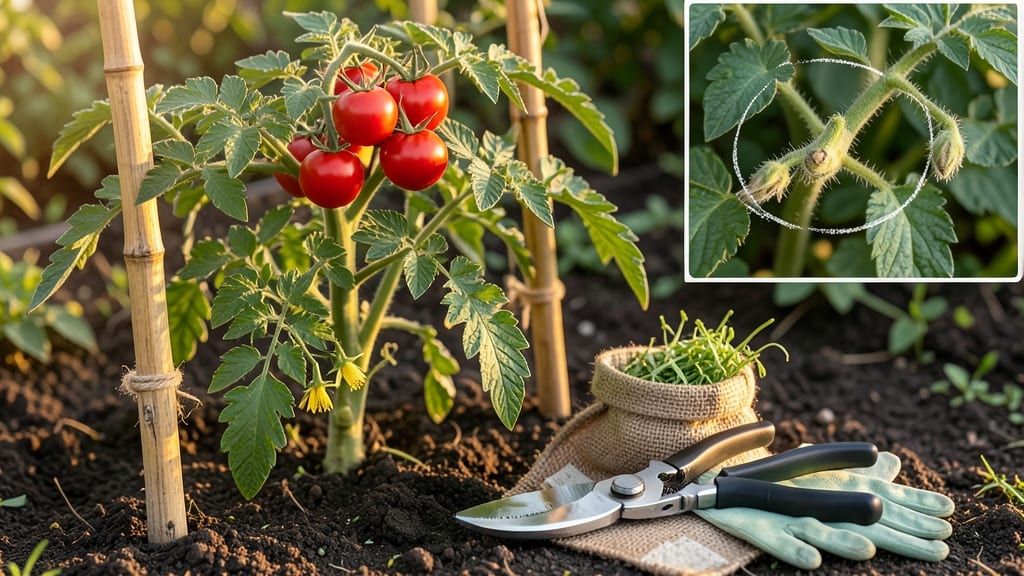
Trimming back tomato plants isn't just about shaping—it's how you unlock 20-30% bigger harvests while keeping your plants strong. ✂️ I spent years watching tomatoes struggle with too many suckers, until I learned the simple pruning rules that transformed my garden.
The key? Removing those little side shoots (called suckers) at the right time and in the right way—without overdoing it.
You'll need sharp pruners, a sunny day, and about 10 minutes per plant every 1-2 weeks during growing season. The goal is to focus the plant's energy on fruit production, not extra foliage.
Indeterminate tomatoes (the vining types) need regular suckering, while determinate (bush) varieties usually don't—but even they benefit from light trimming to improve airflow and prevent disease.
What you end up with is plants that stay disease-resistant, produce fruit faster, and keep bearing all summer long. The first time I pruned correctly, my cherry tomatoes went from a handful of fruits to pounds of clusters.
And the best part? You can do this whether you're growing in containers or a full garden bed.
Fair warning: over-pruning is a real risk, so we'll cover exactly how much to trim and when to stop. This method works for any tomato variety, but the timing and technique vary slightly—let's get those plants producing like champions.
📚 In This Guide
- What you need
- Instructions
- Tips and common mistakes
- Wrapping up and next steps
What you need
- ● Pruning shears or sharp scissors: Choose bypass pruners (clean cuts) or small, sharp scissors to avoid damaging stems. Disinfect with rubbing alcohol between cuts to prevent disease spread. 💡 Pro tip: Avoid dull tools—they crush stems, inviting infections!
- ○ Gloves (optional but recommended): Wear gardening gloves to protect hands from thorns and dirt. Lightweight, breathable fabric works best.
- ● Rubbing alcohol (70% or higher): A small bottle for sterilizing tools between cuts. 1-2 oz should suffice for a single session.
- ○ Garden twine or plant ties (optional): If your tomatoes need support after trimming, keep 3–4 ft of twine handy to secure stems to stakes or cages.
- ● Healthy tomato plants: Only trim established plants (4–6 weeks old) with at least 3–4 true leaves and visible suckers.
- ● Good weather: Trim on a cloudy day or early morning to reduce stress on the plant. Avoid trimming when plants are wilting from heat or drought.
- ● Patience: Suckering is a gradual process—don’t rush! Plan for weekly checks during peak growth (spring/summer).
- ● No fertilizers immediately after pruning: Wait 1–2 weeks to let the plant recover before feeding.
- ● Avoid over-trimming: Never remove more than 1/3 of the plant’s foliage at once.
Step-by-step guide to trimming tomato plants for stronger growth
Here's how to suckering your tomato plants the right way—no guesswork, just bigger fruit and healthier vines.
✂️ Step 1: Identify and Locate Suckers
Suckers are the small shoots that grow in the V-shaped junction between the main stem and a branch. They appear 3-4 weeks after transplanting when the plant starts flowering. Use your thumb and forefinger to gently pinch them off at the base—don’t leave a stub, or they’ll regrow.
I always start at the bottom of the plant and work upward. This is where suckers first appear, and removing them early directs energy to the roots and lower fruit clusters. If you miss a sucker, it’ll grow into a competing vine that steals nutrients from your harvest.
✂️ Step 2: Prune for the Main Stem and Branches
Tomatoes grow best with 1-2 main stems (depending on variety). For indeterminate tomatoes, keep the strongest central stem and remove all others. For determinate tomatoes, let the plant bush out naturally but still remove suckers to improve airflow.
Watch for flower clusters—never prune above them. The rule is: leave 2-3 leaves below each fruit cluster so the plant can support the weight. If you cut too high, the remaining leaves won’t have enough energy to ripen the fruit.
🌿 Step 3: Thin Leaves for Airflow and Sunlight
Once the plant reaches 4-5 feet tall, focus on removing lower leaves that touch the soil. These are the first to rot and spread disease. Use clean pruners to make a clean cut just above a leaf node—never tear leaves, as this invites pests.
Leave the top leaves intact until the plant stops flowering. These help ripen the fruit. You’ll know you’ve done it right when sunlight reaches the lower stems and no leaves brush against the ground.
⏰ Step 4: Time Your Pruning for Maximum Yield
Prune early in the morning when the plant is turgid (full of water). This reduces stress and speeds up recovery. Avoid pruning late in the day—the plant won’t heal as quickly, and you risk sunburn on exposed stems.
Stop pruning 4-6 weeks before your first frost. After that, the plant focuses on ripening existing fruit rather than new growth. If you keep trimming too late, you’ll end up with green tomatoes that never mature.
🌱 Step 5: Monitor and Adjust for Your Climate
In hot, dry climates, prune less aggressively—tomatoes need their leaves to regulate moisture. In cool, wet climates, prune more to prevent fungal diseases like blight. Always check the undersides of leaves for signs of pests or mildew before you start.
If your plant looks stressed after pruning, give it a light fertilizer (like compost tea) to help it recover. You’ll see new growth in 5-7 days—that’s your signal everything is working. Keep an eye on the remaining branches for new suckers and repeat the process weekly.
Tips & tricks for perfect tomato plant pruning
Common pitfalls—and how to sidestep every one—when trimming tomato plants for maximum yield.
The Early Bird Gets the Harvest: Those first suckers appear around 3-4 weeks after transplanting, so don't wait until you see a jungle growing! I learned this the hard way after letting my plants get overrun—start checking the V-shaped junctions between main stems and branches as soon as flowers appear. The earlier you remove suckers, the more energy the plant puts into fruit development rather than competing vines.
Leaf Logic: When your plants hit 4-5 feet tall, focus on removing only the lower leaves that touch the soil. These are prime spots for rot and disease, but leave the top leaves alone until flowering stops—those are the powerhouses for ripening fruit. Think of it like a skyscraper: you want sunlight reaching all floors, not just the penthouse.
Timing is Everything: Pruning early in the morning when plants are turgid (full of water) makes all the difference. I've seen plants recover in half the time when pruned right after watering. And here's a pro move: avoid late-day pruning—exposed stems can sunburn overnight. The 4-6 weeks before frost cutoff is critical too; after that, your plant's energy shifts to ripening existing fruit, not new growth.
Climate-Smart Pruning: Your climate dictates your pruning style. In hot, dry areas, go easy—tomatoes need leaves to regulate moisture. In cool, wet regions, be aggressive to prevent blight. I always check the undersides of leaves before starting; if I see mildew or pests, I know it's time for a more aggressive trim. And if your plant looks stressed after pruning, a light dose of compost tea works wonders—you'll see new growth in 5-7 days.
Pro Tips for Trim Back Tomato Plants
- Common pitfalls—and how to sidestep every one—when trimming tomato plants for maximum yield.
- The Early Bird Gets the Harvest: Those first suckers appear around 3-4 weeks after transplanting, so don't wait until you see a jungle growing!
- Leaf Logic: When your plants hit 4-5 feet tall, focus on removing only the lower leaves that touch the soil.
Frequently asked questions
Got questions about trimming tomato plants?
Here are some of the most common queries—and their answers—to help you prune like a pro!
When is the best time to suckering tomato plants?
Start pruning when your plants are about 12–18 inches tall and have 4–6 true leaves. Focus on removing suckers (side shoots) when they’re small—ideally, under 2 inches long. Regular pruning (every 1–2 weeks) keeps plants healthy and boosts fruit production. Pro tip: Avoid heavy pruning late in the season (after flowering), as it can stress the plant and reduce yields.
What if I don’t prune my tomato plants at all?
Unpruned tomato plants will still produce fruit, but you’ll likely get smaller harvests and more disease risks. Without pruning, plants channel energy into excessive foliage instead of fruit. However, determinate varieties (like Roma or Celebrity) don’t need pruning—they grow bushy and set fruit naturally. For indeterminate types (like Cherry or Beefsteak), pruning is key for bigger, healthier yields!
Can I prune tomato plants too much?
Yes! Over-pruning removes too many leaves, reducing the plant’s ability to photosynthesize and support fruit. Leave at least 3–4 main stems and 12–18 inches of foliage below the lowest fruit cluster. If you see yellowing leaves or stunted growth after pruning, you’ve likely gone too far. Rule of thumb: Never remove more than 1/3 of the plant’s foliage at once.
Should I prune tomato plants before or after flowering?
Prune before flowering to encourage strong stem growth and more fruit clusters. Once flowers appear, minimize heavy pruning—focus only on removing diseased or overcrowded leaves. After flowering, prioritize supporting existing fruit over aggressive trimming. Exception: If you spot pests or disease, remove affected leaves immediately, regardless of the flowering stage.
What’s the deal with “blind” tomato suckers—should I keep them?
“Blind” suckers are shoots that grow above a flower cluster with no flowers of their own. While they don’t produce fruit, they can steal energy from your main harvest. Remove them early (when small) to redirect nutrients to existing fruit. However, if your plant is stressed (e.g., from heat or drought), leave a few blind suckers to help it recover—just monitor for pests!
Wrapping up and next steps
Trimming back your tomato plants may feel like extra work, but it’s a game-changer for a healthier, more productive harvest! 🌱 By removing suckers and pruning strategically, you’re directing energy to fruit production, not just foliage.
Now that you’re armed with the right techniques, get out there and give your plants the TLC they deserve—your future salads, sauces, and salsas will thank you!
Ready to take it further? Monitor your plants weekly and adjust pruning as they grow. Soon, you’ll be the proud gardener with the juiciest tomatoes on the block! 🍅