
Plants
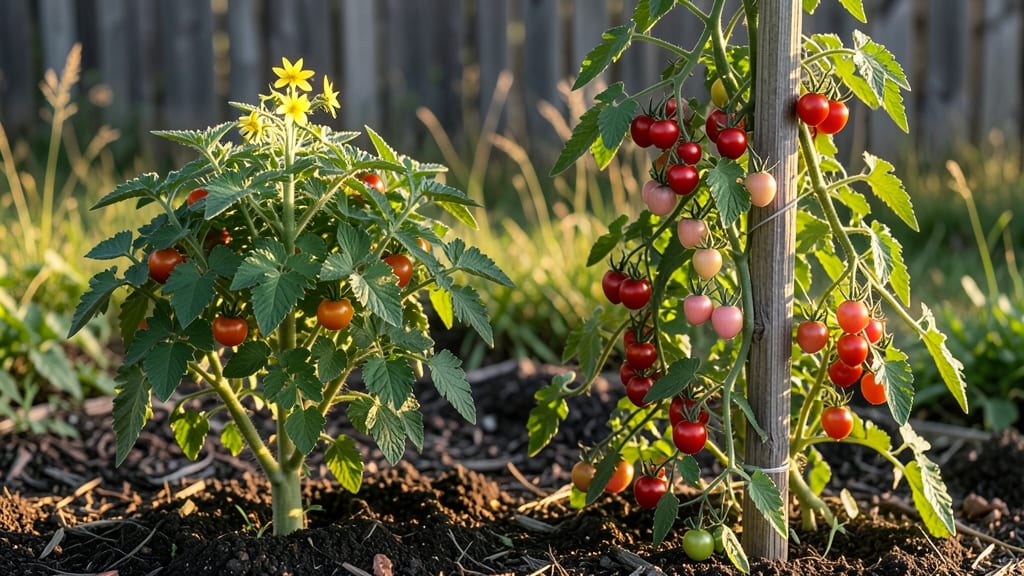
Cherry tomato plants are typically indeterminate, growing continuously with vining habits that produce fruit throughout the season. Some compact varieties are determinate, maturing all at once with bushier growth. Choose based on space and harvest preferences.
Most cherry tomato varieties fall into the indeterminate category, meaning they grow tall and sprawling with an endless supply of fruit as long as conditions are right. 🌱 These plants need support like cages or trellises to manage their height, which can reach 6-10 feet if left unchecked.
On the other hand, determinate types like 'Tiny Tim' stay compact, producing all their fruit in one burst before slowing down—ideal for small gardens or container growing.
When selecting varieties, consider your space and how you plan to harvest. Indeterminate plants offer a longer harvest window but require more maintenance, while determinate types provide a concentrated yield with less upkeep.
Many gardeners choose indeterminate for fresh-picking over weeks, while determinate suits those who prefer canning or freezing a single big harvest.
💡 In This Article
- Determinate vs Indeterminate Cherry Tomato Growth Patterns
- Best Cherry Tomato Varieties for Your Garden Space
Determinate vs indeterminate cherry tomato growth patterns
The key difference between determinate and indeterminate cherry tomato plants lies in their genetic growth patterns. Determinate varieties produce a single main stem that stops growing once it reaches maturity, typically around 3-5 feet tall.
They form a compact, bushy shape with clusters of flowers at the top, which all bloom and fruit simultaneously. This results in a concentrated harvest window of about 2-3 weeks, after which fruit production slows dramatically. The plant's energy shifts toward seed production rather than new fruit growth.
Indeterminate cherry tomatoes, on the other hand, grow continuously throughout the season, often reaching 6-10 feet or more if unsupported. Their main stems never fully stop growing, and new leaves, flowers, and fruit develop at leaf axils along the entire vine.
This creates a staggered harvest where you can pick ripe tomatoes for weeks or even months, depending on climate and care. The trade-off is that indeterminate plants require more space and support structures like cages or trellises to prevent sprawling and disease.
What actually happens at the cellular level is fascinating: determinate plants have a genetic signal that tells them to stop growing vertically after reaching a certain height, while indeterminate varieties lack this "stop" signal.
This difference affects how they allocate resources—determinate plants focus all their energy on the terminal flower cluster, while indeterminate plants distribute energy across multiple growth points. 🌱 The flowering mechanism also differs: determinate plants produce one main flower cluster, while indeterminate plants continuously form new flower buds throughout the season.
For gardeners, this means your choice affects both space management and harvest strategy. Determinate varieties like 'Tiny Tim' or 'Patio' are perfect for small gardens or containers, as they stay under 2 feet tall and produce all their fruit at once.
Indeterminate types like 'Sweet 100' or 'Sun Gold' need vertical support and more room to sprawl, but reward you with continuous production. The vine structure of indeterminate plants also makes them more susceptible to wind damage and disease if not properly supported and pruned.
Consider your growing conditions when choosing: determinate plants thrive in cooler climates with shorter seasons, while indeterminate varieties excel in warm climates where they can keep producing through summer and fall.
The fruit size difference is another factor—indeterminate plants often produce smaller, more numerous cherry tomatoes, while determinate varieties may yield slightly larger fruit in their single harvest. The choice ultimately comes down to whether you prefer a big one-time harvest or a steady supply over months.
One practical tip: if you're growing indeterminate varieties in containers, choose dwarf or semi-determinate types that stay under 4 feet tall. These hybrids offer some of the continuous production benefits while requiring less space.
For example, 'Balcony Red' is an indeterminate variety bred specifically for container growing, reaching only 2-3 feet tall with proper pruning. The right choice depends on your available space, desired harvest timing, and how much maintenance you're willing to invest in supporting tall vines.