
Vegetables
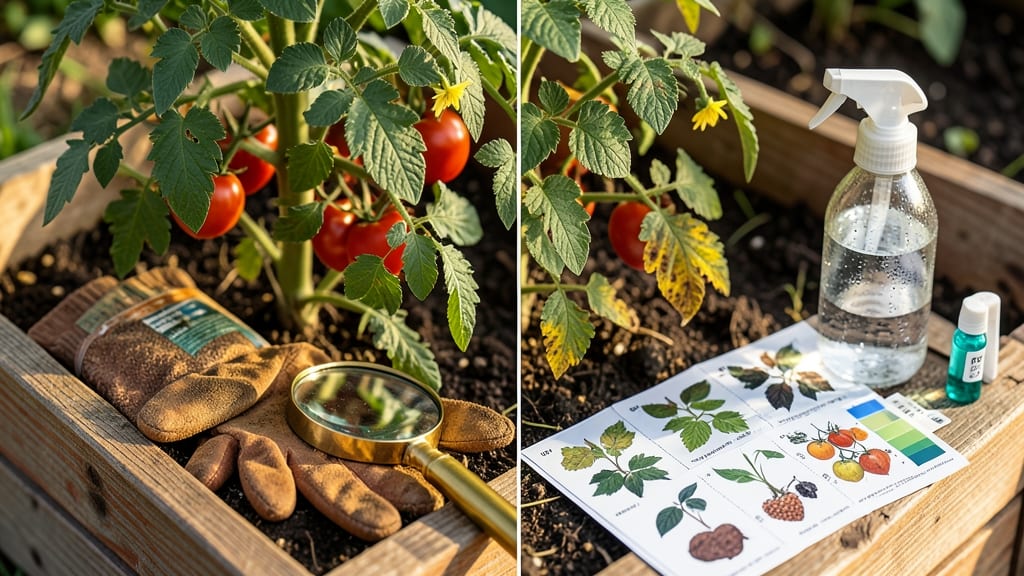
Those mysterious tomato leaf spots are your plant’s way of screaming for help—don’t ignore diagnosing the demonstrative problems on them. 🌱 I’ve spent years diagnosing everything from fuzzy gray mold to crispy brown edges, and the key is learning to read the patterns before they ruin your harvest.
Early blight starts with concentric rings, late blight turns leaves black overnight, and bacterial spots look like tiny water-soaked freckles. Each one tells a different story, and knowing the difference saves your tomatoes.
The worst part? Many problems start looking alike until you zoom in. I once lost a whole plant because I mistook powdery mildew for nutrient burn—both leave white residue, but one needs fungicide while the other just needs better airflow.
That’s why I break it down by spot shape, color, and where it appears: stems, edges, or between veins. You’ll spot the clues you’ve been missing, like the yellow V-patterns of mosaic virus or the greasy black streaks of early blight.
What you’ll get is a clear plan for each issue: how to confirm it (yes, there’s a trick for telling bacterial spots from fungal), what to spray or prune, and how to prevent it next season.
My 3-step troubleshooting method cuts guesswork—just match the symptom to the solution and act fast. The goal isn’t just to fix the current problem but to protect your future harvests.
This works for backyard gardens, containers, and even greenhouse setups—just adjust the spacing and watering tips for your setup. Once you master the visual clues, you’ll catch problems before they spread, and your tomatoes will thank you with heavier fruit and fewer surprises.
Let’s get those leaves talking to you instead of screaming.
Root Causes Behind Tomato Leaf Troubles
Tomato leaves don’t just develop spots, yellowing, or wilting out of the blue—they’re sending you SOS signals about underlying issues. Understanding why these problems arise is half the battle in fixing them.
Below, we break down the scientific triggers behind the most common tomato leaf woes, so you can address the real culprit—not just the symptoms.
Fungi thrive in moist, warm conditions, turning your tomato leaves into a buffet. These microscopic organisms don’t just weaken plants—they can spread rapidly if left unchecked.
- **Early Blight (Alternaria solani) - Why it happens: Fungal spores survive in soil or plant debris, then splash onto leaves during watering or rain.
High humidity (above 75%) and temperatures between 60–85°F (15–30°C) create the perfect storm. - How it starts: Tiny dark spots with concentric rings appear on lower leaves first, often with yellow halos.
As it progresses, the spots turn gray and crusty, and stems may darken. - Actionable fix: Remove infected leaves immediately, space plants for airflow, and water at soil level (not overhead). Copper fungicides or neem oil can prevent outbreaks.
- Late Blight (Phytophthora infestans) 🌧️🍅 - Why it happens: This aggressive fungus loves cool, wet weather (50–77°F / 10–25°C) and spreads via wind, water, or contaminated tools.
It’s the same pathogen that caused the Irish Potato Famine—don’t ignore it! - How it starts: Greasy-looking, irregular brown spots with white mold on undersides.
Leaves may die within days, and the disease can jump to fruits. - Actionable fix: Rotate crops, avoid overhead watering, and apply baking soda spray (1 tbsp baking soda + 1 quart water + a drop of dish soap) as a preventive.
- Powdery Mildew (Erysiphe cichoracearum) - Why it happens: This fungus feasts on dust and poor airflow, thriving in shady or crowded gardens.
It’s more common in spring and fall when nights are cool and days are warm. - How it starts: White, powdery patches on upper leaf surfaces, often starting at the edges.
Leaves may curl or yellow as the fungus blocks sunlight. - Actionable fix: Prune for sunlight exposure, use reflective mulch, and spray with milk spray (1 part milk to 9 parts water) for a natural fungicide.
Unlike fungi, bacteria multiply rapidly and can’t be treated with fungicides. Once they’re in your garden, they’re nearly impossible to eradicate—prevention is key.
- Bacterial Spot (Xanthomonas perforans) - Why it happens: Bacteria hitchhike on wind, rain, or tools, entering through wounds (like pruning cuts or insect bites). They love humidity and temperatures above 80°F (27°C). - How it starts: Tiny, water-soaked spots that turn dark with yellow halos.
Spots may merge into large, dead patches, and fruits can develop scabs. - Actionable fix: Sterilize pruners with rubbing alcohol**, remove infected plants ASAP, and avoid overhead irrigation. Copper-based bactericides can help before symptoms appear.
- **Bacterial Wilt (Ralstonia solanacearum) - Why it happens: This soil-borne bacteria invades through roots, clogging the plant’s vascular system.
It thrives in warm, moist soil (above 86°F / 30°C) and can survive for years in infected debris. - How it starts: Leaves suddenly wilt and turn brown, even if the soil is moist.
Cutting stems may reveal dark, oozing streaks. - Actionable fix: Rotate crops (avoid tomatoes in the same spot for 3+ years), test soil pH (aim for 6.0–6.8), and use resistant varieties like ‘Celebrity’ or ‘Mountain Merit’.
Tomatoes are heavy feeders, and poor nutrition shows up first on leaves. Each deficiency has a distinct visual signature—learn to read the signs.
| Deficiency | Why It Happens | Leaf Symptoms | Quick Fix |
|---|---|---|---|
| Nitrogen (N) | Soil lacks organic matter or compost; overwatering leaches nitrogen. | Pale yellow leaves (chlorosis) starting on older leaves. Stunted growth. | Add blood meal or alfalfa meal; use a balanced fertilizer (10-10-10). |
| Potassium (K) | Poor soil, overuse of synthetic fertilizers, or drought stress. | Yellowing edges (scorching) on older leaves; weak stems. | Apply greensand or wood ash; use a fertilizer high in potassium (e.g., 5-10-10). |
| Magnesium (Mg) | Compacted or sandy soil; over-fertilizing with nitrogen. | Yellow patches between veins (interveinal chlorosis) on older leaves. | Sprinkle Epsom salt (1 tbsp/gallon) as a foliar spray or soil drench. |
| Calcium (Ca) | Cool soil temps (<50°F / 10°C), poor drainage, or overwatering. | New leaves curl upward; blossom end rot (brown scabs on fruits). | Mix crushed eggshells into soil or use calcium nitrate. |
| Iron (Fe) | Alkaline soil (pH >7.0) locks out iron; overwatering. | Bright yellow leaves (no green) on young leaves; veins stay green. | Lower pH with sulfur or vinegar spray (1 tbsp/gal); use chelated iron. |
Not all leaf problems come from pathogens or poor soil—sometimes, it’s Mother Nature’s fault.
- Overwatering or Poor Drainage - Why it happens: Soggy soil cuts off oxygen to roots, leading to root rot** (often caused by Phytophthora fungi).
Tomatoes in containers without drainage are especially vulnerable. - Leaf symptoms: Yellowing between veins (like iron deficiency, but roots are mushy and black). - Fix: Improve drainage with perlite or sand; water only when the top 1–2 inches of soil are dry.
- Underwatering or Heat Stress - Why it happens: Tomatoes need 1–2 inches of water per week.
Heatwaves (above 90°F / 32°C) cause transpiration stress, making leaves wilt or scorch. - Leaf symptoms: Brown, crispy edges; leaves may curl upward to conserve moisture. - Fix: Mulch heavily to retain moisture; water deeply in the morning (not at night).
Provide shade cloth during peak heat.
- Pest Damage: The Hidden Culprits - Aphids, Spider Mites, or Whiteflies 🐜🐛 - Why it happens: These sap-suckers inject toxins into leaves, causing yellowing, curling, or stippling.
They thrive in dry, dusty conditions. - Leaf symptoms: Sticky residue (honeydew) on undersides; silver webbing (spider mites) or white, waxy insects (aphids). - Fix: Spray with soapy water (1 tsp mild soap/quart water) or introduce ladybugs as natural predators.
Sometimes, the problem isn’t biological—it’s mechanical.
- Hail or Wind Burn
- Why it happens: Sudden temperature drops or strong winds can tear or bruise leaves, making them susceptible to infections.
- Leaf symptoms: Ragged edges, dark spots (like
Quick Fixes for Healthy Tomato Leaves
Now that you’ve identified the culprit behind your tomato plant’s leaf woes, it’s time to roll up your sleeves and get to work! 🌱💪 The good news? Most tomato leaf problems have simple, effective solutions—whether it’s a fungal infection, pest invasion, or nutrient deficiency.
Below, we’ve mapped out practical fixes for each common issue, plus prevention tips to keep your plants thriving season after season.
Fungal infections like early blight, late blight, and powdery mildew thrive in damp conditions, but you can outsmart them with these steps:
🔥 Remove and Destroy Infected Leaves - How to do it: Snip off yellow, brown, or spotted leaves at the stem (don’t toss them in your compost—fungi can survive!).
Use sterilized pruners (wipe with rubbing alcohol between cuts) to avoid spreading spores. - Pro tip: 💡 If the disease is severe, remove entire branches or even the plant if it’s beyond saving. Better to sacrifice one plant than risk losing the whole harvest!
🌡️ Boost Airflow and Reduce Moisture - How to do it: Space plants 18–24 inches apart and prune lower leaves to improve airflow.
Water early in the day (before 10 AM) so foliage dries quickly. - Prevention tip: ✨ Use drip irrigation instead of overhead watering to keep leaves dry. If humidity is high, consider a fan on low speed near plants to circulate air.
🛡️ Apply Fungicidal Sprays (Organic or Chemical)
- Organic options:
- Baking soda spray: Mix 1 tsp baking soda + 1 tsp vegetable oil + 1 tsp soap per quart of water.
Spray every 7–10 days (test on a small leaf first). - Neem oil: Apply weekly (follow label instructions) to smother fungal spores. - Chemical options: Copper fungicides (like Copper Soap) work well for blight but must be reapplied after rain. - Prevention tip: 🎯 Rotate sprays to prevent resistance.
Start treatments preventively if your area is prone to fungal outbreaks.
Pests like aphids, spider mites, and hornworms can decimate leaves overnight. Here’s how to evict them:
🔪 Handpick and Hose Off Soft-Bodied Pests - How to do it: For aphids, whiteflies, or spider mites, blast them off with a strong stream of water from your hose (early morning works best).
Check the undersides of leaves—that’s where they hide! - For hornworms: 👨🍳 Squish them (they’re gross but effective) or drop them in soapy water. Do this every morning for a few days to break their life cycle.
🕷️ Introduce Beneficial Predators
- Ladybugs, lacewings, or parasitic wasps love munching on aphids and mites. Buy them online or attract them with dill, fennel, or marigolds planted nearby.
- Pro tip: 🌱 Plant basil or borage near tomatoes—they repel pests naturally!
🧴 Use Insecticidal Soap or Oil - How to make it: Mix 2.5 tbsp mild castile soap + 1 quart water (or buy a pre-made version).
Spray directly on pests (avoid hot sun—it can burn leaves). - Reapply every 5–7 days until pests are gone. - Prevention tip: 🔥 Cover young plants with floating row covers if pests are a recurring issue.
Yellowing leaves, stunted growth, or purple stems? Your tomatoes might be hungry. Here’s how to fix common deficiencies:
📊 Soil Test First (If Possible) - How to do it: Grab a DIY soil test kit (or send a sample to your local extension office) to check pH and nutrient levels.
Tomatoes prefer pH 6.0–6.8. - Quick fix: If your soil is too alkaline, add sulfur or peat moss. If it’s too acidic, sprinkle lime.
💪 Fertilizer Fixes for Specific Issues
| Problem | Likely Deficiency | Solution |
|---|---|---|
| Yellow lower leaves | Nitrogen | Apply balanced fertilizer (10-10-10) or compost/manure tea. |
| Yellow between veins | Magnesium (Mg) | Spray Epsom salt solution (1 tbsp per gallon of water) every 2 weeks. |
| Purple stems/leaves | Phosphorus (P) | Use a phosphate-rich fertilizer (like bone meal) or fish emulsion. |
| Weak, pale new growth | Iron (Fe) | Apply chelated iron or ferrous sulfate (follow package rates). |
- Prevention tip: 🥗 Side-dress plants with compost or worm castings mid-season to avoid deficiencies.
Sometimes, the problem isn’t biological—it’s too much sun, heat, or cold. Here’s how to tweak your garden’s climate:
☀️ Shield from Scorching Sun or Heat Stress
- How to do it: If leaves are crispy or bleached, provide afternoon shade with a lightweight shade cloth (30–50%) or move potted tomatoes to a spot with dappled shade.
- Water deeply (1–2 inches per week) to keep roots cool.
❄️ Protect from Cold Damage
- How to do it: If frost threatens, cover plants with row fabric or old blankets (remove during the day). Mulch heavily (straw or grass clippings) to insulate roots.
- Prevention tip: 🌱 Plant in a sheltered spot (near a fence or wall) to trap heat.
An ounce of prevention is worth a pound of cure! Follow these easy habits to keep your tomato leaves healthy:
- 🌱 Rotate crops: Don’t plant tomatoes (or nightshades like peppers/eggplants) in the same spot every year—this prevents soil-borne diseases from building up.
- 💦 Water wisely: Drip irrigation > hose > overhead sprinklers. Morning watering = less fungal growth.
- 🧹 Clean up debris: Remove fallen leaves and plant waste at the end of the season to eliminate fungal spores.
- 🌿 Choose resistant varieties: Pick disease-resistant tomatoes (look for labels like "VFN" for virus/fungal/nematode resistance).
- 🔄 Monitor regularly: Check leaves weekly (especially undersides) for early signs of trouble.
Final pro tip: 🔥 Keep a garden journal! Note what works (and what doesn’t) each season—your future tomato plants will thank you!
Frequently asked questions
How do I tell the difference between early blight and late blight on tomato leaves?
Early blight shows concentric rings (like bullseye targets) on lower leaves, often with yellow halos. Late blight appears as greasy, irregular brown spots with white mold on undersides—it spreads fast in cool, wet weather. Early blight progresses slowly, while late blight can kill leaves in days.
Why are my tomato leaves turning yellow between the veins?
This is likely a magnesium deficiency (interveinal chlorosis). Check for yellow patches while veins stay green. Fix it by spraying Epsom salt solution (1 tbsp/gallon) every 2 weeks or adding compost. If roots are mushy, you might have overwatering instead.
Can I still eat tomatoes if the leaves have spots?
It depends! For fungal spots (like early blight), the fruit is usually safe if the spots haven’t reached it. With bacterial spots or late blight, remove affected fruit immediately—these can spread to tomatoes. Always wash produce thoroughly before eating.
What’s the fastest way to stop powdery mildew?
Prune for better airflow, then spray with a milk solution (1 part milk to 9 parts water) or neem oil. Reapply every 7–10 days. For severe cases, use reflective mulch to reduce humidity. Act fast—this fungus spreads quickly in shady conditions.
How do I prevent tomato leaf problems next season?
Rotate crops (avoid planting tomatoes in the same spot for 3+ years), use drip irrigation, and choose disease-resistant varieties (look for VFN labels). Clean up debris at season’s end to remove fungal spores. Start with healthy seedlings and sterilize tools between uses.