
Planting
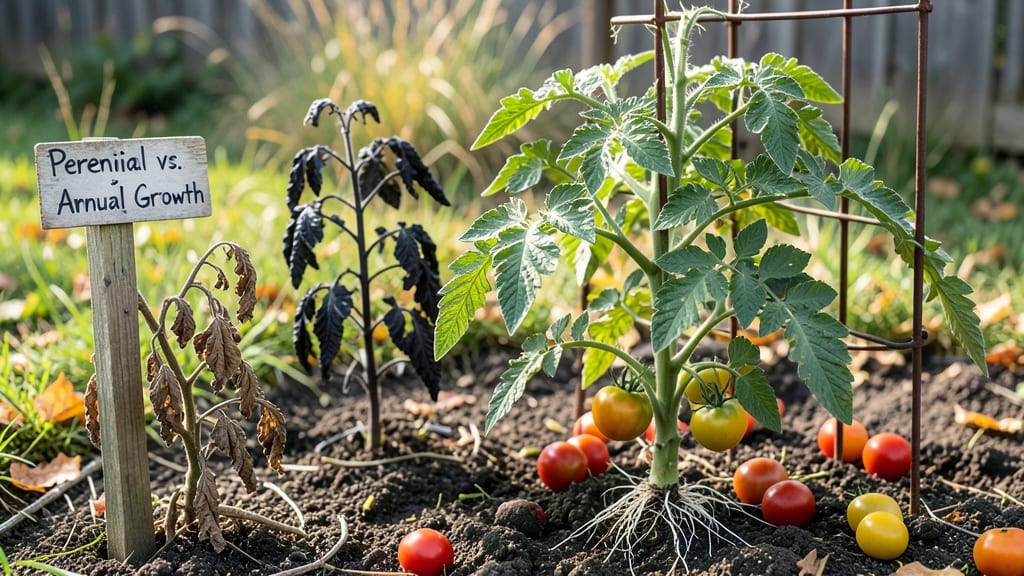
Will a tomato plant come back? In most climates, no—tomato plants are annuals that die after fruiting. However, in warm regions like USDA Zones 10-12, some varieties can survive as perennials with proper winter protection like mulching and careful pruning.
Most gardeners treat tomato plants as annuals because they complete their life cycle in one growing season, producing fruit before dying from cold or exhaustion. 🌱 The key difference lies in climate—tropical varieties in Zone 10+ may regrow if protected from frost, while northern growers must replant each spring.
Even in mild winters, many tomato plants won't survive without heavy mulch or greenhouse protection, as their roots are sensitive to temperature drops below 40°F.
What's fascinating is how some heirloom varieties, like cherry tomatoes, have shown surprising resilience in overwintering experiments when given consistent warmth and moisture. The trade-off? These "perennial" tomatoes often produce smaller yields the second year, making them more of a novelty than a reliable crop for most gardeners.
💡 In This Article
- Why Tomato Plants Die in Most Climates
- How to Overwinter Tomato Plants in Cold Climates
Why tomato plants die in most climates
Tomatoes are classified as annuals because their natural life cycle spans just one growing season. The plant focuses all its energy on producing fruit—those juicy, sun-ripened tomatoes—rather than investing in long-term survival structures like thick stems or deep root systems.
Once temperatures drop below 50°F at night, the plant's metabolic processes slow dramatically, and frost at 32°F or lower triggers irreversible cell damage, causing the plant to blacken and die within hours.
The science behind this involves the plant's cold sensitivity. Tomatoes originated in tropical regions, so their cellular membranes contain high levels of unsaturated fats that remain fluid in warm climates. When exposed to cold, these fats solidify, disrupting the membrane's integrity and causing cell leakage.
Determinate varieties (bush types) are slightly more frost-tolerant than indeterminate vining types, but neither can survive prolonged exposure to freezing temperatures without protection.
What most gardeners don't realize is how quickly this process happens. A single night below 35°F can kill an unprotected tomato plant, even if daytime temperatures rebound. The plant's roots, which absorb water and nutrients, are particularly vulnerable—they begin to rot when soil temperatures drop below 40°F.
This is why mulching with 4-6 inches of straw or leaves can buy a few extra weeks of life in marginal climates.
There's also a physiological trade-off: tomatoes prioritize fruit production over survival. The energy that goes into developing those 1-2 pound tomatoes (or hundreds of cherry tomatoes) would otherwise be used to strengthen stems or develop protective bark.
This is why even in mild winters, most tomato plants won't regrow—they've essentially "spent themselves" producing fruit.
Interestingly, some tropical tomato varieties like Solanum lycopersicum var. cerasiforme (wild cherry tomatoes) have shown better cold tolerance, but they still won't survive northern winters without intervention.
The key difference lies in their genetic adaptation to slightly cooler climates—think of them as the marathon runners of the tomato world compared to sprint-focused commercial varieties.
For visual learners, imagine a tomato plant as a marathon runner who collapses after crossing the finish line—all energy expended, no reserves left for recovery. That's the botanical reality behind why these plants don't come back in most gardens.