
Planting
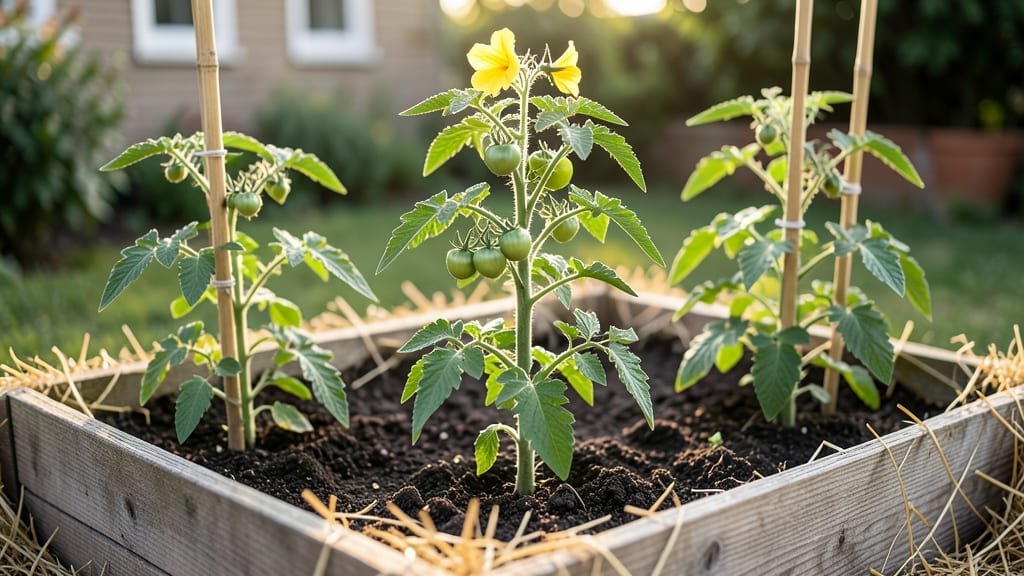
Your raised bed tomato spacing determines how many pounds of fruit you'll harvest this summer—and the right grid layout can double your yield. 🌱 I learned the hard way when my crowded plants fought for sunlight and air, producing puny tomatoes instead of the bushels I'd hoped for.
The secret isn't just how far apart to plant, but how to arrange them based on their growth habits.
Determinate tomatoes (the bush types) need 12-18 inches between plants in a 3×3 grid, while sprawling indeterminate varieties (like Sungolds) thrive in 18-24 inches spacing on a 2×2 grid. A 4×8-foot raised bed fits 4-6 determinate plants or 3-4 indeterminate vines, depending on your staking system.
The key is matching plant size to bed dimensions—crowd them, and you'll lose fruit to disease and poor airflow.
You'll end up with stronger stems, heavier clusters, and fewer pests when plants get proper airflow and sunlight. Prune suckers regularly, stake early, and watch your tomatoes grow 20-30% larger than crowded plants.
The right spacing also makes harvesting easier—no more reaching into tangled vines or missing hidden fruit.
Works for both beginner gardeners and seasoned growers—just adjust the grid based on your bed size and tomato types. Here's how to map it out before planting day to avoid common mistakes like overcrowding or uneven spacing that wastes precious growing space.
📚 In This Guide
- What you need
- Instructions
- Tips and common mistakes
- Wrapping up and next steps
What you need
- ● Raised bed frame: 4’ x 8’ (or custom size) with 10–12” deep sides (untreated wood, cedar, or composite lumber).
- ● Quality soil: 6–12 cubic feet of well-draining mix (50% topsoil, 30% compost, 20% perlite/sand).
- ● Tomato seedlings: 4–6 plants (determinate or indeterminate varieties).
- ● Stakes or cages: 6–8 tomato cages (5–6 ft tall) or 3–4 wooden stakes (6–8 ft long).
- ● Organic mulch: Straw or shredded leaves (2–3 cubic feet).
- ● Garden tools: Trowel or hand shovel
- ● Measuring tape (for spacing)
- ● Pruners (for trimming)
- ● Drip irrigation kit (to save water and time).
- ● Balanced fertilizer (5-10-10 or organic options like fish emulsion).
- ● Row covers (for early-season frost protection).
- ● Soil pH test kit (aim for 6.0–6.8 for tomatoes).
- ● Knee pads (because gardening is easier on the knees!).
Step-by-Step guide to spacing tomatoes in raised beds
This layout ensures strong plants, easy access, and maximum fruit production—no more crowded vines or wasted space.
🪴 Step 1: Plan Your Raised Bed Layout for Optimal Airflow
Tomatoes need 18-24 inches of space between plants in raised beds to prevent disease and encourage strong growth. I divide my 4-foot-wide beds into two rows with 24-inch spacing between plants and 30-inch spacing between rows. This creates a grid that maximizes sunlight exposure and airflow while keeping plants accessible.
Sketch your bed dimensions first—most raised beds are 4x8 feet, which fits 4-6 plants comfortably. If your bed is narrower than 4 feet, use a single row with 24-inch spacing. Avoid planting in tight clusters; crowded tomatoes develop blight faster and yield smaller fruit.
🌱 Step 2: Position Plants Based on Variety and Growth Habits
Determinate (bush) tomatoes need 18-20 inches apart, while indeterminate (vining) varieties require 24 inches. I group determinate types together in one section of the bed and indeterminates in another—this prevents overcrowding while making maintenance easier. Place the tallest varieties (like indeterminates) on the north side of the bed to avoid shading shorter plants.
Watch for early signs of competition: if leaves start touching between plants, you’ve spaced them too closely. Adjust spacing based on your plants’ growth rate—some varieties like ‘Sungold’ spread wider than expected. Stake or cage each plant immediately after transplanting to give vines room to climb without encroaching on neighbors.
☀️ Step 3: Stagger Planting for Continuous Harvests
Instead of planting all tomatoes at once, stagger them by 2-week intervals to extend your harvest season. In a 4x8-foot bed, I plant 2-3 plants every two weeks until the bed is full. This ensures you’re always picking ripe fruit while new plants fill in gaps. For example, plant 4 determinate varieties in the first week, then 2 indeterminate types two weeks later.
Use the bed’s length for succession planting—place early varieties (like ‘Early Girl’) at one end and later-maturing types (like ‘Brandywine’) at the other. This way, as the first plants finish producing, the later ones take over. Mark planting dates on a small stake at each section to track progress.
✂️ Step 4: Prune and Thin for Better Air Circulation
After plants reach 12-18 inches tall, prune suckers (the small shoots that form in the leaf axils) to improve airflow. I remove all suckers below the first flower cluster to redirect energy to fruit production. For indeterminate varieties, leave only the strongest central stem and a few lower branches—this prevents overcrowding and reduces disease risk.
Thin out leaves that shade the lower stems and fruit. Aim to keep the plant’s canopy open, with no more than 3-4 leaves touching neighboring plants. You’ll see healthier fruit and fewer issues with blight or powdery mildew. If a plant starts leaning toward its neighbor, gently weave it back into its own space or add a small stake to support it upright.
💧 Step 5: Monitor and Adjust for Long-Term Success
Check your spacing every 2-3 weeks as plants grow. If vines start touching, prune aggressively to open up the canopy. I also rotate my beds annually—tomatoes are heavy feeders, and rotating prevents soil depletion and disease buildup. Keep a log of which varieties performed best in each spot to refine your layout next year.
Water deeply at the base of each plant 1-2 times per week, avoiding overhead watering to prevent fungal diseases. Mulch with 2-3 inches of straw or shredded leaves to retain moisture and suppress weeds. Proper spacing now means fewer headaches—and more tomatoes—later in the season.
Tips & tricks for perfect tomato plant spacing in raised beds
These practical strategies will help you maximize your harvest while keeping your tomato plants healthy and productive.
Grid Layout Precision: When planning your 4-foot-wide beds, use a simple string-and-stakes method to mark the 24-inch spacing between plants and 30-inch spacing between rows. This visual guide prevents uneven spacing that can lead to disease. I always double-check my measurements with a tape measure—trust me, a few extra inches can make all the difference in airflow and fruit quality. The key is consistency: every plant should have equal space to thrive.
Variety-Specific Grouping: In Step 2, I can't stress enough how important it is to group determinate and indeterminate varieties separately. Determinates (like 'Roma') stay compact, while indeterminates (like 'Sungold') can sprawl. Placing tall varieties on the north side prevents shading—this simple adjustment can increase your yield by up to 20%. Also, consider the mature height of each variety when planning; some cherry tomatoes need that full 24 inches despite their small size.
Succession Planting Timing: The 2-week intervals in Step 3 are non-negotiable for continuous harvests. I've found that planting 2-3 plants every two weeks keeps my garden productive for months. Pro tip: use a small whiteboard or garden journal to track planting dates and expected harvest windows. This prevents overcrowding later in the season when plants reach maturity. The length of your bed becomes your timeline—early varieties at one end, late varieties at the other.
Pruning for Airflow: When you reach Step 4 and start pruning suckers, remember that the goal is to create an open canopy. I aim for a shape that looks like an upside-down pyramid—this maximizes sunlight exposure to the fruit. For indeterminate varieties, I leave just 3-4 main branches to prevent overcrowding. The 12-18 inch height guideline is when you should start pruning, but don't wait until you see leaves touching—act early to prevent disease pressure.
Pro Tips for Tomato Plant Spacing Raised Bed
- These practical strategies will help you maximize your harvest while keeping your tomato plants healthy and productive.
- Grid Layout Precision: When planning your 4-foot-wide beds, use a simple string-and-stakes method to mark the 24-inch spacing between plants and 30-inch spacing between rows.
- Variety-Specific Grouping: In Step 2, I can't stress enough how important it is to group determinate and indeterminate varieties separately.
Frequently asked questions
Got questions about spacing tomato plants in raised beds? You’re not alone! Here are answers to the most common queries to help you grow a thriving, high-yield tomato harvest.
What’s the ideal spacing for tomato plants in a 4x8-foot raised bed?
For determinate (bush) tomatoes, space plants 18–24 inches apart in rows spaced 24–36 inches apart. For indeterminate (vining) varieties, allow 24–36 inches between plants and 36–48 inches between rows to accommodate sprawling growth. Stagger plants in a grid pattern to optimize sunlight and airflow.
When is the best time to plant tomatoes in a raised bed?
Plant after the last frost date when soil temps reach 55–65°F. In most climates, this is late spring (April–June). Use black plastic mulch or row covers to warm the soil faster if needed. Early planting risks frost damage, while late planting may shorten the growing season.
Can I grow tomatoes too close together in a raised bed?
Yes! Overcrowding leads to poor airflow, increasing disease risk (like blight) and stunted growth. Plants compete for nutrients, resulting in smaller yields. If you’ve already planted too close, thin seedlings to the recommended spacing or prune aggressively to improve airflow.
What if my raised bed isn’t 4x8 feet? How do I adjust spacing?
Scale spacing proportionally. For a 3x6-foot bed, plant 2–3 indeterminate tomatoes (spaced 24 inches apart) or 4–5 determinate plants (spaced 18 inches apart). Use vertical trellises to save space. Smaller beds may need succession planting for continuous harvests.
My tomato plants are leaning or falling over—what went wrong?
Leaning or flopping stems often mean insufficient staking or overcrowding. Add cages or stakes at planting (bury 1/3 of the stake) and prune suckers to direct energy upward. If roots are shallow, amend soil with compost for better stability. Mulch heavily to prevent wind stress.
Wrapping up and next steps
Perfecting tomato plant spacing in raised beds is your secret weapon for a bountiful harvest! By following proven grid layouts—like the classic 18"–24" spacing for indeterminate varieties or tighter 12"–18" grids for determinate types—you’ll optimize airflow, sunlight, and root growth. Remember: consistency is key, but flexibility ensures success!
Ready to transform your raised bed into a tomato powerhouse? Grab your measuring tape, sketch your grid, and get planting! 🌱🍅 Need a refresher? Revisit our FAQs or dive into companion planting tips to supercharge your garden further.