
Planting
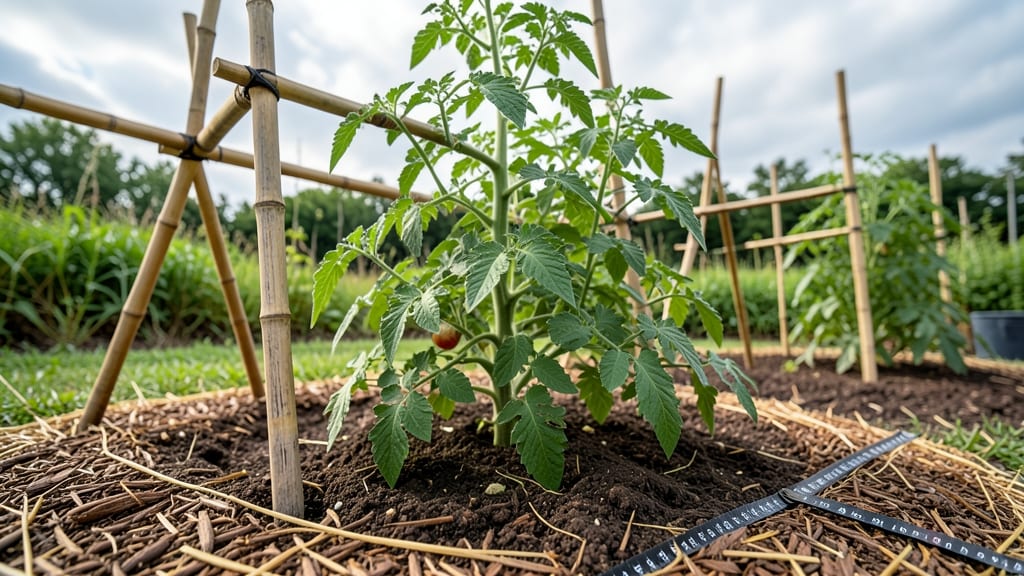
Spacing indeterminate tomatoes correctly keeps those 10-foot vines 🍅 from tangling into a disease magnet while packing your garden with fruit.
Picture this: you’ve just planted your heirloom Sungolds, and by July, they’re sprawling like jungle vines—unless you plan ahead. Too close, and airflow stalls, inviting blight; too far apart, and you waste precious garden real estate. The right spacing turns chaos into a high-yield system.
Here’s the game-changer: 18–24 inches apart for in-ground plants (or 3–4 feet for heavy-fruiters like Brandywine), but trellises and cages change the rules entirely. I’ll walk you through proven layouts—whether you’re working with cages, stakes, or containers—plus how to spot (and fix) common spacing mistakes before they ruin your harvest.
By the end, you’ll know exactly how to balance airflow, sunlight, and yield—so your tomatoes thrive from June to October without the guesswork.
Optimal indeterminate tomato spacing by growing method (cage, trellis, OR stake)
Indeterminate tomatoes grow like jungle vines—reaching 6 to 12 feet tall with continuous fruiting. Proper spacing prevents disease, improves airflow, and maximizes your harvest. The wrong setup can lead to shady lower leaves, blossom end rot, and tangled messes that are impossible to manage.
Let's break down the ideal spacing for three popular growing methods: cages, trellises, and stakes, including adjustments for small spaces and high-yield varieties.
Most gardeners start with in-ground planting, but container gardening is also an option if you're working with limited space. The key is balancing vine growth with support structure. For example, a 6-foot-tall cage needs different spacing than a 10-foot trellis.
Let’s explore the specifics so you can choose what works best for your garden layout and tomato varieties.
🌱 Pro Tip: Always plant indeterminate tomatoes in full sun (6+ hours daily) and ensure your support system is installed at planting time to avoid disturbing roots later. Skipping this step can lead to weak stems and poor fruit production.
| Growing Method | Standard Spacing (In-Ground) | Container Spacing (Per Pot) | Support Height | Best For |
|---|---|---|---|---|
| Cage (5-6 ft) | 18-24 inches apart in rows 3-4 feet apart | 1 plant per 5-gallon pot (minimum) | 5-6 feet | Small gardens, easy maintenance, varieties like 'Cherry Tomato' |
| Trellis (8-12 ft) | 24-36 inches apart in rows 4-5 feet apart | 1 plant per 7-gallon pot (or larger) | 8-12 feet (adjustable) | Vertical gardens, high-yield varieties, small footprints |
| Stake (6-10 ft) | 24-30 inches apart in rows 3-4 feet apart | 1 plant per 5-gallon pot (with strong stake) | 6-10 feet (individual stakes) | Traditional gardens, single plants, varieties like 'Brandywine' |
| Espalier (Wall Trellis) | 18-24 inches apart along wall | 1 plant per 3-5 gallon pot (wall-mounted) | 6-8 feet (horizontal spread) | Urban gardens, small spaces, decorative layouts |
For in-ground planting, cages are the easiest option for beginners. Place them 18-24 inches apart in rows that are 3-4 feet apart to allow for easy movement between plants. This setup works well for cherry tomatoes or smaller varieties like 'Sweet 100.'
The 5-6 foot height of standard cages keeps vines contained while still allowing plenty of airflow around the foliage.
If you're growing heavy-fruiting varieties like 'Sungold' or 'Beefsteak,' a trellis system is ideal. These vines can get top-heavy with fruit, so a 10-12 foot trellis with 24-36 inches of spacing between plants gives them room to spread out horizontally while climbing vertically.
This method also makes harvesting easier—just reach up and pick ripe tomatoes without bending over.
For container gardening, indeterminate tomatoes need at least 5 gallons of soil per plant to thrive. If you're using a cage or stake, opt for a 7-gallon pot or larger to accommodate root growth.
Place containers 18-24 inches apart to ensure adequate airflow. If you're growing in balcony planters, consider a vertical trellis to save space while still providing support.
One common mistake is overcrowding in containers. A 5-gallon pot might seem sufficient, but indeterminate tomatoes will outgrow it quickly, leading to stunted growth and poor fruiting. Always upgrade to a larger container if you notice roots circling the bottom or leaves yellowing from nutrient deficiency.
🌿 Key Takeaway: The right spacing depends on your support system, garden size, and tomato variety. Start with the guidelines above, then adjust based on your plants' growth habits.
If you notice vines rubbing against each other or leaves staying damp too long, it's time to space them out further or prune for better airflow.
For small gardens, consider espalier training along a fence or wall. This method allows you to grow indeterm
How to adjust spacing for heavy-fruiting indeterminate varieties (like 'Sungold' or 'Brandywine')
Heavy-fruiting indeterminate varieties like 'Sungold' or 'Brandywine' tomatoes produce more fruit per vine than standard types, but their sprawling growth demands extra attention to spacing. Without proper room, you’ll face fungal diseases from poor airflow and reduced yields from overcrowded vines.
These varieties can easily reach 10+ feet tall and spread 3-4 feet wide if unchecked.
Standard spacing guidelines (like 18-24 inches apart) often fall short for these powerhouses. Their dense foliage and heavy fruit loads create microclimates that trap moisture, inviting blight and mildew. The key is balancing air circulation with fruit production—and sometimes, thinking outside the cage.
For small gardens, espalier training is a game-changer. By tying vines to a fence or wall, you create a compact, high-yield system that saves space. I’ve grown 'Brandywine' along a 6-foot trellis in a 4x4-foot patch, producing 20+ pounds of tomatoes in one season—without sacrificing airflow.
If you’re using containers, opt for 5-gallon buckets or fabric grow bags with at least 18 inches of depth. These varieties need deep root zones to support their heavy fruit loads. Pair containers with strong stakes or cages (like 6-foot tomato towers) to prevent toppling.
Pro tip: Mulch heavily with straw or wood chips to retain moisture and reduce soil-borne diseases. Heavy-fruiters like 'Sungold' wilt faster in dry soil, so drip irrigation is your best friend for consistent moisture.
🌱