
Planting
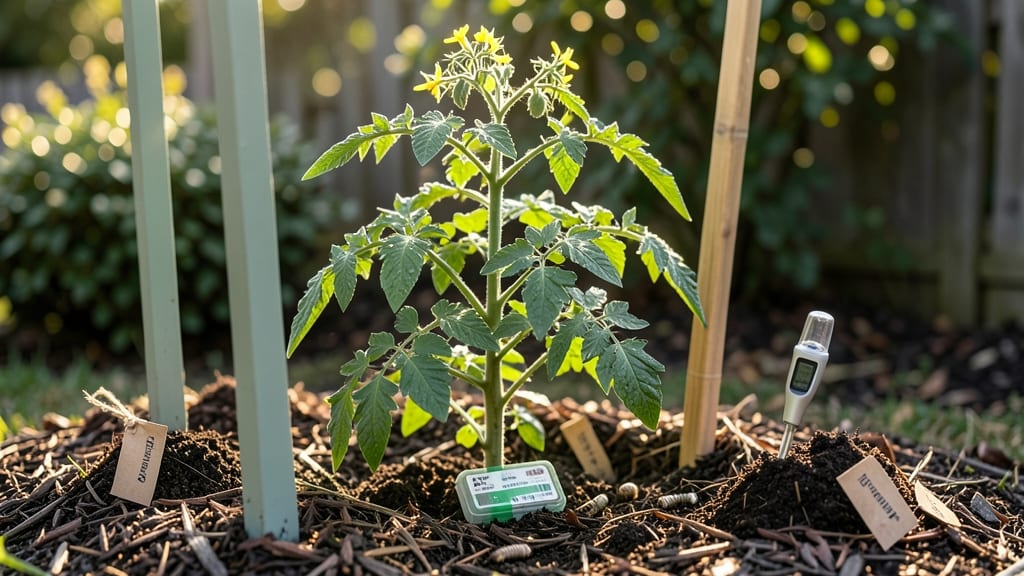
Tomato plant soil requirements demand well-draining, nutrient-rich soil with a slightly acidic to neutral pH (6.0–6.8), plenty of organic matter like compost, and balanced nitrogen, phosphorus, and potassium levels to support strong root and fruit development.
Tomatoes thrive when their soil mimics their natural habitat in Mediterranean climates—light, airy, and packed with nutrients. 🌱 The pH range of 6.0–6.8 isn't just arbitrary; it's where tomatoes can efficiently absorb essential minerals like calcium and magnesium.
I've seen firsthand how even a slightly alkaline soil can lead to blossom-end rot, a common tomato disease caused by calcium deficiency. For containers, mix equal parts potting soil, compost, and perlite to ensure proper aeration and moisture control.
Don't overlook the texture—tomatoes hate soggy roots. Sandy loam soils drain best, but if your garden has heavy clay, amending with 4-6 inches of compost can transform it into tomato-friendly territory.
The key is balance: too much organic matter can compact over time, while too little leaves your plants starving for nutrients. I always recommend testing soil before planting to avoid costly mistakes.
💡 In This Article
- Optimal pH and Soil Composition for Tomato Growth
- Step-by-Step Guide to Amending Soil for Tomatoes
Optimal pH and soil composition for tomato growth
The pH range of 6.0–6.8 for tomato soil isn't just a recommendation—it's a biological necessity. Tomatoes absorb nutrients most efficiently in this zone because it maximizes the availability of key minerals like calcium, magnesium, and phosphorus.
At lower pH levels (more acidic), aluminum and manganese become toxic to roots, while above 7.0, calcium and phosphorus become locked away in insoluble forms.
Think of it like a lock-and-key system: the soil's pH determines whether your tomato roots can "unlock" the nutrients they need to grow strong stems and develop sweet, juicy fruit. 🌱
Soil texture plays an equally critical role in tomato health. Sandy soils drain too quickly, washing away nutrients and leaving roots thirsty, while clay soils can suffocate roots by holding too much moisture.
The ideal texture is a loamy soil—a balanced mix of sand, silt, and clay that holds moisture without waterlogging while providing good aeration. For example, a 60% sand, 30% silt, 10% clay blend creates the perfect environment for tomato roots to spread and access oxygen.
Organic matter like compost acts like a sponge, improving water retention and nutrient availability while preventing compaction.
Here's what happens when soil composition is off: in heavy clay, roots struggle to breathe, leading to stunted growth and poor fruit set. In pure sand, plants bolt (flower prematurely) because they sense stress from lack of moisture. The solution?
Amend your soil with 3-4 inches of compost mixed into the top 12 inches of soil before planting. Compost introduces beneficial microbes that break down organic matter into plant-available nutrients, while also improving soil structure.
For container gardening, blend 1 part compost, 1 part perlite, and 2 parts potting mix to replicate ideal loamy conditions in a compact space.
Don't overlook the role of organic matter in preventing common tomato diseases. Blossom-end rot, for instance, occurs when calcium isn't available to the plant—often because the soil pH is too high or too low, or because heavy rains leach calcium away.
By maintaining proper pH and adding compost, you're not just feeding your tomatoes; you're creating a buffer system that keeps nutrients consistently available throughout the growing season. The result? Healthier plants with fewer problems and bigger, tastier harvests. 🍅
For visual learners, imagine soil particles as a three-dimensional puzzle. Sandy soil has large particles with lots of space between them (like a coarse sieve), while clay has tiny particles packed tightly together (like a fine mesh).
Loamy soil strikes the perfect balance—enough space for roots to grow and air to circulate, but enough particles to hold moisture and nutrients. When you add compost, you're essentially gluing these particles together in a way that creates ideal pore space for root development and microbial activity.
One common mistake gardeners make is assuming all organic matter is equal. While compost is excellent, peat moss (which is highly acidic) can throw off your pH balance if used in excess. Instead, opt for well-aged compost or coconut coir, which are more neutral.
The goal is to create a living soil ecosystem where beneficial bacteria and fungi work with your tomato plants to break down nutrients and protect against pathogens. This symbiotic relationship is what turns good soil into great soil for tomatoes. 🌿