
Planting
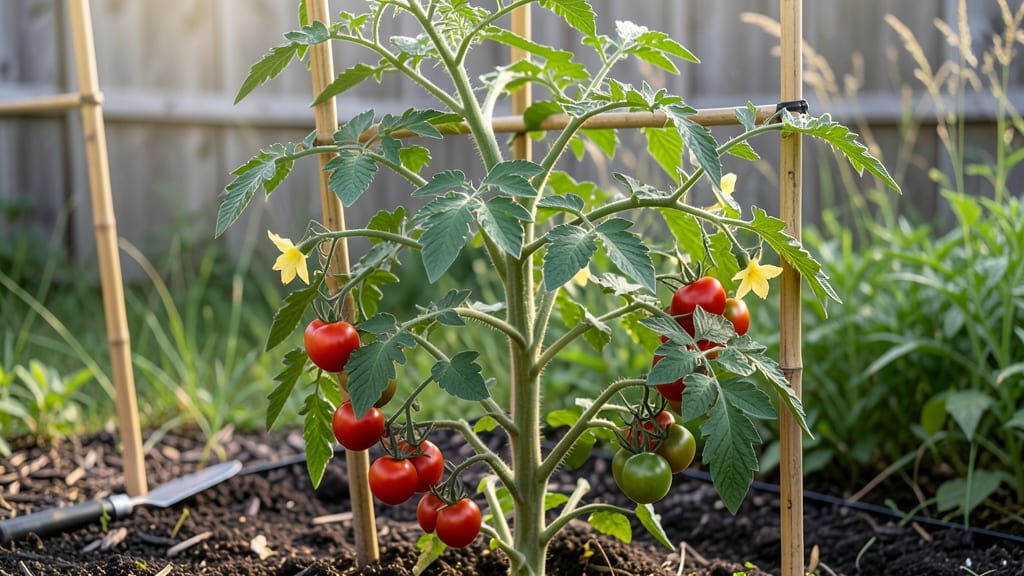
The identification of a tomato plant starts with its leaves—listen closely to the secrets they whisper. 🌱 Determinate tomatoes have broad, lobed leaves clustered near the stems, while indeterminate types grow narrower, serrated foliage that climbs relentlessly.
The difference isn’t just in the shape but in how your plant will feed you all season. Start by comparing leaf texture and growth habit: determinate plants stop growing at a set height, producing fruit in one burst, while indeterminate types keep stretching and yielding until frost.
That curly, jagged leaf? Likely an heirloom. Smooth-edged and glossy? Probably a hybrid. Both are clues to what’s coming next—whether it’s a single heavy harvest or a steady stream of tomatoes. If your plant’s leaves turn yellow with brown spots, it’s not a variety trait—it’s early blight.
Check the undersides for fungal signs and act fast. The right identification means you’ll know whether to prune for air flow or replace the plant entirely. This isn’t just about naming your tomato; it’s about saving it.
Master these visual cues, and you’ll spot pests, diseases, and even your neighbor’s stolen varieties from across the yard. Grab a magnifying glass and let’s decode your garden’s mysteries—one leaf at a time.
📚 In This Guide
- What you need
- Instructions
- Tips and common mistakes
- Wrapping up and next steps
What you need
- ● Tomato plant(s): At least 1-2 healthy plants (potted or in-ground) for close inspection.
- ○ Magnifying glass: A 2x-5x magnification lens (optional but helpful for fine details).
- ● Ruler or measuring tape: A standard 12-inch ruler or flexible tape for leaf/stem measurements.
- ● Notebook or smartphone: To jot down observations (apps like PlantNet or PictureThis can assist!).
- ○ Camera (optional): A decent smartphone camera or DSLR for high-res photos of leaves, stems, and fruit.
- ● Pruning shears: Small, sharp shears for safely snipping leaves/stems if needed (sterilized with rubbing alcohol).
- ● Field guide or ID chart: Printed or digital (e.g., University of Florida’s Tomato Variety Guide or Seed Savers Exchange resources).
- ● Gloves: Lightweight gardening gloves to protect hands during handling.
- ● Labeling tags: Small plant tags to mark varieties if testing multiple types.
- ● UV flashlight: For inspecting leaf undersides or subtle stem markings.
- ● Reference samples: Pre-identified tomato leaves/stems for comparison (e.g., from a local nursery).
How to identify tomato varieties by leaf shape and stem
Here's how I decode tomato plants just by looking at their leaves and stems—no labels needed.
🌿 Step 1: Examine Leaf Shape for the Big Clues
Start by comparing leaf shapes to these three main types. Potato-leaf tomatoes have deeply lobed, almost fern-like leaves with 5-9 pointed sections. These are your heirloom varieties like Brandywine or Cherokee Purple. Regular-leaf tomatoes look like classic tomato leaves—oval with 5-7 smooth lobes and serrated edges. These are your standard slicing tomatoes like Roma or Celebrity. Curly-leaf tomatoes have wavy, almost crinkled edges and are often cherry tomatoes like Sweet 100 or Sun Gold.
Hold a leaf up to the light—you'll notice the veins form a distinct pattern. Potato-leaf varieties have prominent veins that create a web-like structure, while regular-leaf varieties have more uniform, parallel veins. This is your first major clue about the plant's heritage and growth habit.
🌱 Step 2: Study Stem Characteristics for Growth Habits
Look at the main stem where leaves attach. Indeterminate tomatoes (the vining types) have continuous growth with leaves spaced 1-2 inches apart along the stem. These plants keep producing flowers and fruit until frost. Determinate tomatoes (the bush types) have a more compact growth with leaves clustered at stem joints and a noticeable main stem that stops growing at a certain height.
Run your fingers along the stem—indeterminate varieties feel smooth and continuous, while determinate stems often have slight bumps where leaf clusters form. This tells you whether the plant will need staking or can grow freely in a bush form.
🌶 Step 3: Check Leaf Color and Texture for Variety Hints
Healthy tomato leaves typically range from medium to dark green, but some varieties have distinctive color hints. Purple-leaf tomatoes like Black Krim or Black Beauty have deep purple stems and veins that sometimes extend into the leaves. Variegated tomatoes like 'Tigerella' have creamy white streaks along the leaves. Even the texture gives clues—some heirlooms have slightly hairy leaves while modern hybrids tend to be smoother.
Gently rub a leaf between your fingers. Hairy leaves indicate older varieties that might have better disease resistance, while smooth leaves suggest newer hybrids bred for uniformity. This tactile check helps distinguish between commercial varieties and heirlooms.
✂️ Step 4: Observe Flower Clusters for Fruit Type
Look at the flower clusters where fruits develop. Single-truss varieties (like determinate tomatoes) have one main cluster of flowers at each stem joint. Indeterminate tomatoes produce flowers continuously along the vine, often with multiple small clusters. Cherry tomatoes typically have many small flower clusters, while slicing tomatoes have fewer but larger clusters.
Count the flower clusters on a mature plant—if you see more than three clusters along a vine, it's likely an indeterminate variety that will produce fruit all season. This is your final piece of the puzzle to determine whether you're growing a one-time harvest bush tomato or a continuous producer.
📝 Step 5: Cross-Reference with Known Characteristics
Now compare what you've observed to known tomato characteristics. Create a simple chart with leaf shape, stem type, leaf color, and flower clusters. For example, a plant with deeply lobed leaves, indeterminate growth, and purple stems is likely a Black Krim. A plant with regular leaves, determinate growth, and smooth stems is probably a Roma.
I keep a small notebook by my garden with sketches of different leaf shapes and notes about each plant's growth habits. After a few seasons, you'll start recognizing patterns and can identify varieties just by glancing at the plants. This visual library becomes invaluable for future seasons.
Tips & tricks for perfect tomato variety identification
These practical tips will help you sharpen your eye for tomato plant characteristics—and avoid common misidentifications.
Lighting Matters: Always examine leaves in natural daylight, not artificial light. I've caught myself misidentifying leaf shapes under fluorescent lighting—it washes out the subtle differences between potato-leaf and regular-leaf varieties. If you're indoors, place plants near a south-facing window for the most accurate comparison. The way light filters through the veins reveals the true structure, especially those web-like patterns in heirloom varieties.
Leaf Texture Test: Don't just look at leaves—touch them! The tactile difference between hairy heirloom leaves and smooth hybrid leaves is your secret weapon. I learned this the hard way after mistaking a hairy-leaf plant for a hybrid. Run your thumb along the underside: if it feels fuzzy, you're likely dealing with an older variety like Cherokee Purple. This simple test saves hours of research later.
Stem Spacing Secret: When checking stem spacing in Step 2, measure between the first two leaves from the base. This gives you the most accurate baseline for the plant's growth pattern. I've seen gardeners measure from random points and get confused when the spacing varies higher up the stem. Consistent measurements at the base reveal the true growth habit—whether it's the 1-2 inch spacing of indeterminate types or the clustered growth of determinate varieties.
Visual Cheat Sheet: Create a simple chart with leaf shape, stem type, and flower cluster patterns before your planting season. I keep mine laminated in my gardening journal. Include sketches of each type (potato-leaf, regular-leaf, curly-leaf) and note the key characteristics. When you're out in the garden, you can quickly reference this chart to double-check your identifications. This visual reference becomes especially helpful when you're comparing multiple plants side by side.
Pro Tips for Tomato Plant Identification
- These practical tips will help you sharpen your eye for tomato plant characteristics—and avoid common misidentifications.
- Lighting Matters: Always examine leaves in natural daylight, not artificial light.
- Leaf Texture Test: Don't just look at leaves—touch them!
Frequently asked questions
Got questions about spotting your tomato varieties? Here’s a quick guide to the most common ones—so you can decode your garden like a pro!
How do I tell if my tomato plant is heirloom or hybrid?
Heirlooms often have distinctive leaf shapes (like deeply lobed or fuzzy leaves) and vibrant colors, while hybrids may have smoother edges or uniform traits. Check the stem: heirlooms sometimes have hairier stems. If unsure, look for seed packets or ask local growers—many hybrids are labeled!
When is the best time to identify tomato plants?
Identify plants early in the season (when leaves are young) to spot key traits before flowers or fruit develop. Late summer can be tricky—some varieties change leaf shape as they mature. Snap a photo of the first true leaves (not seedling leaves) for reference!
Can I identify a tomato plant by its fruit before the leaves?
Fruit can hint at variety (e.g., cherry tomatoes vs. beefsteaks), but leaves and stems are more reliable for precise ID. Wait until the plant has 3–5 true leaves to avoid misidentification. If you’re desperate, compare fruit to variety databases—but leaves win for accuracy!
My tomato leaves look diseased—how do I tell if it’s a variety trait or a problem?
Some heirlooms (like ‘Black Krim’) have naturally purple-tinged or jagged leaves, while others (like ‘Sungold’) stay smooth. Red flags: yellow spots, holes, or wilting. Compare your plant to UMD’s disease guide. If unsure, isolate the plant to prevent spread!
What if I can’t identify my tomato plant at all?
No stress! Try these tricks:
- Leaf rub test: Rub a leaf between fingers—hairy = likely heirloom.
- Growth habit: Indeterminate (vining) vs. determinate (bushy) can narrow it down.
- Ask the internet: Post photos to r/tomatoes or Facebook groups—growers love helping!
Wrapping up and next steps
Identifying your tomato plant by its leaf shape, stem texture, and growth habits unlocks the secret to growing the perfect variety for your garden! Whether you’re dealing with the lobed leaves of heirlooms or the serrated edges of cherry tomatoes, these clues help you nurture your plants with confidence.
Now that you’re equipped with the knowledge, why not take the next step?
🌱 Your Action Plan:
- Snap a photo of your plant’s leaves and stems—then compare it to our guide to confirm your variety!
- Experiment with growing conditions tailored to your tomato’s needs (sun, soil, or support).
- Share your findings with fellow gardeners—you might just inspire someone else’s green thumb journey!
Happy growing—your tomato harvest is just around the corner! 🍅✨