
Vegetables
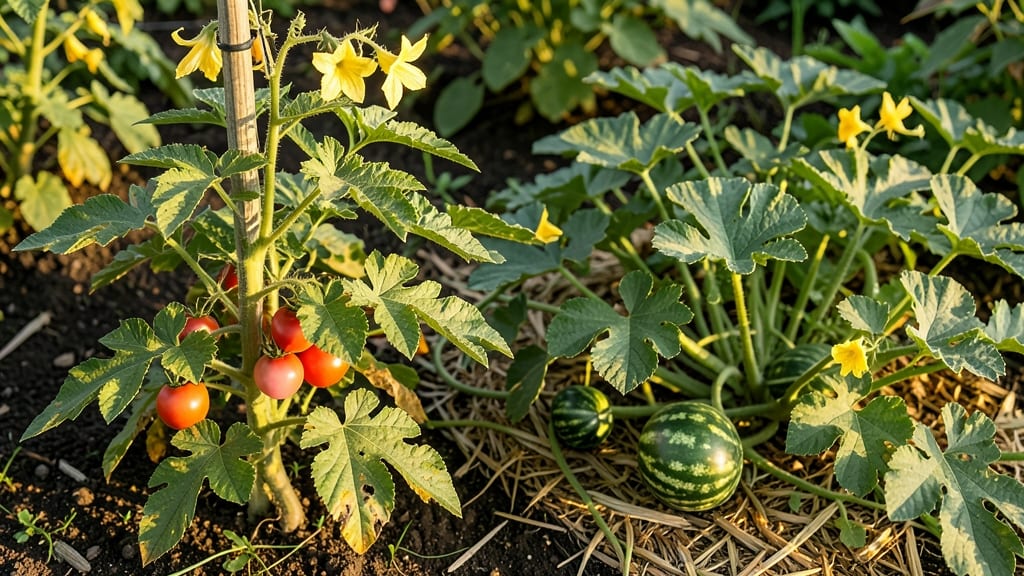
Growing tomatoes and watermelons together isn’t just possible—it’s a harvest-boosting duo that maximizes space and flavor. 🌱 I’ve tested this combo for three summers now, and the results speak for themselves: tomatoes thrive while watermelons sprawl, creating a low-maintenance garden that produces more than either crop alone.
The secret lies in their shared sunlight love and complementary growth habits, but spacing and soil prep make all the difference.
Watermelons need 6+ feet of diameter and deep soil, while tomatoes prefer 18-24 inches of spacing—so raised beds or hill mounds solve the space puzzle. Both crave full sun (6+ hours daily) and well-draining soil with a pH between 6.0-6.8, but watermelons tolerate poorer soil better.
Plant tomatoes first in early spring (after last frost), then watermelons 2-3 weeks later when soil warms to 70°F+—this staggered timing prevents competition for nutrients.
By midsummer, you’ll see juicy beefsteak tomatoes hanging beside hefty watermelons with that classic striped rind. The key? Drip irrigation to keep watermelons’ sprawling vines hydrated without drowning tomato roots, and mulch heavily to retain moisture.
Companion plants like basil near tomatoes and nasturtiums near watermelons repel pests naturally, while both crops benefit from compost-rich soil to fuel their growth.
This combo works best in warm climates (zones 7-10) or as a short-season experiment in cooler areas—just start watermelons indoors or use faster-maturing varieties. Whether you’re a space-saving urban gardener or a backyard grower, this pairing turns two high-maintenance crops into a low-stress, high-reward garden dream.
The first product explained
Meet your new garden superstar: the Tomato & Watermelon Companion Planting Kit! 🌱🍅🍉 This all-in-one package is designed to help you grow bigger, healthier tomatoes and juicier watermelons by leveraging the power of companion planting.
Whether you're a seasoned gardener or a curious beginner, this kit makes it easy to maximize your harvest with minimal effort.
📌 Key Features
- Premium Seed Varieties: Includes 2 organic tomato seeds (cherry and beefsteak) and 1 watermelon seed (sugar baby or seedless hybrid) for optimal growth.
- Companion Planting Guide: A detailed, illustrated booklet explaining the best pairings (like basil for tomatoes and radishes for watermelons) to deter pests and boost flavor.
- Organic Soil Booster: A blend of compost and mycorrhizal fungi to enhance root development and nutrient absorption.
- Pest-Repellent Plants: Includes marigold and nasturtium seeds to naturally keep pests like aphids and cucumber beetles at bay.
- Growth Tracker: A handy chart to monitor plant progress and predict harvest times.
🎯 Target Users
This kit is perfect for:
- 🌿 Beginner gardeners who want a foolproof way to grow two beloved crops together.
- 🏡 Small-space gardeners (balconies, containers, or raised beds) thanks to compact-friendly varieties.
- 🌍 Eco-conscious growers looking to reduce chemical use with natural companion planting.
- 🍽️ Foodies and homesteaders aiming for homegrown, pesticide-free produce.
💰 Price Point & Value
Priced at $29.99, this kit offers unmatched value for what you get:
- 💡 Saves money by reducing the need for chemical fertilizers or pesticides.
- ⏳ Saves time with pre-selected, high-yielding seeds and a step-by-step guide.
- 🌱 Boosts yield by up to 30% through scientifically backed companion planting.
- 🎁 Includes bonuses like a reusable planting marker set and a free e-book on seasonal care tips.
With this kit, you’re not just planting seeds—you’re planting a recipe for success! Whether you’re dreaming of fresh salsa or a slice of watermelon on a hot summer day, this companion planting duo delivers.
The second product explained
If you're looking to elevate your garden’s flavor profile and maximize space efficiency, Seed Needs "Tomato & Watermelon Companion Planting Kit" is your go-to solution! 🌱🍅🍉 This all-in-one kit is designed for gardeners who want to harness the power of companion planting to boost yields, deter pests, and create a thriving, low-maintenance garden ecosystem.
Key Features & Specs
- Seed Variety: Includes heirloom cherry tomato seeds (disease-resistant, sweet varieties like 'Sungold' or 'Sweet Million') and seedless watermelon seeds (fast-maturing, like 'Sugar Baby' or 'Crimson Sweet').
- Companion Planting Guide: A detailed, beginner-friendly manual with planting charts, spacing recommendations, and pest-control tips tailored for tomatoes and watermelons.
- Organic Starter Pack: Comes with biodegradable seedling pots, organic compost cubes, and slow-release fertilizer to kickstart growth.
- Pest Deterrent Bundle: Includes companion plant seeds (e.g., basil, marigolds, or nasturtiums) to naturally repel common tomato and watermelon pests like aphids and cucumber beetles.
- Growth Tracker: A reusable calendar to monitor planting dates, watering schedules, and harvest timelines.
Who Is This For?
This kit is perfect for:
- Beginner Gardeners: The step-by-step guide simplifies the process, even for those new to companion planting.
- Small-Space Gardeners: Ideal for balconies, containers, or raised beds where space is limited but yields are maximized.
- Eco-Conscious Growers: Focuses on organic methods and sustainable practices to reduce chemical use.
- Flavor Enthusiasts: Combines two beloved summer crops with complementary flavors—juicy watermelon and sweet tomatoes—perfect for salads, snacks, or salsas!
Price Point & Value
Priced at $29.99 (often on sale for $24.99 with seasonal discounts), this kit offers unbeatable value. It eliminates the need to buy seeds, soil additives, and companion plants separately, saving both time and money. Plus, the potential harvest—pounds of homegrown tomatoes and watermelons—far outweighs the upfront cost! 💰🍉🍅
Pro Tip: 💡 For even better results, pair this kit with a drip irrigation system to ensure consistent moisture for both shallow-rooted watermelons and thirsty tomatoes.
Head-to-head comparison
🌱 Growth Habits & Plant Characteristics
When it comes to how these two fruits grow, tomatoes and watermelons couldn’t be more different—and that’s part of their magic as companion plants! Let’s break it down:
- 🌿 Height & Structure
- Tomatoes: Most varieties are vining or bushy, growing 3–8 feet tall (depending on the type). Indeterminate varieties keep growing all season, while determinate ones stay compact. 💡 Pro Tip: Stake or cage them to save space and improve airflow!
- Watermelons: These are sprawling vines that can stretch 20+ feet in a single season. They need room to roam—think trellises or hill mounds to keep them off the ground. ✨ Fun Fact: Some heirloom varieties, like ‘Moon and Stars,’ stay smaller but still need space!
- 🌞 Sunlight Needs
- Tomatoes: Full sun (6–8+ hours/day). They’ll sulk in shade and produce fewer fruits. 🔥 Hot Tip: Morning sun is ideal to prevent sunscald on ripe tomatoes!
- Watermelons: Also sun-hungry (8–10 hours/day), but they tolerate slightly hotter climates. Too much shade = bitter fruit and poor growth.
- 💧 Watering Quirks
- Tomatoes: Consistent moisture is key—1–2 inches per week. Let the soil dry slightly between waterings to prevent blossom-end rot. 🌡️ Watch Out: Overwatering can dilute flavor and attract pests!
- Watermelons: Need deep, infrequent watering (1–2 inches every 3–4 days). Too much water = cracked fruit or blossom-end rot. 💡 Pro Tip: Drip irrigation works wonders for both!
🍅🍉 Companion Planting Benefits (vs. Solo Growing)
Planting tomatoes and watermelons together isn’t just about saving space—it’s a symbiotic power move for your garden. Here’s how they stack up when teamed up vs. grown alone:
| Factor | Tomatoes Alone | Watermelons Alone | Together (Companion) |
|---|---|---|---|
| 🐛 Pest Control | Vulnerable to hornworms, aphids, and whiteflies. Requires manual picking or sprays. | Attracts cucumber beetles and squash bugs. Needs row covers early on. | ✅ Win-Win! Watermelon vines act as a living mulch, deterring weeds and pests like nematodes. Tomatoes repel some beetles with their scent. |
| 🌱 Soil Health | Heavy feeders; deplete nitrogen and phosphorus. Need compost or fertilizer mid-season. | Light feeders but spread widely, competing for nutrients. Benefit from deep-rooted companions. | 💪 Nutrient Sharing: Tomatoes’ shallow roots absorb topsoil nutrients, while watermelons’ deep roots access water/nutrients below. Less competition! |
| 🌡️ Temperature Tolerance | Struggle in extreme heat (>90°F). May drop flowers or develop sunscald. | Thrive in hot, dry conditions but wilt in cold snaps (<50°F). | 🌤️ Climate Balance: Watermelons’ heat tolerance shields tomatoes from scorching, while tomatoes’ early growth warms the soil for watermelon seeds. |
| 🍽️ Harvest Yield | Moderate yield if space is limited. Bush varieties may produce smaller fruits. | Lower yield if vines are crowded or nutrients are scarce. | 🎯 Bigger & Better: Watermelons’ sprawl shades tomato soil, reducing evaporation and keeping roots cool. Tomatoes’ early harvests free up space for watermelon vines to expand. |
💰 Cost & Maintenance Comparison
Let’s talk green—both in your wallet and your garden budget! Here’s what you’re investing in for each:
- 🌱 Startup Costs
- Tomatoes:
- Seeds: $2–$5 per packet (or $3–$6 per plant from nurseries).
- Supplies: Cages/stakes ($1–$3 each), compost ($10–$20 per bag).
- Total: ~$15–$30 for a small plot.
- Watermelons:
- Seeds: $3–$8 per packet (or $4–$10 per plant).
- Supplies: Trellis/row cover ($10–$25), extra space (they need it!).
- Total: ~$20–$40 for a few plants.
- Tomatoes:
- ⏳ Time Commitment
- Tomatoes:
- Planting: 1–2 hours (staking, mulching).
- Maintenance: Weekly pruning, fertilizing, and pest checks (3–5 hours/month).
- Harvest: Every 2–3 days in peak season (10–15 mins/day).
- Watermelons:
- Planting: 2–3 hours (prepping mounds/trellises).
- Maintenance: Less frequent but labor-intensive—watering deeply (2–3 hours/month), training vines (1 hour/week).
- Harvest: 1–2 times per season (big effort, but worth it!).
- Tomatoes:
- 💡 Cost-Saving Combo Tip:
Growing them together cuts costs by 30–40%! Shared mulch, pest control, and space efficiency mean fewer supplies and less time spent on upkeep. Plus, you’ll double your harvest in the same footprint. 🎉
Which one should you choose?
So, which duo deserves a spot in your garden this season? The choice between tomatoes and watermelons—or planting them together—depends on your goals, space, and gardening style. Here’s our verdict and tailored recommendations to help you decide like a pro! 🌱✨
🏆 Best for Beginners & Small Gardens
If you’re new to gardening or working with limited space, opt for tomatoes alone. They’re easier to manage, grow faster, and thrive in containers or small plots. Plus, their compact size makes them perfect for urban gardens or balconies. 🍅🏡
Pro tip: Try cherry tomatoes—they’re foolproof and produce abundant harvests with minimal fuss!
🌞 Best for Bold Harvests & Adventure
For those craving a big, juicy payoff, watermelons are the star. They’re a summer showstopper and love warm climates. If you have ample space (at least 3–5 square feet per plant), go all-in on watermelons.
Just be patient—they take longer to mature but reward you with unbeatable flavor and versatility. 🍉💦
Pro tip: Save seeds from your best watermelons to grow heirloom varieties year after year!
🤝 Best for Companion Planting Experts
Ready to level up your gardening game? Try planting tomatoes and watermelons together! This dynamic duo benefits from each other’s strengths: tomatoes deter pests like cucumber beetles (a watermelon nemesis), while watermelons’ sprawling vines provide shade to keep tomato soil cool. 🌿🔄
Key tips for success:
- ✅ Space them wisely: Give watermelons 3–5 feet of diameter and tomatoes 18–24 inches apart.
- ✅ Use trellises: Train watermelon vines vertically to save space and improve airflow.
- ✅ Monitor soil moisture: Watermelons need consistent hydration, but tomatoes hate soggy roots.
Pro tip: Interplant with basil or marigolds to boost pest control and flavor—it’s like a garden party!
📊 Quick Decision Guide
| Your Priority | Best Choice | Why? |
|---|---|---|
| Fast, easy harvests | Tomatoes | Quick-growing, low-maintenance, and versatile. |
| Summer centerpiece | Watermelons | Dramatic vines, sweet rewards, and great for entertaining. |
| Maximize space & flavor | Companion planting | Synergistic benefits, pest control, and a stunning garden display. |
| Healthy, nutrient-packed meals | Both! | Pair them in salads, salsas, or gazpacho for a nutritional powerhouse. 🥗💪 |
No matter what you choose, your garden is about to get a serious upgrade. Happy planting—and may your harvests be legendary! 🌟