
Planting
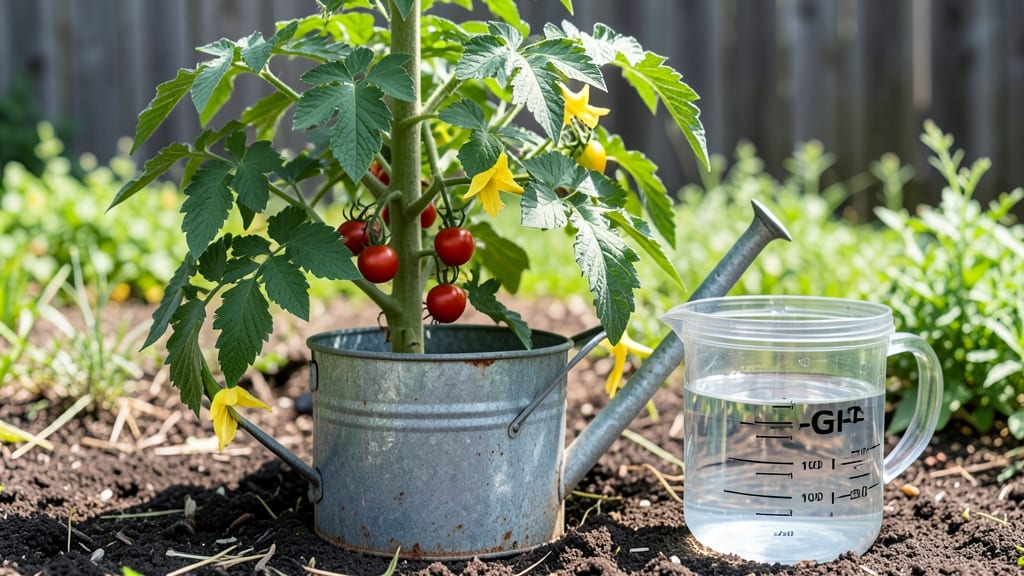
To keep your 🍅 tomato plant thriving, you’ll need 1 to 2 gallons of water per plant per week—but the exact amount depends on size, stage, and climate.
Struggling to keep your tomato plants thriving? Watering correctly is half the battle—and knowing exactly how many gallons to use at each stage can make all the difference between a bumper crop and wilted leaves.
A seedling in a small pot needs just half a gallon every few days, while a mature plant in full sun can drink 2 gallons at a time during peak summer heat.
Container size, soil type, and even your local humidity play a huge role in how much water your 🍅 actually needs.
In this guide, I’ll break down the exact gallons required for each growth stage, how to adjust for containers vs. garden beds, and the smartest ways to water without wasting a drop—so you can grow tomatoes that burst with flavor, not frustration.


Tomato plant water requirements by growth stage (gallons breakdown)
Watering your tomato plants isn't just about keeping the soil damp—it's about providing the right amount at each growth stage. Too little water stresses roots, while too much causes blossom end rot or fungal diseases.
Understanding how many gallons per plant your tomatoes need weekly will help you avoid these pitfalls and maximize your harvest.
Tomato water needs change dramatically from seedling to fruiting. A 1-gallon seedling requires far less than a 5-foot mature plant producing heavy fruit. Soil type also plays a critical role—sandy soil drains quickly, while clay soil holds moisture longer. Let's break down the gallons-per-week requirements for each stage.
During the vegetative stage, your tomato plants focus on leaf growth. This is when roots spread aggressively, so 1.5–2.5 gallons per week keeps them thriving. However, if your soil is sandy, you'll need to add an extra gallon because water drains too quickly.
Conversely, clay soil retains moisture longer, so you can reduce by 0.5 gallons.
When flowers appear, your plants enter the flowering stage, requiring 2.5–3.5 gallons weekly. This is critical—water stress during this phase causes flowers to drop before setting fruit.
Morning watering is key to preventing blossom end rot, a common issue when calcium uptake is disrupted by inconsistent moisture.
The fruiting stage demands the most water—4–6 gallons per week—because heavy tomatoes pull moisture from the soil rapidly. If your plants wilt during the day, it's a sign they need immediate deep watering.
For container-grown tomatoes, this stage often requires daily watering in hot climates, as pots dry out faster than garden beds.
Soil type dramatically affects absorption rates. In sandy soil, water moves through too quickly, so you may need to double your weekly gallons during peak heat. Meanwhile, clay soil can hold excess moisture, increasing the risk of root rot if overwatered.
Always check soil moisture by sticking your finger 2 inches deep—if it's dry, it's time to water.
One common mistake is assuming all tomato plants need the same amount of water. A bush variety like 'Roma' requires less than a vining type like 'Sungold'. Always match your watering to the plant's size and growth stage.
For example, a 6-foot indeterminate plant in July will need nearly twice as much as a 3-foot determinate plant in May.
To make watering more efficient, consider mulching with straw or wood chips. This retains moisture, reducing the total gallons needed by 20–30%. Pair mulch with drip irrigation for precision—this system delivers water directly to roots, minimizing waste and fungal risks from overhead sprinklers.
Finally, always adjust for your climate. In hot, dry regions, you may need to increase gallons by 50% during peak summer. Conversely, in cooler or rainy seasons, reduce water to prevent over-saturation. Pay attention to your plants—they’ll tell you when they’re thirsty through drooping leaves or crispy edges.
Mastering the gallons-per-week formula takes practice, but once you nail it, your tomato plants will reward you with juicy, flavorful fruit all season long. Start with these guidelines, then fine-tune based on your soil and weather. Happy growing! 🌱💧
How to calculate gallons needed for multiple tomato plants (containers vs. garden beds)
Calculating the exact gallons needed for tomato plants depends on two key factors: container size (if growing in pots) and root zone depth in garden beds. A single mature tomato plant typically needs 1-2 gallons per watering, but scaling this for multiple plants—or adjusting for containers—requires a simple formula.
Let’s break it down step by step to avoid over- or under-watering.
First, understand that container-grown tomatoes dry out faster than those in garden beds. A 5-gallon pot may need 1 gallon every 2-3 days in summer, while a 10-gallon container can stretch water to 1.5 gallons every 3-4 days.
For garden beds, roots spread deeper, so 1-2 gallons per plant every 3-5 days is standard—but this varies by soil type and climate.
- 1 Determine container size: Multiply container gallon capacity by 0.2 (20%) for daily water needs. Example: 5-gallon pot × 0.2 = 1 gallon/day in peak heat.
- 2 Garden beds: Use 1 gallon per square foot of root zone. A 3-foot diameter bed (7 sq ft) needs 7 gallons total for 2-3 plants, split over 3-5 days.
- 3 Adjust for climate: Add 20-30% more in 90°F+ heat or sandy soil. Subtract 10-20% in humid climates or clay soil.
- 4 Drip irrigation tip: Run emitters for 10-15 minutes per gallon needed. Example: 10-gallon container = 1.5 gallons → 20-25 minutes per watering.
- 5 Mulch saves gallons: Apply 2-3 inches of mulch to reduce evaporation by 30-50%, cutting your total water needs by half.
For multiple tomato plants, multiply the single-plant gallon needs by the number of plants, then divide by your watering schedule. For example, 5 plants in 5-gallon pots would need 5 gallons total per day in summer (1 gallon per pot).
In garden beds, spread water evenly to encourage deep root growth—avoid shallow puddling, which wastes gallons and invites disease.
Pro tip: Use a moisture meter to check soil depth. Tomatoes need 12-18 inches of moist soil at all times. If the top 2 inches are dry, it’s time to water.
This method trumps guesswork and ensures you’re not over- or under-watering, which directly impacts your tomato yield and plant health.
Finally, track your water usage for a week to refine your formula. Adjust based on leaf wilting (underwatering) or yellowing leaves (overwatering). With this system, you’ll master the art of efficient tomato watering—whether you’re growing 6 plants in containers or a full garden bed.