
Companion Plants
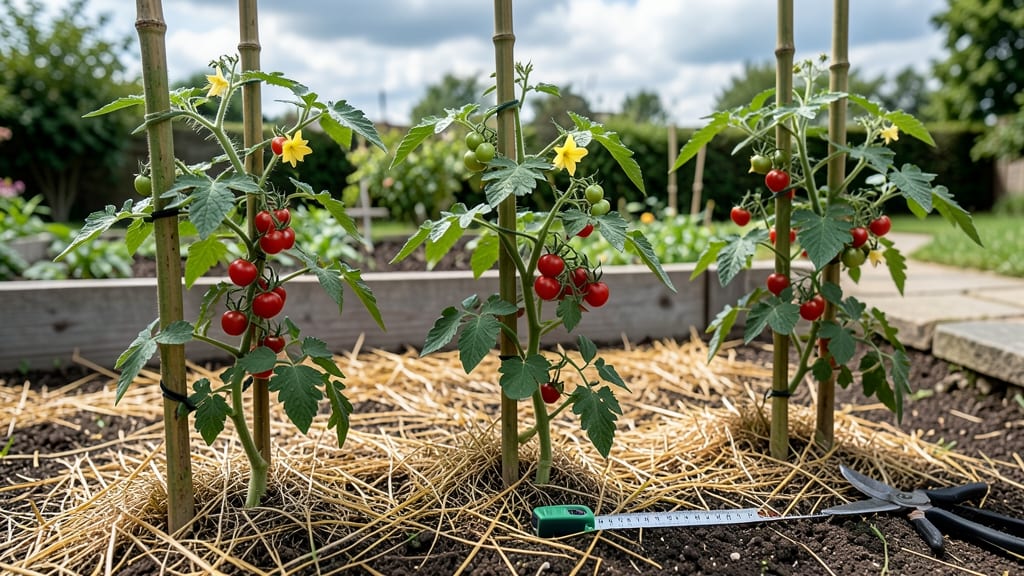
To determine how many cherry tomato plants per person you need, plan for 2 to 4 plants for a family of four, assuming each plant yields 10-15 pounds of fruit and accounting for moderate fresh consumption. Space them 18-24 inches apart to ensure proper airflow and maximize your garden's productivity.
This range accounts for the fact that cherry tomatoes are prolific producers, often yielding more fruit than you might expect. 🌱 A single healthy plant can easily produce 15-20 pounds of fruit in a season, which is why even a small family of four might only need 2-3 plants if they're primarily using the tomatoes for salads or snacks.
The spacing recommendation isn't just about giving roots room to spread—it's also critical for preventing disease by improving air circulation around the foliage. I've found that container gardens can work well with this spacing too, using 5-gallon pots for each plant to maintain similar growing conditions.
What's interesting is how variety plays into this calculation. Some cherry tomato types, like Sweet 100, produce more uniformly sized fruit, while others like Sun Gold yield fewer but larger, sweeter tomatoes.
Your personal preference and how you plan to use the tomatoes will influence how many plants you ultimately need. For example, if you're making sauces that require more volume, you might want to lean toward the higher end of the plant count.
💡 In This Article
- Calculating Cherry Tomato Yield per Plant and Garden Space
- Best Cherry Tomato Varieties for High Yield and Compact Growth
Calculating cherry tomato yield per plant and garden space
Cherry tomato plants are surprisingly productive, with a single healthy plant capable of yielding 10-15 pounds of fruit per season under ideal conditions. This translates to roughly 500-750 individual tomatoes (assuming an average weight of 0.5 ounces per cherry tomato).
The yield varies based on variety, with some like Sweet 100 producing more uniformly sized fruit, while others like Sun Gold yield fewer but larger, sweeter tomatoes. 🌿 The key factor here is the plant's ability to convert sunlight into energy through photosynthesis, which directly impacts fruit production.
Sunlight exposure is critical—cherry tomatoes thrive with 6-8 hours of direct sunlight daily. Inadequate light reduces photosynthesis efficiency, leading to fewer flowers and fruit. Soil quality also plays a role: well-draining, nutrient-rich soil with a pH of 6.0-6.8 ensures optimal root development and nutrient uptake.
For example, a plant in fertile, loamy soil with consistent moisture can produce 20-30% more than one in poor or compacted soil. Proper spacing of 18-24 inches apart isn't just about root competition—it's essential for air circulation, which reduces humidity around the foliage and minimizes fungal diseases like early blight.
Garden layout significantly impacts yield efficiency. In a 4x8-foot raised bed, you can fit 8-10 plants spaced 18 inches apart, producing 80-150 pounds of tomatoes in a season. For container gardens, using 5-gallon pots (one plant per pot) mimics ground conditions, ensuring similar yields.
What most gardeners don't realize is that overcrowding reduces airflow, leading to higher humidity and increased disease risk. This is why even small gardens benefit from proper spacing—it maximizes both yield and plant health. 🌱
Temperature also affects production. Cherry tomatoes grow best in daytime temperatures of 70-85°F, with nighttime temps above 55°F. Below 55°F, flowering slows, and fruit may fail to set.
In cooler climates, using black plastic mulch can raise soil temperatures by 5-10°F, extending the growing season and boosting yields. Additionally, consistent watering (1-1.5 inches per week) prevents blossom-end rot and ensures steady fruit development.
Drip irrigation is ideal as it delivers water directly to the roots without wetting the foliage, further reducing disease risk.
Consider these key factors when estimating your needs:
- Variety: Some produce more fruit but smaller in size (e.g., Tiny Tim), while others yield fewer but larger tomatoes (e.g., Sun Gold).
- Growing Conditions: Urban gardens with limited sunlight may need fewer plants, while rural areas with full sun can support more.
- Usage: If you're making sauces, you'll need more volume than for fresh eating or salads.
For a family of four, starting with 2-3 plants is a safe bet for fresh consumption, but if you're canning or preserving, 4-5 plants ensure you have enough for a full season's harvest.
The beauty of cherry tomatoes is their versatility—they're easy to grow, prolific, and adaptable to various garden setups. 💫