
How To
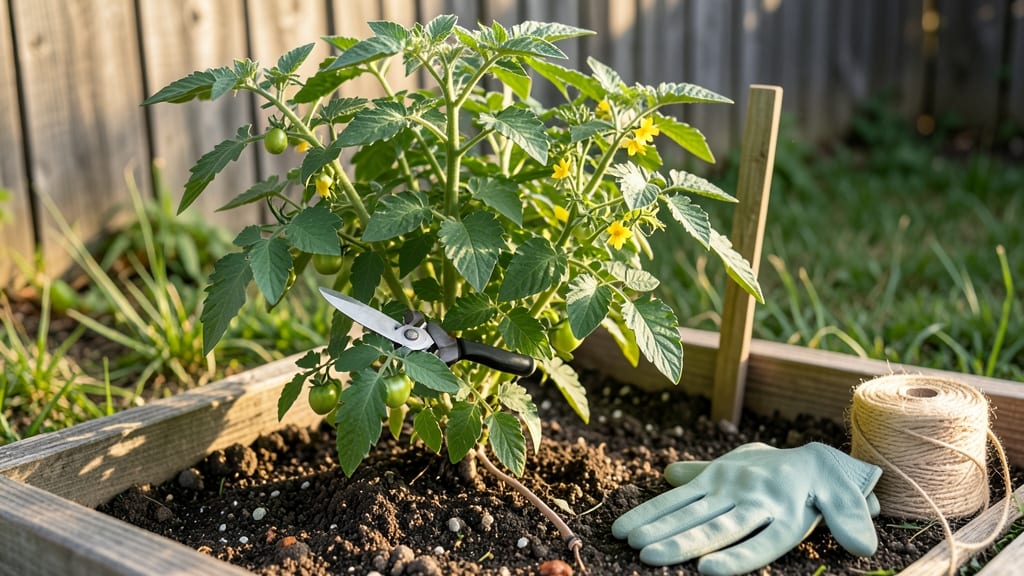
Pruning cherry tomato plants can double your harvest when done right. 🌱 I’ve gone from scraggly vines to buckets of sweet fruit by mastering just two simple techniques—removing suckers and trimming lower leaves—both of which most gardeners skip.
The difference between a handful of tomatoes and a overflowing basket often comes down to these few minutes of work.
Start by grabbing sharp pruning shears and a small bucket for trimmings. For indeterminate varieties, pinch off suckers (those little shoots in the leaf axils) weekly to direct energy upward. For determinate types, focus on removing only the lowest leaves to improve airflow and prevent disease.
The key is consistency—spend 10 minutes every few days and watch your plants reward you with heavier clusters of fruit.
📚 In This Guide
- What you need
- Instructions
- Tips and common mistakes
- Wrapping up and next steps
What you need
- ● Sharp pruning shears or scissors – Choose bypass pruners (not anvil-type) for cleaner cuts. Look for 4-6 inch blades with ergonomic handles for comfort.
- ● Gloves – Opt for gardening gloves with tactile grip to protect against thorns and dirt (e.g., Cooper or Fellex brands).
- ● Disinfectant (rubbing alcohol or bleach solution) – Mix 1 part bleach to 9 parts water to sterilize tools between cuts and prevent disease spread.
- ● Garden twine or plant ties – 3-4 feet per plant of 1/8-inch twine to support indeterminate varieties after pruning.
- ○ Small bucket or tray – For collecting pruned branches and debris (optional but handy!).
- ● Hand lens or magnifying glass – Helps spot pests or diseases on stems before pruning.
- ● Pruning saw – For thick, woody stems (rare in cherry tomatoes but useful for older plants).
- ● Garden spray bottle with water – Keeps tools clean and reduces dust while working.
- ● Plant growth regulator (e.g., Seaweed extract) – Apply post-pruning to indeterminate varieties to encourage bushier growth.
Step-by-Step instructions for pruning cherry tomato plants
Mastering pruning transforms your cherry tomatoes from scraggly to productive—here's how I do it for both bushy and vining types.
✂️ Step 1: Identify Plant Type and Pruning Needs
Determinate (bush) cherry tomatoes don't need pruning—they grow in compact shapes and produce all fruit at once. Focus on air circulation instead: remove any suckers that form in the leaf axils (the V-shaped junctions where stems meet leaves) to prevent disease. For indeterminate (vining) types, pruning is essential to direct energy to fruit production.
Start by examining your plants at the base. Indeterminate varieties will have continuous vines, while determinate plants will stop growing after flowering. If your plant keeps growing beyond its first flower cluster, it's indeterminate and ready for pruning. Use clean, sharp pruners to avoid damaging stems.
🌿 Step 2: Prune Indeterminate Plants for Maximum Fruit
For indeterminate cherry tomatoes, remove suckers (the small shoots growing between the main stem and branches) when they're about 2 inches long. These compete with fruit production. I prune suckers from the base using my thumb and forefinger—no need for shears. Leave the top two leaves on the main stem above each flower cluster to support photosynthesis.
Watch for the plant's natural growth pattern: the main stem grows upward, while branches grow outward. Prune branches that grow downward or cross over others. This prevents shading and improves air flow. Prune in the morning so wounds have time to heal before evening moisture sets in.
🌱 Step 3: Support and Train the Plant
Use the 4 tomato cages or bamboo stakes to support indeterminate plants as they grow. Tie the main stem to the stake or cage with soft plant ties or strips of old T-shirt fabric every 12-18 inches. This prevents breakage from wind or fruit weight. For determinate plants, place cages at planting time—they won't need additional support.
As the plant grows, gently weave side branches through the cage or stake to encourage upward growth. This creates a sturdy framework that holds fruit without snapping. If you notice leaves touching the ground, trim them immediately to prevent soil-borne diseases from spreading upward.
⏰ Step 4: Prune for Air Circulation and Disease Prevention
Remove any leaves that grow below the first flower cluster—these block sunlight and air from reaching lower fruit. Trim leaves that show signs of disease (yellowing, spots, or wilting) using sterilized pruners. Dip blades in rubbing alcohol between cuts to prevent spreading pathogens. Prune during dry weather to minimize disease risk.
For both determinate and indeterminate plants, focus on maintaining an open canopy. You'll know you're doing well when you can see sunlight reaching all parts of the plant and air can flow freely through the branches. This reduces humidity buildup where fungal diseases thrive.
☀️ Step 5: Adjust Pruning as the Season Progresses
As the plant matures, shift focus to fruit production. For indeterminate varieties, stop pruning suckers once the plant reaches the top of your support structure. This allows the plant to focus energy on ripening existing fruit rather than growing more vegetation. For determinate plants, no further pruning is needed after the initial setup.
Monitor your plants weekly for new suckers or overcrowded branches. Prune during the early morning when plants are turgid (full of water) and temperatures are cooler. This reduces stress on the plant. By late summer, indeterminate plants will naturally slow growth—this is your cue to let them produce fruit until the first frost.
Tips & tricks for pruning cherry tomato plants
Pruning cherry tomatoes isn't rocket science, but these little tricks make all the difference between a scraggly plant and a fruit-loaded powerhouse.
Timing is Everything: I can't stress enough how important morning pruning is. When you trim in the early hours, the wounds have all day to heal before evening moisture rolls in. This simple habit cuts down on disease risk dramatically. And always use clean, sharp pruners—dull blades crush stems instead of making clean cuts. For those stubborn suckers that are hard to reach, I've found that pinching them off between my thumb and forefinger works just as well as shears.
The Two-Leaf Rule: In Step 2, when you're removing suckers, remember to leave the top two leaves above each flower cluster. These leaves are the plant's powerhouses—they capture sunlight and convert it into energy for fruit production. I learned this the hard way after over-pruning and wondering why my tomatoes weren't ripening. Think of these leaves as your plant's solar panels.
Support System Check: For indeterminate plants, those 4 tomato cages or bamboo stakes in Step 3 are non-negotiable. I've seen plants collapse under their own fruit weight when not properly supported. When tying the main stem every 12-18 inches, use soft materials like old T-shirt strips—they're gentle on stems and won't cut into them as the plant grows. And here's a pro move: weave those side branches through the cage as they grow. It creates a natural trellis that holds fruit without needing extra ties.
Disease Prevention: That rubbing alcohol dip for your pruners in Step 4 is your secret weapon against fungal diseases. I keep a small bottle right by my gardening tools and dip blades between every cut. It's a 10-second habit that prevents weeks of frustration. Also, watch for those leaves touching the ground—they're ground zero for soil-borne diseases. Trim them immediately, even if they look healthy. Prevention is always easier than cure in the garden.
Pro Tips for Prune Cherry Tomato Plants
- Pruning cherry tomatoes isn't rocket science, but these little tricks make all the difference between a scraggly plant and a fruit-loaded powerhouse.
- Timing is Everything: I can't stress enough how important morning pruning is.
- The Two-Leaf Rule: In Step 2, when you're removing suckers, remember to leave the top two leaves above each flower cluster.
Frequently asked questions
Got questions about pruning cherry tomato plants? You’re not alone! Here are some of the most common concerns—plus straightforward answers to keep your plants thriving.
Why should I prune cherry tomato plants at all?
Pruning improves air circulation, reduces disease risk, and directs energy toward fruit production. For indeterminate varieties, it also helps manage vine growth—so you get more (and bigger!) tomatoes. Determinate types need less pruning, but removing suckers can still boost yield and health.
When is the best time to prune cherry tomatoes?
Prune indeterminate plants weekly during the growing season (spring/summer), focusing on suckers (side shoots) that appear in leaf axils. For determinate types, minimal pruning is needed—just remove diseased or crowded stems early in the season. Avoid heavy pruning late in the year, as it can stress plants before harvest.
What if I skip pruning altogether?
Indeterminate varieties may become unruly, with fewer tomatoes and higher disease risk. Determinate types might still produce fruit but could be bushier and less productive. Pruning isn’t mandatory, but it’s a game-changer for maximizing yield and plant health—especially in small gardens or containers!
Can I prune cherry tomatoes too much?
Yes! Over-pruning removes too many leaves, reducing the plant’s ability to photosynthesize and support fruit. For indeterminate types, never remove more than 1/3 of the foliage. Leave lower leaves intact to support the plant, and avoid cutting into main stems. When in doubt, prune lightly and observe your plant’s response.
What do I do with the pruned branches?
Toss them in the compost bin (if disease-free) or use them as mulch around other plants. Avoid adding pruned branches to open compost piles if your tomatoes had signs of blight or pests—sterilize with heat or trash them instead to prevent spreading issues.
Wrapping up and next steps
Pruning your cherry tomato plants—whether determinate or indeterminate—is a game-changer for bigger yields and healthier vines! 🌱 By following the right techniques, you’ll encourage stronger growth, better airflow, and juicier tomatoes all season long.
Now that you’re armed with the know-how, grab those shears and get ready to transform your garden.
Ready to take it further? Experiment with training methods (like staking or caging) or try organic fertilizers to boost your harvest even more. Happy pruning—your future tomato feasts are waiting! 🍅✨