
Companion Plants
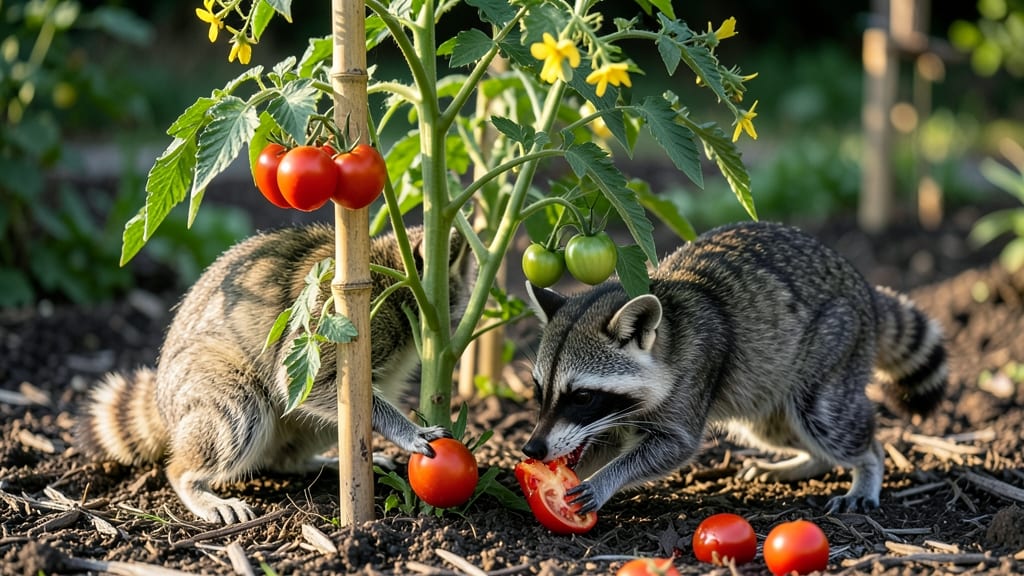
Racoons eat tomato plants voraciously, feasting on ripe fruit, tender leaves, and even stems for their juicy sweetness, particularly under cover of night when garden activity is at its quietest. Their relentless foraging can strip plants bare and leave behind telltale claw marks and scattered debris.
Raccoons are drawn to tomato gardens primarily because of the plants' high sugar content, which makes them irresistible snacks. 🌱 These nocturnal creatures also have dexterous paws that allow them to easily pluck ripe tomatoes and tear through foliage.
Their intelligence means they quickly learn which gardens offer the easiest meals, especially if they've encountered human food sources nearby.
Beyond the fruit, raccoons often dig around tomato plants, disturbing roots and creating pathways that invite pests. The damage isn't just cosmetic—it can reduce yields by up to 70% in severe cases.
Understanding their behavior is key to protecting your harvest, as their feeding patterns are tied to both hunger and curiosity.
💡 In This Article
- Why Racoons Target Tomato Plants in Gardens
- Effective Raccoon-Proofing Strategies for Tomato Gardens
Why racoons target tomato plants in gardens
Raccoons are drawn to tomato plants because of their high sugar content—ripe tomatoes can contain up to 5% natural sugars, making them a sweet, moisture-rich treat. 🌱 The flesh of a tomato is particularly appealing because it's soft, juicy, and easy to digest, providing quick energy for these opportunistic foragers.
Unlike many garden pests that target specific parts of a plant, raccoons go after the whole package: fruit, leaves, and even stems, often leaving behind a messy trail of chewed debris and scattered seeds.
The nocturnal nature of raccoons plays a major role in their garden raids. These creatures are most active between dusk and dawn, when cooler temperatures and darkness reduce human interference.
Their dexterous front paws—equipped with five digits and opposable thumbs—allow them to easily pluck tomatoes from vines or tear through foliage with precision. This physical adaptability, combined with their sharp teeth, makes them formidable opponents for unprotected tomato plants.
Raccoons are also highly intelligent and have excellent memories.
If they discover a garden with ripe tomatoes, they'll return repeatedly, often teaching other raccoons in their social groups about the food source. 🦝 This "information sharing" can turn a single garden into a hotspot for multiple raids, especially if the raccoons have previously encountered human food sources like pet food or unsecured trash cans nearby.
Their curiosity and problem-solving skills mean they'll quickly learn how to bypass simple deterrents, like shallow fencing or flimsy netting.
The ecological side of this behavior is fascinating too. In the wild, raccoons primarily eat insects, fruits, and small vertebrates, but their diet becomes more opportunistic in urban and suburban areas where gardens provide easy access to high-calorie foods.
Tomato plants, with their abundant fruit and tender leaves, offer a nearly all-in-one meal—something raccoons are quick to exploit. Their foraging isn't just about hunger; it's also tied to territorial behavior, as they mark their feeding grounds with scent and activity.
What makes this even more frustrating for gardeners is how raccoons adapt their techniques based on the plant's growth stage.
Early in the season, they might focus on young leaves and stems, while later they'll zero in on ripe fruit. 🍅 Their digging habits also contribute to the problem, as they often uproot plants or create pathways that invite other pests like rodents or insects.
Understanding these patterns is the first step in developing effective strategies to protect your tomato harvest.
One often-overlooked factor is the role of scent. Raccoons have an incredibly keen sense of smell, which they use to locate food sources from great distances.
A single ripe tomato left on the ground—or even the scent of overripe fruit—can attract them to your garden long before they actually see it. This is why removing fallen fruit promptly and using scent-based repellents can be so effective in deterring them.