
Companion Plants
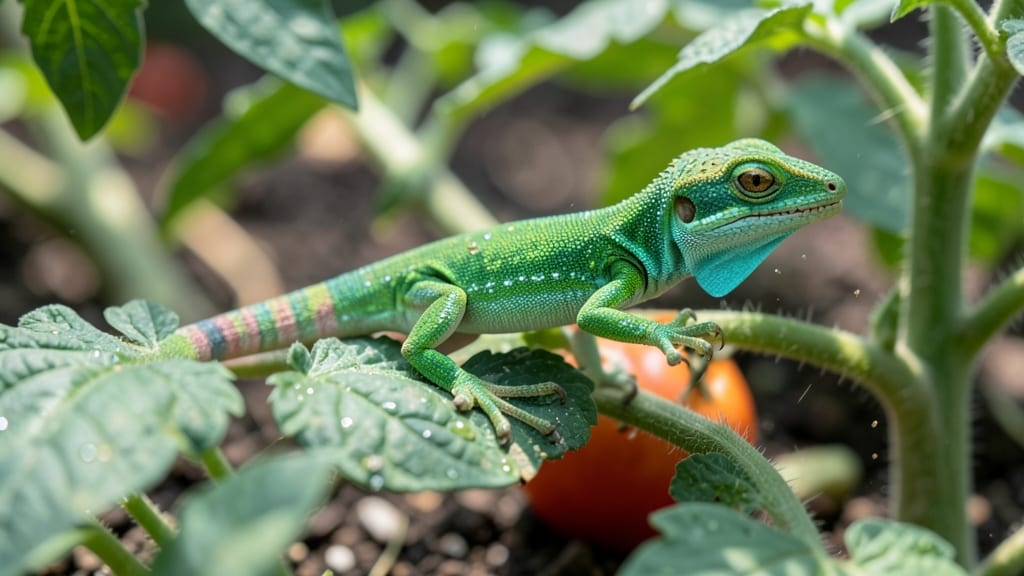
Lizards don't eat tomato plants, but they help gardens by hunting pests like aphids, spider mites, and beetles that damage tomato leaves and fruit. Their natural pest control makes them valuable allies in tomato-growing areas.
Lizards focus on small, mobile insects rather than plant material, making them excellent garden predators. 🦎 They target pests that chew tomato leaves or lay eggs in fruit, reducing damage without harming the plants themselves.
Studies show lizards can cut down on garden pests by up to 30% when given proper habitat, proving their worth in organic pest management systems.
While they won't nibble your tomatoes, their presence means fewer aphid colonies or cucumber beetles—common tomato threats. The key is creating a lizard-friendly environment with rocks, mulch, and shallow water sources to keep them around longer.
💡 In This Article
- How Lizards Contribute to Tomato Garden Pest Control
- Encouraging Lizards in Your Tomato Garden Naturally
How lizards contribute to tomato garden pest control
The ecological role of lizards in tomato gardens is rooted in their specialized diet. Unlike herbivores, lizards are insectivores, meaning they primarily consume small, fast-moving insects rather than plant material. Their diet includes aphids, spider mites, caterpillars, and beetles—all of which are common tomato pests.
For example, a single anole lizard can eat up to 100 insects per day, significantly reducing pest populations that would otherwise damage tomato leaves or fruit.
Lizards target pests through a process called active foraging, where they hunt by sight and movement. Their sharp vision detects insects on tomato plants, and their quick reflexes allow them to strike with precision.
Studies in agricultural ecosystems show that lizards can reduce garden pest populations by 20-30% when given suitable habitat. This predation is particularly effective against soft-bodied insects like aphids, which lizards consume in large quantities to meet their protein needs.
The impact of lizards extends beyond just reducing pest numbers—their presence also disrupts insect life cycles. By preying on larvae and eggs, lizards prevent future generations of pests from emerging. For instance, a lizard feeding on tomato hornworm eggs (a major tomato threat) can save an entire plant from defoliation.
This indirect protection allows tomato plants to grow stronger and produce healthier fruit without chemical interventions.
Lizards also play a role in maintaining ecological balance. Their predation helps control outbreaks of specific pests, preventing them from becoming dominant in the garden. Unlike broad-spectrum pesticides, which kill beneficial insects alongside pests, lizards offer targeted control.
This selective approach preserves the garden's natural biodiversity while keeping tomato plants thriving.
For gardeners, understanding this dynamic means recognizing lizards as allies rather than nuisances. Their presence indicates a healthy ecosystem where pests are naturally kept in check. However, their effectiveness depends on providing the right conditions—such as shelter, food sources, and water—to encourage them to stay and hunt in the garden.
In summary, lizards don't eat tomato plants, but their hunting habits create a ripple effect of benefits. By focusing on pests that directly threaten tomatoes, they become an essential part of organic pest management. 🌿