
Plants
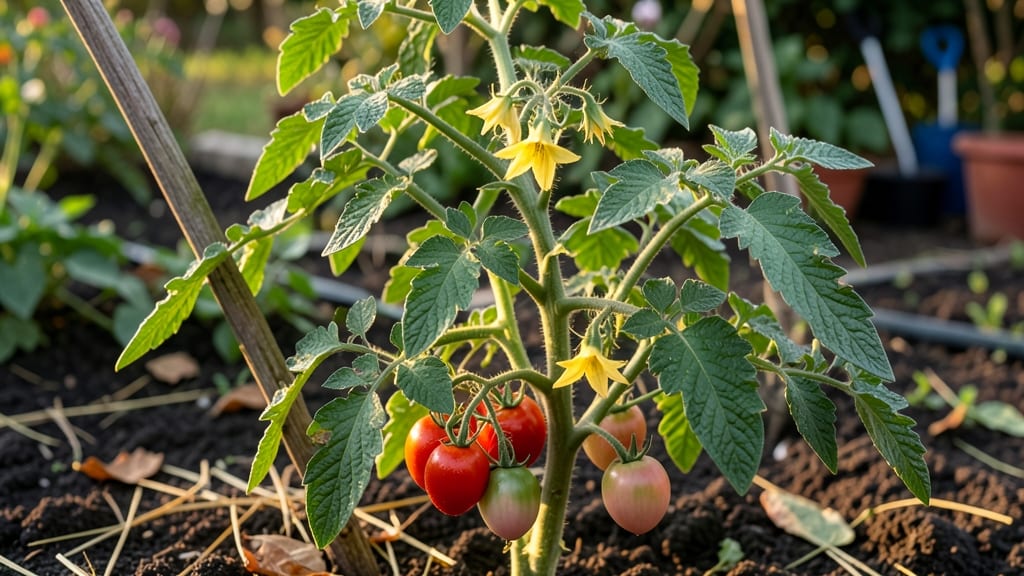
Tomato plants are bad for dogs because their leaves, stems, and unripe fruit contain solanine and tomatine—natural toxins that trigger vomiting, diarrhea, and lethargy. While fully ripe red tomatoes are less toxic, they still carry mild risks in large amounts, and green parts should never be fed.
Tomato plants are bad for dogs because their green parts contain higher concentrations of solanine and tomatine, compounds that act as natural pesticides in the plant. 🌱 Even small exposures can cause digestive upset in dogs, with symptoms like drooling, weakness, or loss of appetite appearing within hours.
The good news? Ripe tomatoes in moderation are generally safe, but it's best to avoid feeding them as treats—especially the stems and leaves, which are far more hazardous.
If you're concerned about your dog's safety around tomato plants, consider creating a designated pet-friendly garden area with non-toxic alternatives like basil, sunflowers, or marigolds. These plants not only add beauty to your yard but also provide safe options for your furry friends to explore without worry.
💡 In This Article
- Toxic Components in Tomato Plants and Their Effects on Dogs
- Safe Garden Alternatives to Tomato Plants for Dog-Friendly Yards
Toxic components in tomato plants and their effects on dogs
Tomato plants produce two key toxins: solanine and tomatine, both belonging to the glycoalkaloid family. These compounds act as natural insect repellents and protect the plant from predators. Solanine levels peak in the green parts—leaves, stems, and unripe fruit—where concentrations can reach 0.001-0.01% of the plant's dry weight.
For comparison, that's roughly 10-100 times more concentrated than in ripe red tomatoes, which contain trace amounts.
The physiological impact on dogs begins with digestive irritation. When ingested, these toxins disrupt the gastrointestinal lining, triggering acute vomiting within 2-12 hours of exposure.
Larger dogs may show mild symptoms like drooling or lethargy, while smaller breeds (under 20 lbs) can experience severe diarrhea or even neurological signs like tremors or weakness.
The severity correlates with both the toxin dose and the dog's size—10 lbs of tomato leaves could be lethal to a 10-lb Chihuahua, while a 50-lb Labrador might only show mild discomfort.
What makes this particularly dangerous is how quickly symptoms escalate.
Unlike some plant toxins that require hours to manifest, solanine's effects appear within minutes to hours. 🌿 The plant's green parts are especially risky because dogs are naturally drawn to their strong, bitter scent—a chemical defense mechanism that masks the toxin's presence.
Even a single stem chewed by a curious pup can cause distress, making prevention critical in homes with both tomato plants and pets.
Ripe tomatoes, while safer, still contain 0.0001-0.0005% tomatine, which can cause mild stomach upset if consumed in large quantities (e.g., an entire 8-oz tomato at once). The key difference is that ripe fruit's cell walls break down during ripening, reducing toxin accessibility.
However, the stems and leaves remain equally hazardous regardless of the tomato's ripeness—this is why gardeners with pets should always remove these parts promptly.
Breed-specific vulnerabilities also play a role. Brachycephalic breeds (e.g., Bulldogs, Pugs) are more prone to respiratory distress from vomiting, while toy breeds have less reserve capacity to handle toxin exposure.
The American Society for the Prevention of Cruelty to Animals (ASPCA) classifies tomato plants as moderately toxic, emphasizing that immediate veterinary care is needed for severe symptoms like abdominal pain or dilated pupils—signs of systemic toxin absorption.
To put this into perspective, imagine your dog nibbling on a 1-inch stem while you're gardening. Within 30 minutes, you might notice your usually energetic pup suddenly lying down, panting heavily, or pawing at their mouth.
This isn't just an upset stomach—it's a clear warning sign that the toxins are already taking effect. 🚨 The good news? Early intervention with activated charcoal (administered by a vet) can significantly reduce absorption and mitigate symptoms.