
Container Gardens
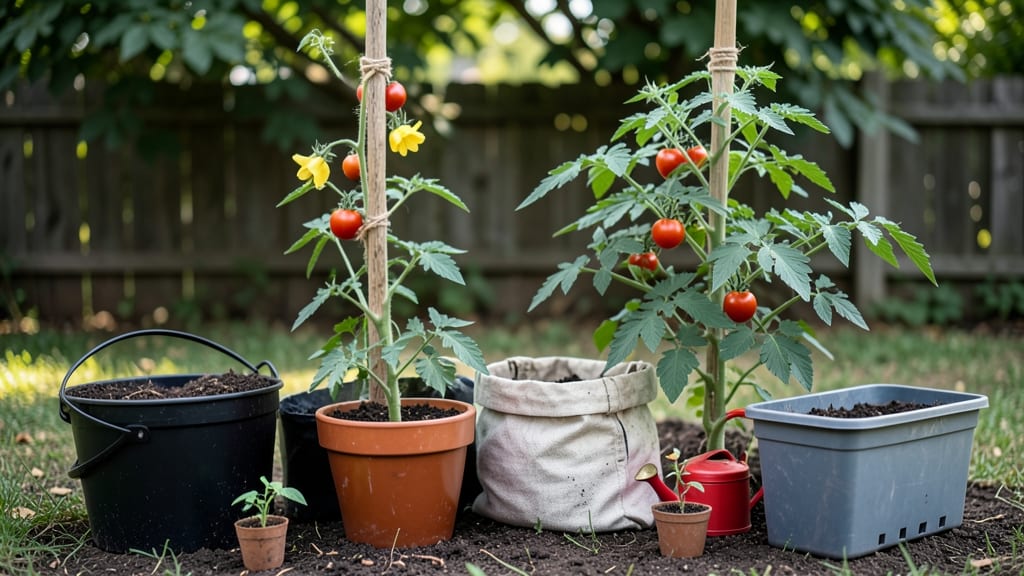
The size container for tomato plant depends on the variety: dwarf tomatoes thrive in at least 5-gallon pots (12 inches deep), while indeterminate varieties need 10+ gallons (18+ inches deep) for strong root growth and maximum yield. Bush types do well in 3-5 gallon containers (10-12 inches deep).
Container size directly impacts how well your tomato plants grow—root space determines nutrient absorption and overall plant health. 🌱 Indeterminate varieties, which grow continuously, need deeper containers because their roots spread extensively downward. Dwarf varieties, while compact, still require enough room to prevent root binding, which can stunt growth.
I always recommend adding a layer of compost or organic matter to smaller containers to boost nutrient availability and retain moisture.
For urban gardeners or those with limited space, consider fabric grow bags or stackable pots—they provide excellent drainage while maximizing vertical growth. Just ensure any container has drainage holes to prevent waterlogging, which can lead to root rot.
The key is balancing root space with your growing conditions, whether you're on a balcony or in a backyard.
💡 In This Article
- Root Space Requirements for Different Tomato Varieties
- Choosing the Best Tomato Planters for Small Spaces
Root space requirements for different tomato varieties
Tomato roots grow in predictable patterns based on the plant's genetic makeup. Determinate (bush) varieties develop a compact root system that stays within a 12-inch radius and 12-inch depth, which is why they thrive in 3-5 gallon containers.
Their roots absorb nutrients quickly, making them ideal for smaller spaces. Indeterminate (vining) varieties, however, send roots 36+ inches deep and spread laterally, demanding 10+ gallons of soil to support their continuous growth and heavy fruit load.
The science behind this lies in oxygen availability and nutrient distribution. Roots need 1 cubic foot of soil per plant to access sufficient oxygen for respiration and water for nutrient uptake.
A 5-gallon pot holds about 0.25 cubic feet, while a 15-gallon container provides 0.5 cubic feet—enough for indeterminate varieties to flourish. Smaller containers force roots to compete aggressively for resources, often leading to stunted growth or blossom end rot.
Consider this real-world example: A Cherry Tomato (determinate) in a 3-gallon pot might produce 5-8 oz of fruit, while the same variety in a 5-gallon pot could yield 12-16 oz.
An Indeterminate Beefsteak in a 5-gallon pot may struggle to produce more than 2-3 lbs of tomatoes, whereas in a 15-gallon container, it can reach 10+ lbs—a 5x increase in yield. The deeper the roots, the more water and nutrients they can access, directly impacting fruit production.
Soil type also plays a critical role. In lightweight potting mixes, roots need more volume to spread compared to dense garden soil.
For instance, a 5-gallon pot filled with standard potting mix provides ~1 cubic foot of root space when packed properly, but if the mix is too airy, roots may not develop as robustly. Adding compost or worm castings can enhance nutrient density, allowing smaller containers to support slightly larger plants.
Another key factor is the plant's growth habit. Indeterminate varieties like Brandywine or Sungold produce fruit continuously throughout the season, requiring steady nutrient replenishment. Their roots need to explore more soil volume to sustain this growth.
Determinate varieties like Roma or Celebrity produce fruit in one flush, so their root systems don't need to be as extensive—but they still benefit from adequate space to prevent root binding.
What most gardeners overlook is how container shape affects root growth. Wide, shallow containers encourage lateral root spread, while deep, narrow pots promote downward growth. For indeterminate varieties, a 12-inch diameter pot with 18+ inches of depth is ideal because it balances both horizontal and vertical root expansion.
This shape mimics natural soil conditions, allowing roots to explore more volume without becoming root-bound.