
Plants
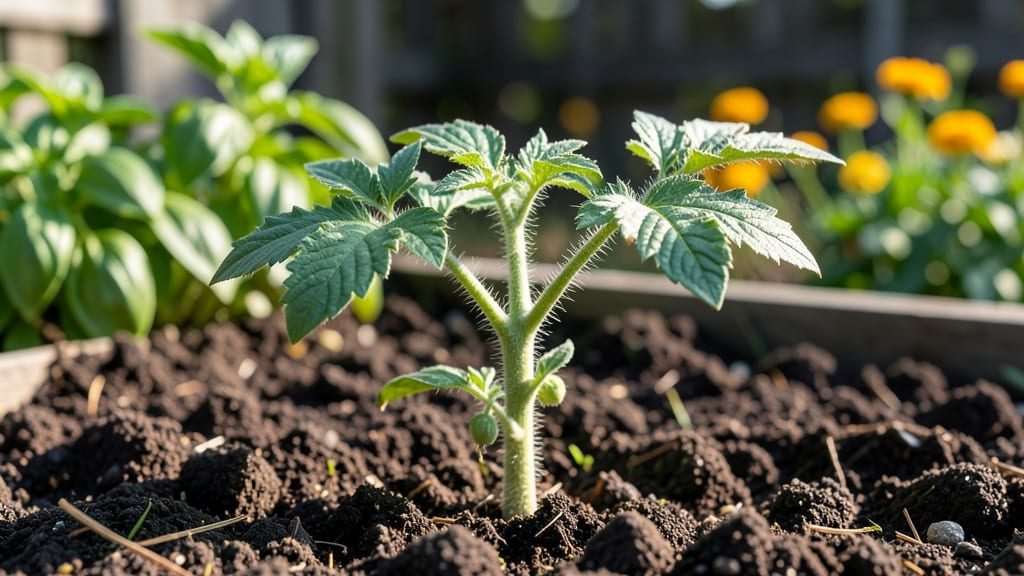
Tomato seedlings look like tiny green sprouts with two small oval seed leaves (cotyledons) at first. Within 1-2 weeks, their first true leaves emerge as jagged-edged foliage that mimics miniature tomato plants, often with a slightly fuzzy appearance.
Tomato seedlings go through two distinct visual phases that reveal their identity. 🌱 The initial pair of cotyledons are simple, round leaves that appear almost immediately after germination.
These give way to the serrated, jagged-edged true leaves that define tomato plants, which develop within two weeks and resemble miniature versions of mature foliage. The fuzzy texture on young leaves helps distinguish them from weeds or other seedlings, while the deep vein patterns become more pronounced as they grow.
What makes these early stages so important is how they predict plant health. Healthy seedlings develop vibrant green leaves with firm stems, while weak or diseased seedlings may show yellowing, curling, or irregular patterns.
I always check for these visual cues when transplanting to ensure I'm moving strong, viable plants that will thrive in my garden.
💡 In This Article
- Identifying Tomato Seedling Stages by Leaf Shape
- Common Mistakes When Recognizing Tomato Seedlings
Identifying tomato seedling stages by leaf shape
The very first leaves you'll spot on tomato seedlings are the cotyledons—those tiny, oval-shaped seed leaves that appear just after germination. These aren't true leaves at all but rather the plant's first food source, packed with nutrients from the seed.
They typically measure around 0.25 to 0.5 inches wide and have a smooth, almost waxy surface that helps conserve moisture in the soil. What's fascinating is how these cotyledons emerge in pairs, positioned opposite each other on the stem, creating a symmetrical look that's unique to many plant species.
About 7-14 days after germination, the real transformation begins when the first true leaves push through. These are instantly recognizable by their deeply serrated edges and more complex vein patterns compared to the simple cotyledons.
The serrations look like tiny, jagged teeth along the leaf margins, which helps increase surface area for photosynthesis. Under magnification, you can see tiny hairs or a slightly fuzzy texture on these young leaves—this isn't just for show but helps protect against pests and retain moisture in dry conditions.
The leaves also develop a more pronounced central vein with secondary veins branching out at 45-60 degree angles, creating a web-like pattern.
What's often overlooked is how the leaf shape changes predictably as the seedling grows. Early true leaves might appear more rounded with gentle serrations, while later leaves become more elongated with sharper teeth.
This progression is your built-in quality check—if you notice leaves developing irregularly (like sudden curling or yellowing), it could signal problems like damping-off disease or nutrient deficiencies. I always compare my seedlings to reference images of healthy tomato plants at each growth stage to catch issues early.
The transition from cotyledons to true leaves also marks when the seedling starts producing its own food through photosynthesis. Before this point, the plant relies entirely on the seed's stored energy.
Once those first true leaves appear, you'll notice the stem thickening and developing more rigidity—a clear sign the plant is shifting into its growth phase. The timing of this transition can vary based on temperature: seedlings grown at 70-75°F typically develop true leaves faster than those in cooler conditions.
Here's a quick visual guide to help you identify each stage:
- Cotyledon Stage: Two smooth, oval leaves (0.25-0.5 inches) appearing immediately after germination
- First True Leaves: Serrated edges with fuzzy texture, appearing 7-14 days after germination
- Mature Seedling Leaves: More elongated with sharper serrations, developing 2-3 weeks after true leaves emerge
Paying attention to these visual cues helps you determine if your seedlings are healthy and ready for transplanting. The more you observe these patterns, the easier it becomes to spot when something's amiss—like leaves that appear too pale (possible nitrogen deficiency) or develop dark spots (fungal infection). 🌱