
Light Requirements
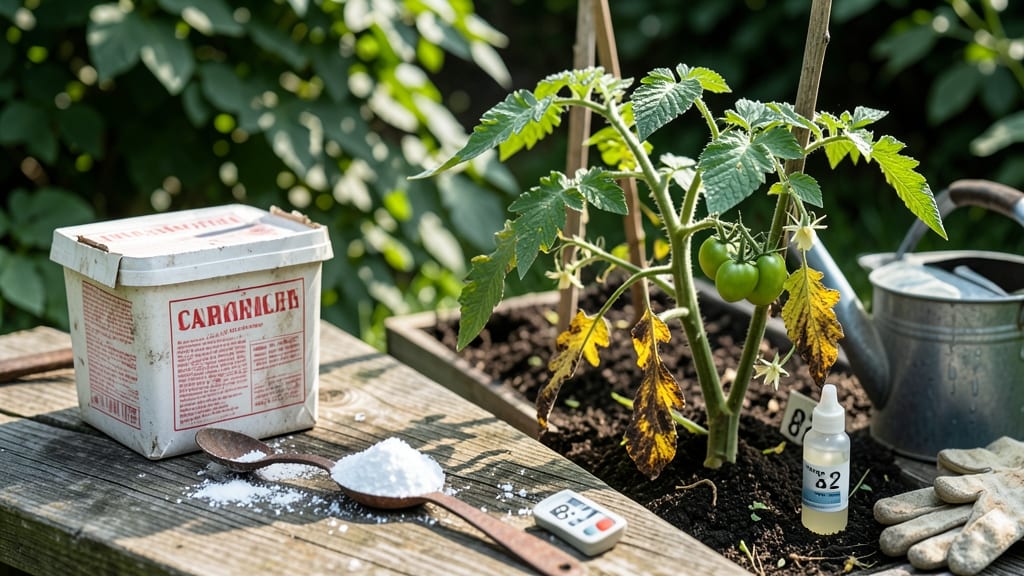
When too much baking soda on tomato plants turns leaves crispy and yellow, don’t panic—this is fixable. 🌱 I’ve nursed back plants with identical problems by flushing the soil and balancing the pH, and you can too. The key is acting fast before the roots suffer permanent damage.
The problem isn’t just the baking soda itself—it’s the sudden pH spike that confuses your plants. Tomato roots prefer a slightly acidic soil (pH 6.0–6.8), and baking soda shoots that range into alkaline territory (7.0+), locking out essential nutrients like phosphorus and iron.
You’ll see yellowing between veins first, then brown edges that crisp like overcooked pasta.
Start by watering deeply with plain water for 3–5 days to dilute the excess. Then, mix 1 part vinegar to 10 parts water and apply it slowly to the soil—this gently lowers pH without shocking the plants.
Within 7–10 days, new growth should emerge with a healthier green color, and the soil will start returning to balance.
Prevent future mishaps by testing soil pH first (kits cost $5 at garden centers) and sticking to 1 teaspoon baking soda per gallon of water—no more. For organic control, switch to neem oil or insecticidal soap instead. Your tomatoes will bounce back stronger than ever.
Root Causes of Overdoing Baking Soda
Baking soda (sodium bicarbonate) is a popular garden remedy for adjusting soil pH and combating fungal diseases, but using too much can backfire spectacularly on your tomato plants. Understanding why this happens helps you avoid future mistakes—and saves your harvest. Here are the key reasons behind the problem:
Tomatoes thrive in slightly acidic soil, ideally with a pH between 6.0 and 6.8. Baking soda is alkaline (pH ~8.3), so while it can raise soil pH to fight acidity, too much shifts the balance too far in the opposite direction.
- Nutrient Lockout: In overly alkaline soil, essential nutrients like iron, manganese, and phosphorus become unavailable to plant roots. This causes yellowing leaves (chlorosis), stunted growth, and poor fruiting—even if the soil looks "fertile."
- Root Stress: High pH disrupts the rhizosphere (the microbial ecosystem around roots), reducing beneficial bacteria that help absorb nutrients. Roots may shrink or turn brown as they struggle to function.
Pro Tip: Test your soil’s pH with a meter or kit before adding baking soda. If your soil is already neutral or alkaline, skip it entirely—opt for sulfur or peat moss to lower pH instead.
Baking soda dissolves into sodium and bicarbonate ions in water. While sodium itself isn’t toxic in small doses, excessive use leads to salt accumulation in the soil. This creates two major issues:
1. Osmotic Stress: High salt concentrations draw water out of plant cells via osmosis, causing:
- Wilted, crispy leaf edges 🌿
- Blistered or scalded foliage (like a chemical burn)
- Slowed or halted growth
2. Soil Compaction: Sodium ions displace calcium and magnesium in soil particles, leading to:
- Hardened, clay-like soil that repels water
- Poor aeration, which strangles roots
Pro Tip: If you suspect salt buildup, flush the soil with 5–10 gallons of water per plant to leach out excess sodium. Avoid fertilizing immediately after—wait until the soil dries slightly.
Baking soda is often used to prevent fungal diseases like powdery mildew or early blight. However, overuse can kill beneficial microbes that keep pathogens in check, creating a vicious cycle:
- Good Bacteria Die Off: Soil microbes like mycorrhizae and nitrogen-fixers are sensitive to high pH and salt. Their death weakens the plant’s natural defenses.
- Fungi Adapt: Some pathogens (e.g., Phytophthora) thrive in alkaline conditions. A baking-soda "cure" might temporarily mask symptoms but worsen the root problem long-term.
- Secondary Infections: Stressed plants are more vulnerable to pests like spider mites or aphids, which further drain the plant.
Pro Tip: For fungal issues, use baking soda sparingly (1 tsp per gallon of water, max 2–3 times/season). Pair it with neem oil or copper fungicide for broader protection. Never apply it when plants are already wilting or diseased.
By recognizing these root causes, you can diagnose the damage and take targeted corrective action—before your tomato plants hit the brink. Stay tuned for our next section on emergency recovery steps!
Fixing Over-Treated Tomato Plants Safely
Now that you’ve identified the signs of baking soda overuse—yellowing leaves, stunted growth, or even browning edges—it’s time to act. The good news? Tomato plants are resilient, and with the right steps, you can help them bounce back.
Below are targeted solutions based on the most common causes of overuse, along with prevention tips to keep your plants thriving.
Problem: Baking soda raises soil pH, and tomatoes prefer a slightly acidic range (6.0–6.8). If your soil tested too alkaline (above 7.0), your plants are struggling to absorb nutrients like iron, manganese, and phosphorus.
🔥 How to Lower pH Quickly
- Flush the Soil with Water - Water the plant deeply (about 1–2 inches of water) to help dilute the excess baking soda.
Repeat every 2–3 days for a week to gradually reduce alkalinity. - Pro tip: Use a hose with a gentle spray nozzle to avoid displacing soil around roots.
- Add Acidifying Amendments - Mix sulfur, peat moss, or pine needles into the top 6 inches of soil.
These organic materials slowly lower pH over time. - Dosage: Start with 1–2 tablespoons of sulfur per gallon of soil (follow package instructions). - Alternative: Use vinegar (acetic acid) as a last resort—dilute 1 tablespoon white vinegar per gallon of water and water the soil (not the leaves).
Test pH again after 3–5 days.
- Use Chelated Nutrients
- Since high pH locks out micronutrients, feed your plants with a chelated iron or manganese supplement (like iron sulfate or Sea90). Follow label rates for best results.
- Signs it’s working: New leaves should green up within 5–7 days.
Problem: Direct contact with baking soda (especially undiluted) can cause chemical burns on foliage, leading to crispy edges or yellow patches.
🍳 How to Soothe Affected Leaves
- Rinse Gently with Water - Use a soft cloth or sponge dipped in lukewarm water to wipe down burned leaves.
Avoid harsh scrubbing to prevent further damage. - For stubborn residue: Mix 1 teaspoon mild dish soap in a gallon of water and lightly mist the leaves (avoid over-wetting).
- Prune Damaged Foliage
- Snip off severely burned or yellow leaves with clean scissors to redirect the plant’s energy to healthy growth.
- When to stop: Leave at least 3–4 healthy leaves per stem to maintain photosynthesis.
- Boost Humidity Temporarily
- Place a shallow tray of water near the plant or use a humidifier to reduce stress. Tomatoes appreciate 40–60% humidity, especially in dry climates.
Problem: Overuse can disrupt nutrient uptake, leading to weak stems, dropped blossoms, or poor fruit set. Tomatoes need a balance of nitrogen, phosphorus, and potassium to thrive.
🎯 How to Restore Balance
- Fertilize with a Balanced Formula
- Switch to a 5-10-10 or 10-10-10 fertilizer (NPK ratio) to replenish nutrients. Use half-strength for the first application to avoid shock.
- Organic option: Compost tea or fish emulsion works well for recovery.
- Support the Plant Physically
- If stems weakened, stake or cage the plant immediately to prevent collapse. Use soft ties to avoid damaging the stem.
- Encourage New Growth
- Pinch off any new blossoms for 2–3 weeks to let the plant recover. This redirects energy to root and leaf growth.
- Once recovered: The plant will often produce a second flush of flowers with better fruit set.
- Test Soil Before Treating
- Use a soil pH test kit (digital or liquid) to check levels before adding baking soda. Tomatoes thrive at 6.0–6.8 pH—adjust with amendments if needed.
- Dilute Baking Soda Properly
- The safe rate is 1 teaspoon per gallon of water (or 1 tablespoon per 5 gallons). Never exceed this unless correcting severe fungal issues.
- Alternate with Other Fungicides
- Rotate between baking soda spray, neem oil, or copper fungicide to prevent resistance and reduce overuse risk.
- Monitor Weather Conditions
- Baking soda works best when humidity is high (e.g., after rain). Avoid spraying on hot, dry days to prevent leaf burn.
- Keep a Plant Journal
- Track when and how much baking soda you use, along with plant responses. This helps you adjust treatments for future seasons.
Final Note: Recovery time varies—some plants rebound in 1–2 weeks, while others may take 4–6 weeks, especially if roots were affected. Stay patient, and your tomatoes will thank you with juicy, vibrant fruit! 🍅✨
Frequently asked questions
How quickly will my tomato plants show signs of baking soda overuse?
Symptoms typically appear within 24–72 hours after overapplication. Look for crispy leaf edges, yellowing between veins (chlorosis), or stunted growth. If you used baking soda as a foliar spray, burns may show up even faster—sometimes within just a few hours.
Can I still save my tomato plants if the leaves are already brown and crispy?
It depends on how deep the damage goes. If only the leaf edges are affected, prune them and flush the soil with water. But if the entire leaf is brown and brittle, the plant may need time to grow new foliage. Focus on root recovery by improving soil pH and avoiding stress for 2–3 weeks.
Is vinegar a safe way to fix overly alkaline soil from baking soda?
Yes, but use it sparingly—mix 1 tablespoon white vinegar per gallon of water and apply to soil (never leaves). Vinegar lowers pH quickly, but overuse can harm soil microbes. Test pH after 3–5 days and stop if the soil becomes too acidic (pH below 5.5).
Will compost help neutralize excess baking soda in the soil?
Compost alone won’t fix the issue fast enough, but it’s a great long-term solution. Mix in 2–3 inches of compost to improve soil structure and microbial activity. For immediate relief, combine compost with sulfur or peat moss to actively lower pH while rebuilding soil health.
How do I know if my tomato plants will recover or if they’re beyond saving?
Check the roots—if they’re mushy, black, or smell foul, the plant is likely dying. Healthy roots should be firm and white. If roots look damaged, repot in fresh soil and monitor closely. If new growth appears within 2 weeks, recovery is likely. If not, consider replacing the plant.