
How To
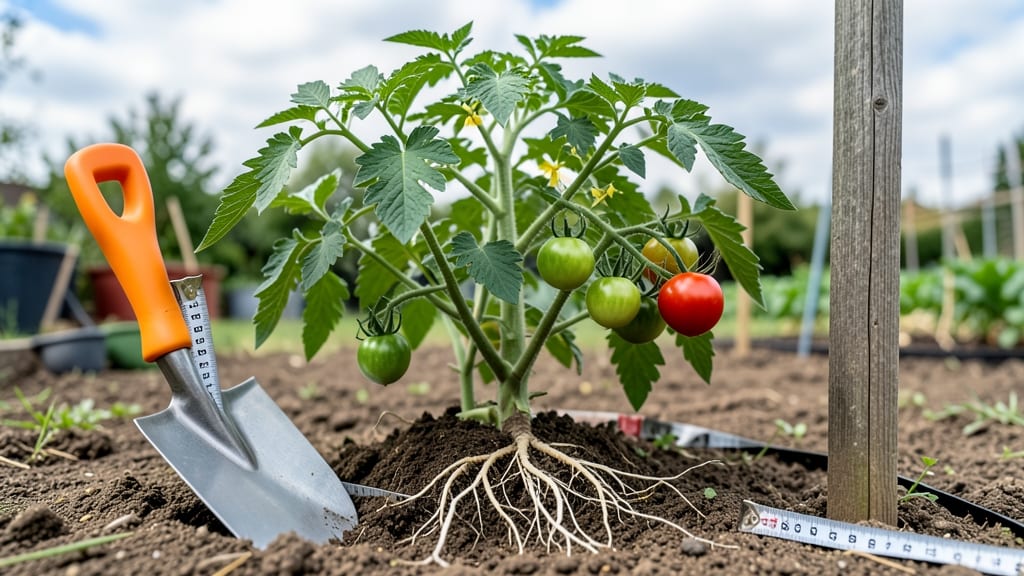
Tomato plant roots grow deeper than you might think, reaching how deep does tomato plant roots grow 12 to 18 inches in mature plants 🍅 — and that depth makes all the difference in how your plants stand, feed, and fruit.
Wondering why your tomato plants keep toppling over or struggling to produce fruit? The answer might lie just beneath the surface—in how deep their roots actually grow. Shallow roots mean poor stability, weak nutrient uptake, and even stunted growth, no matter how much you water or fertilize.
In this guide, I’ll break down exactly how deep tomato roots go, why soil depth matters for your harvest, and how to create the perfect conditions for strong roots—from loose soil to smart mulching. You’ll also learn how to spot root problems before they derail your garden.
Ready to dig into the secrets of healthier tomato plants? Let’s get started with the basics of root depth and how to give your plants the support they need from the ground up.


Tomato plant root depth: how deep they grow and why it matters
If you’ve ever watched your tomato plants struggle—wilting in heat, toppling over, or producing sparse fruit—the issue might start 12 to 18 inches below the soil surface. That’s how deep mature tomato roots typically grow, anchoring the plant and driving its ability to absorb water and nutrients.
Understanding this depth isn’t just a curiosity; it’s the key to stronger plants, better yields, and fewer headaches in your garden.
Tomato roots aren’t just shallow spreaders like some vegetables. They grow deeper than you might think, forming a robust network that stabilizes the plant and accesses moisture from lower soil layers.
When roots struggle to reach this depth—whether due to compacted soil, poor planting techniques, or overcrowding—your tomatoes pay the price with stunted growth, poor fruit set, or even collapse during storms or wind.
Let’s break down what you need to know about tomato root depth, why it matters, and how to give your plants the best chance to thrive from the ground up.
🌱
| Root Stage | Depth Range | Key Function | Growth Factors |
|---|---|---|---|
| Seedling | 0–3 inches | Anchors young plant; absorbs shallow moisture | Loose soil, consistent watering |
| Establishment (4–6 weeks) | 3–8 inches | Expands horizontally; seeks nutrients | Compost, mulch, avoid disturbance |
| Mature (60+ days) | 12–18 inches | Stabilizes plant; accesses deep water/nutrients | Deep watering, aerated soil, space to spread |
| Stressed Roots | <3 inches (shallow) | Wilting, poor fruit; prone to drought | Compacted soil, overwatering, crowding |
The 12–18 inch depth of mature tomato roots isn’t arbitrary—it’s a survival strategy. Deep roots help tomato plants access water during droughts and stay upright in windy conditions. Without this depth, plants become top-heavy, especially as they grow taller and heavier with fruit.
Imagine a skyscraper with only a few feet of foundation—it wouldn’t stand for long, and neither will your tomatoes.
Roots also play a critical role in nutrient absorption. Nitrogen, phosphorus, and potassium—essential for fruit production—are often found deeper in the soil. Shallow roots can’t reach these reserves, leading to yellowing leaves, blossom end rot, or small, underdeveloped tomatoes.
Even the soil’s microorganisms, which break down organic matter into plant-available nutrients, thrive deeper where conditions are more stable.
Another often-overlooked factor is how roots adapt to soil conditions. In loose, well-draining soil, roots grow deeper and faster. But in compacted or clay-heavy soil, roots may spread horizontally instead, creating a shallow network that struggles to support the plant.
This is why amending your soil with compost or using raised beds can make a world of difference in root development—and your harvest.
🌿
You might be thinking, “But my tomatoes seem fine with shallow roots!” While some varieties or container-grown tomatoes adapt, they’re not reaching their full potential. Deep roots correlate with larger yields, better disease resistance, and plants that can handle heat stress and fluctuating moisture levels.
For example, a study by the University of Florida found that tomatoes with deeper root systems produced 20–30% more fruit under drought conditions compared to those with restricted root growth.
So, how can you ensure your tomato roots grow to their full depth? Start with proper planting depth: bury the stem up to the first set of leaves (but not the crown) to encourage root growth along the buried stem.
Use mulch to keep soil temperatures stable and retain moisture, and avoid overcrowding, which forces roots to compete for space. If your soil is heavy clay or rocky, consider raised beds or container gardening with at least 12–18 inches of depth to accommodate root growth.
Finally, pay attention to your watering habits. Deep, infrequent watering (1–2 gallons per plant, 2–3 times per week) encourages roots to grow downward in search of moisture, while shallow, frequent watering keeps roots near the surface, making plants more susceptible to drought stress.
Think of it like training your roots to explore—give them the incentive to dig deeper!
☀️
How to optimize soil depth for maximum tomato root growth
Healthy tomato roots can grow 12–18 inches deep when given the right conditions, but many gardeners unknowingly stunt this growth with shallow soil or compaction. The key to deeper roots lies in creating an environment where roots can spread freely—without hitting obstacles like hardpan or rocky layers.
Even a few extra inches of loose, nutrient-rich soil can transform your tomato plants from wobbly underperformers to sturdy, high-yielding powerhouses.
If your soil feels dense or water pools on the surface after rain, your tomato roots are likely struggling. Compacted soil restricts oxygen flow, forcing roots to stay shallow and making plants more susceptible to wilting and nutrient deficiencies.
The solution? A multi-step approach that combines soil amendments, smart planting techniques, and ongoing care to encourage roots to dive deeper where they can access moisture and nutrients.
For container-grown tomatoes, choose pots at least 18 inches deep—shallow containers force roots to circle, starving the plant of nutrients. If you’re repurposing old pots, drill drainage holes and line them with fabric mesh to prevent soil from washing out while allowing roots to spread.
Monitor root health by gently tugging on the plant stem—if it resists, roots are anchored well. Yellowing leaves on lower stems often signal shallow roots struggling for moisture, while dark green, crisp foliage suggests deep, thriving roots.
Adjust your watering schedule if leaves curl or droop, as this is a classic sign of insufficient root depth.
Deep roots aren’t just about stability—they directly impact your harvest. Plants with 12+ inches of root depth produce 20–30% more fruit because they access water and nutrients consistently. Start optimizing now, and you’ll see stronger stems, fewer fallen plants, and a bountiful tomato season. 🌱