
Pruning
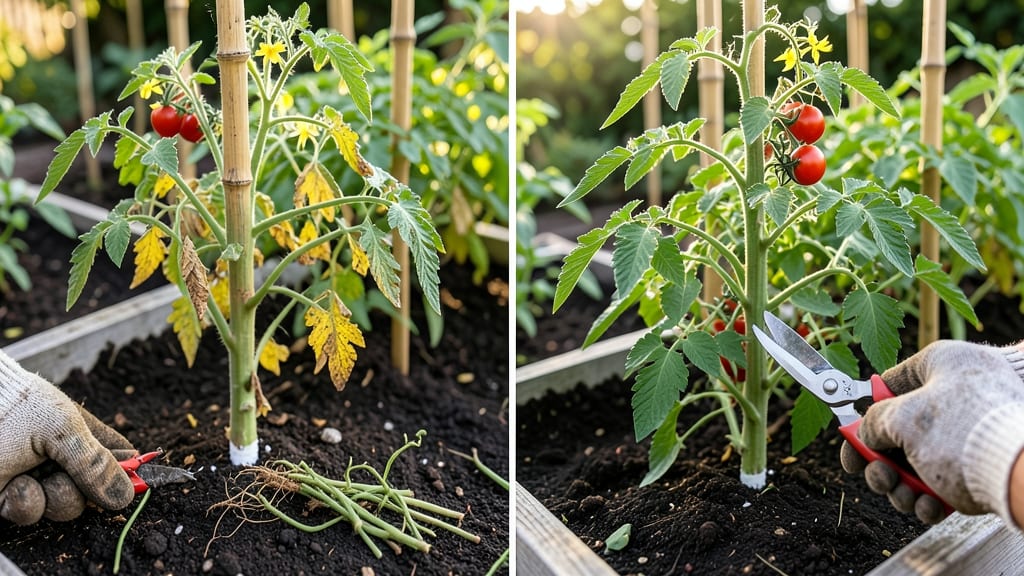
Your tomato plants might be telling you they're either starving or overworked—tomato pruning mistakes can turn a thriving vine into a sad, leggy mess. ✂️ I’ve seen both extremes: plants stripped bare from overzealous pruning and others so tangled they produce tiny, sour fruit.
The key is balance, and I’ll show you how to spot—and fix—both problems before your harvest suffers.
Over-pruned plants look like they’ve been robbed of their leaves, leaving bare stems that struggle to support fruit. Under-pruned ones become dense jungles where air and sunlight can’t reach the center, leading to disease and poor yields.
The fix starts with understanding your plant’s growth habit—determinate tomatoes need minimal pruning, while indeterminate varieties thrive when you remove suckers and encourage upward growth.
Start by examining your plant’s structure: healthy vines should have 3-4 main stems with leaves spaced to let sunlight penetrate. If you’ve gone too far, stop pruning immediately and focus on watering consistently and fertilizing lightly to encourage new growth.
For under-pruned plants, carefully thin out crowded branches to improve airflow—this single change can prevent blight and boost fruit size.
Timing matters too: prune in the morning on warm days to let wounds heal quickly. Avoid heavy pruning late in the season, as new growth won’t have time to harden off before cold weather.
With these adjustments, your plants will rebound, and you’ll see bigger, healthier tomatoes by midsummer. Let’s get those vines back on track!
Root Causes of Pruning Errors
Pruning tomatoes seems simple—snip here, avoid there—but even small missteps can throw your plant’s growth into chaos. Understanding why these mistakes happen helps you avoid them next season. Below, we break down the science and human factors behind the most common pruning blunders.
Over-pruning tomatoes is like cutting off your own arms to "help" them grow—it backfires spectacularly. This mistake typically stems from:
- Misunderstanding plant energy allocation: Tomatoes rely on a balance between vegetative growth (leaves/stems) and reproductive growth (fruit). When you prune too aggressively, you remove too many leaves, stripping the plant of its photosynthetic powerhouse. Without enough leaves, the plant can’t produce energy via sunlight, leading to stunted growth, fewer flowers, and poor fruit development.
- Overcorrecting weak growth: Some gardeners prune excessively to "fix" a leggy or sparse plant, but this often worsens the problem. Tomatoes are indeterminate (they grow continuously), so drastic cuts can shock the plant, triggering compensatory growth—but not the kind you want. Instead of bushy, productive branches, you might end up with a few long, weak stems chasing the sun.
- Ignoring variety-specific needs: Not all tomatoes respond the same way to pruning. Determinate varieties (like Roma or Celebrity) are bred to stop growing and produce fruit in clusters—they don’t need heavy pruning. Yet, many gardeners treat them like indeterminate types (like Beefsteak or Cherry), leading to unnecessary stress and reduced yields.
- Emotional pruning: Some gardeners get too attached to the idea of a "perfect" bush and keep snipping "extra" stems or leaves out of habit. This is especially common in competitive gardening circles, where aesthetics overshadow function.
💡 Pro Tip: Follow the 3-leaf rule—only prune above a leaf with three sets of leaves (not just one or two). This ensures the plant retains enough foliage to fuel growth.
On the flip side, under-pruning leads to rank, unproductive growth—think tangled vines, disease hotspots, and fruit that never ripens. Here’s why it happens:
- Fear of harming the plant: Many beginners avoid pruning altogether because they’ve heard (or seen) that tomatoes are "delicate." In reality, pruning is essential for indeterminate varieties to direct energy toward fruit production. Without it, plants channel resources into excessive vegetative growth, leaving little for tomatoes.
- Lack of awareness about air circulation: Dense foliage traps moisture, creating the perfect conditions for fungal diseases like blight or powdery mildew. Under-pruned plants often suffer from splitting fruits (from poor water absorption) and sunburnt tomatoes (when leaves block light from ripening fruit).
- Assuming "more leaves = more fruit": Some gardeners believe that keeping every leaf and stem will maximize yield. However, too many leaves shade the fruit, preventing them from ripening properly. Plus, crowded plants compete for nutrients, leading to smaller, less flavorful tomatoes.
- Procrastination or overwhelm: Pruning can feel like a daunting task, especially for large indeterminate plants. Gardeners may delay pruning until the plant is already unmanageable, making it harder to correct later.
🌡️ Quick Fix: Start pruning early—as soon as your plant reaches 12–18 inches tall. Remove suckers (the small shoots in the "V" between main stems and branches) consistently to prevent overgrowth.
Pruning at the wrong time can disrupt your tomato’s natural growth cycle. Common timing errors include:
- Pruning during flowering or fruiting: Tomatoes are sensitive to stress during their reproductive phase. Heavy pruning while flowers are blooming or fruit is setting can cause flower drop or fruit abortion. The plant diverts energy away from pollination and fruit development to heal from the pruning wound.
- Late-season pruning: Once tomatoes are 6–8 weeks from harvest, pruning can delay ripening. The plant focuses on new growth instead of maturing existing fruit. Save heavy pruning for early in the season (before flowering) or for maintenance (removing diseased leaves).
- Pruning after rain or in extreme heat: Wet or scorching conditions slow wound healing. Pruning opens the plant to pathogens (like bacteria or fungi) that thrive in moisture. Always prune on a dry, cool morning to minimize stress.
- Not accounting for variety maturity: Fast-growing varieties (like 'Sungold' cherry tomatoes) need more frequent pruning than slower growers. Skipping pruning sessions can lead to unchecked growth, even if you’re technically "pruning enough."
✨ Expert Hack: Use a sharp, sterile pair of pruners and make cuts at a 45-degree angle just above a leaf node. This reduces disease risk and promotes faster healing.
Even the best intentions go wrong with the wrong tools or methods. These mistakes are often avoidable:
- Using dull or dirty pruners: A dull blade crushes stems instead of cleanly cutting them, leading to ragged wounds that invite disease. Dirty tools can spread pathogens like bacterial spot or early blight from plant to plant.
- Pruning too close to the stem: Leaving stubs (more than ¼ inch) slows healing and can rot over time. Always cut just above a leaf node (the bump where leaves grow) to encourage new growth.
- Over-relying on shears or hedge trimmers: These tools tear plant tissue, causing more damage than a precise snip. Tomatoes need clean cuts to heal properly.
- Ignoring the "one-third rule": Never remove more than one-third of the plant’s foliage at once. This rule prevents shock and allows the tomato to adjust to pruning without stress.
🔥 Safety First: Always sterilize pruners with rubbing alcohol between cuts, especially if your plant shows signs of disease.
Fixing Your Tomato Plant’s Pruning Woes
Got tangled vines, stunted growth, or a tomato plant that looks like a sad, overcrowded bush? 🍅😬 No worries—most pruning mistakes are easy to reverse with the right approach. Below, we’ll break down common pruning errors and show you exactly how to fix them (and prevent them next season).
Problem: You snipped too aggressively, leaving bare stems or too few leaves to feed the fruit.
🔪 How to Fix It
- 🌱 Stop Pruning Immediately
- Over-pruning stresses plants, so pause all cutting for 1–2 weeks to let the plant recover.
- 💡 Encourage New Growth
- If stems are exposed, gently pinch (don’t cut) the tips of remaining branches to trigger bushier growth.
- For determinate tomatoes (bush types), avoid further pruning—they don’t need it!
- 🌿 Fertilize for Recovery
- Use a balanced fertilizer (10-10-10) or compost tea to help the plant rebuild energy.
- Pro Tip: 🌡️ If temps are hot, water deeply in the morning to reduce stress.
- 🍅 Protect Existing Fruit
- If flowers/fruit are already set, support them with small stakes to prevent breaking.
- Thin remaining fruit if overcrowded—one large tomato > five small ones.
🛡️ Prevention for Next Year
✅ Follow the "Rule of Thirds":
- Remove suckers (side shoots) only if they’re in the lower 1/3 of the plant (or if they’re competing with fruit).
✅ Check Leaf-to-Fruit Ratio:
- Aim for 15–20 leaves per pound of expected fruit (e.g., 10–15 leaves per tomato).
✅ Prune in Stages:
- Do light pruning every 7–10 days instead of one big session.
Problem: You skipped pruning, leading to overcrowded foliage, poor airflow, and disease risks (like blight).
✂️ How to Fix It
- 🌪️ Open Up the Canopy
- Thin out dense branches by cutting back 1/3 of the thickest growth to improve airflow.
- Pro Tip: 🔪 Use clean, sharp pruners (dull tools crush stems, inviting disease).
- 🍃 Remove Sick or Dead Leaves
- Snip off yellow, spotted, or moldy leaves (especially lower ones) to stop fungal spread.
- Disposal hack: 🗑️ Burn or compost only if leaves are disease-free.
- 🌱 Redirect Energy to Fruit
- If the plant is top-heavy, prune upper leaves to lighten the load.
- For indeterminate tomatoes: Keep 1–2 main stems and remove competing suckers.
- 🌞 Improve Sunlight Access
- Space plants 18–24 inches apart (if possible) or stake/trellis to lift vines.
- Morning sun is key—avoid pruning late in the day to prevent shock.
🛡️ Prevention for Next Year
✅ Prune Weekly:
- Spend 5–10 minutes per plant every week to remove suckers and dead leaves.
✅ Use the "V" Trick:
- When a sucker grows between the main stem and a branch, cut it at the base (it’ll form a "V").
✅ Train Vines Early:
- Tie young plants to stakes before they get unruly—prevents tangled chaos later.
If your tomato is barely hanging on (e.g., no leaves, weak stems), try this last-resort rescue:
- 💦 Hydrate Deeply
- Water slowly at the base (not overhead) for 10–15 minutes to revive roots.
- 🍄 Boost Microbes
- Sprinkle mycorrhizal fungi or compost around the roots to help absorption.
- 🌱 Prune Only the Worst
- Remove only dead/dying parts—don’t over-correct.
- 🍅 Hope for the Best
- Some tomatoes rebound surprisingly fast—keep an eye on new growth!
Final Thought: 🌟 Pruning is more about balance than perfection. Even if you’ve overdone it, your tomatoes can bounce back with a little TLC. Next season, prune like a pro—and enjoy that sun-ripened, vine-tomato harvest you’re dreaming of! 🍅🔥
Frequently asked questions
Why do my tomato plants look sad after pruning?
Your tomatoes may appear stressed because you likely removed too many leaves at once. Tomatoes need 15-20 leaves per pound of expected fruit to photosynthesize properly. When you over-prune, the plant loses its energy source, leading to weak stems and fewer flowers. Stop pruning immediately and focus on watering deeply and fertilizing lightly to help recovery.
Can I prune my tomato plants too much?
Over-pruning is one of the most common mistakes. Never remove more than one-third of the foliage at once, and always leave at least 3-4 main stems for indeterminate varieties. For determinate tomatoes (like Roma), minimal pruning is best—they're bred to produce fruit without heavy maintenance.
What's the difference between pruning determinate vs. indeterminate tomatoes?
Determinate tomatoes (like Celebrity or Bush Early Girl) don't need heavy pruning—they grow to a fixed size and produce fruit in clusters. Indeterminate varieties (like Beefsteak or Sungold) grow continuously and require regular sucker removal to direct energy to fruit production. For indeterminate types, focus on removing suckers in the lower 1/3 of the plant.
When is the worst time to prune tomato plants?
The worst times are during flowering/fruiting or in late season (6-8 weeks before harvest). Pruning during these periods stresses the plant and can cause flower drop or delayed ripening. Also avoid pruning after rain or in extreme heat—always choose dry, cool mornings for best results.
How can I tell if I've under-pruned my tomato plant?
Under-pruned tomatoes show dense, tangled vines with poor airflow, often leading to yellowing leaves or fungal diseases like blight. You'll also see small, underdeveloped fruit clustered together. To fix it, thin out 1/3 of the thickest growth and focus on removing lower leaves to improve sunlight penetration.