
Planting
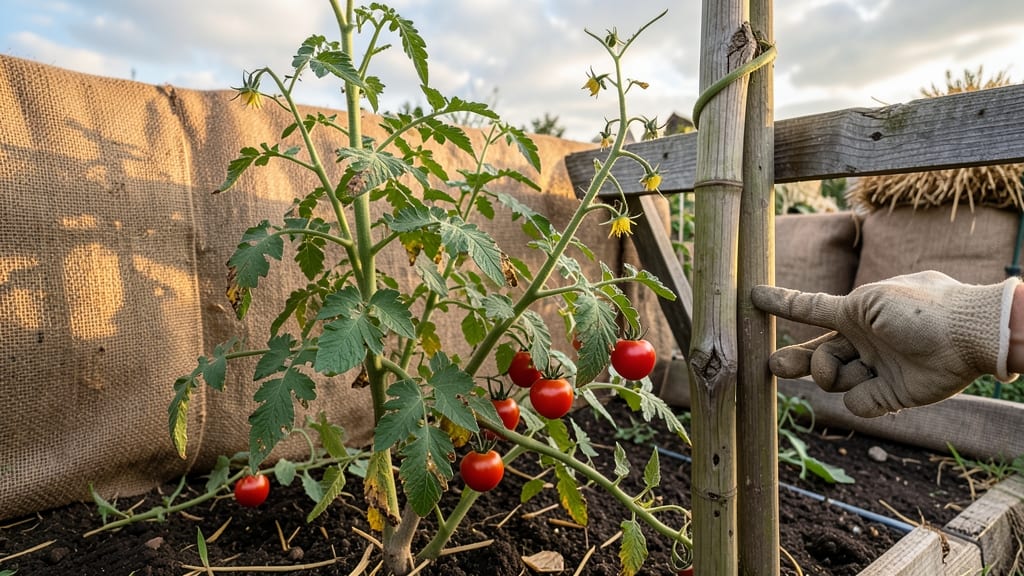
When your tomato plants start looking like they’ve been through a hurricane, it’s time to act fast. 🌱 Wind damage turns lush vines into tangled messes overnight, but with the right moves, you can nurse them back to productivity before your harvest takes a hit.
I’ve seen plants go from flopping to flowering again—here’s how to stop the damage and save your tomatoes.
The first sign is usually stems snapping or leaves shredding like paper. Strong winds also stunt growth by bending plants so far they can’t recover. The good news?
Most damage isn’t fatal—it’s just a call for support. Staking, pruning, and even temporary windbreaks can turn a disaster into a comeback story in just a few days.
Start by trimming broken branches and securing plants to sturdy stakes or cages. Add mulch around the base to stabilize the soil, and consider a temporary windbreak if storms are forecasted.
Within a week, you’ll see new growth pushing through, and those plants will be back to producing like nothing happened.
For high-wind areas, choose compact varieties like ‘Tiny Tim’ or ‘Patio Princess’—they’re built to handle gusts better than tall, sprawling types. A little prevention now means fewer floppy plants later. Let’s get those tomatoes back on track!
When Nature Turns Against Tomatoes
Wind isn’t just a gentle breeze for your tomato plants—it’s a silent saboteur that can turn your lush vines into a tangled mess overnight. Understanding why wind wreaks havoc on tomatoes is the first step to protecting your harvest.
Below, we break down the science behind the chaos, so you can outsmart Mother Nature before she ruins your garden.
Tomato plants may look sturdy, but their delicate stems and broad leaves are no match for strong winds. Here’s how gusts cause damage:
- Stem Snapping: Tomato stems contain collenchyma tissue, which provides structural support—but only up to a point. When wind exerts force beyond 15–20 mph, stems can snap like dry twigs, especially in indeterminate varieties (like 'Cherokee Purple') that grow tall and top-heavy. The apical dominance (growth hormone at the tip) gets disrupted, stunting future growth.
- Leaf Desiccation: Wind accelerates transpiration (water loss) by stripping the boundary layer of moisture around leaves. Without this protective film, leaves dry out faster, leading to crispy edges or complete wilting—even if roots are hydrated. This is why windburned tomatoes often look leathery or scorched.
- Root Dislodgment: Shallow root systems (common in container-grown tomatoes) are easily uprooted by gusts. The soil around roots loses cohesion, and the plant’s anchorage fails. This is why wind often tips over young seedlings or newly transplanted plants.
Pro Tip: 🌡️ If your tomatoes are cupping (leaves curling inward), it’s a sign of wind stress—act fast before the damage spreads!
Wind doesn’t just batter plants—it rewrites the landscape around them. Loose soil is the enemy of stability, and tomatoes suffer when:
- Topsoil Blows Away: Light, sandy, or poorly amended soil lacks aggregate stability (the glue that holds particles together). Wind erodes the top layer, exposing roots and cutting off their oxygen supply. Exposed roots dry out or suffocate, leading to stunted growth or sudden death.
- Mulch Displacement: Organic mulch (like straw) acts as a windbreak and moisture retainer—but if it’s not secured, gusts can scatter it, leaving roots vulnerable. Without mulch, soil temperatures fluctuate wildly, shocking the plant’s root zone.
- Compaction From Debris: Wind-blown rocks, branches, or even neighboring plants can crush stems or bury leaves, creating anaerobic zones (low-oxygen areas) that promote root rot.
Pro Tip: ✨ Test your soil’s wind resistance by gently blowing on a handful—if it disperses easily, it’s time to add compost or hydro-mulch to lock it down.
Wind isn’t just a physical threat—it mess with tomatoes’ love life. Tomatoes are self-pollinating, but they still rely on vibration and airflow to transfer pollen. When wind gets too intense:
- Pollen Scattering: Light pollen grains (like those from 'Roma' tomatoes) get blown away before they can fertilize flowers. This leads to small, misshapen fruits or complete flower drop.
- Ovary Shock: Young tomato flowers have delicate ovaries that can abort if they’re whipped around by wind. This is why you might see blooms falling off even when conditions seem ideal.
- Catfacing: The classic lumpy, deformed tomato (called "catfacing") often happens when wind disrupts pollen tube growth during fertilization. The plant’s energy gets diverted to repairing damage instead of forming smooth fruit.
Pro Tip: 🎯 If your tomatoes are blossoming but not setting fruit, try hand-pollinating with a soft paintbrush on calm days to bypass wind interference.
Wind doesn’t just move air—it amplifies extreme conditions, turning a warm day into a thermal rollercoaster for your tomatoes:
- Rapid Cooling: Wind chills leaves faster than still air, causing cold stress even above freezing. This triggers chilling injury, where cell membranes leak, leading to blotchy leaves or stunted growth.
- Humidity Drain: High humidity is great for tomatoes, but wind strips moisture from the air around plants. This creates desiccating conditions, especially for glabrous (hairless) varieties like 'Celebrity' tomatoes.
- Heat Stress Feedback Loop: On hot days, wind can increase evaporation rates by up to 30%, forcing the plant to close stomata (pores) to retain water. But this traps heat inside leaves, leading to sunburn or leaf scorch.
Pro Tip: 💡 Monitor your garden’s wind speed—if it’s consistently over 10 mph, consider windbreaks or shade cloth to moderate temperature swings.
Quick Fixes for Blown-Out Tomatoes
Wind damage can turn your thriving tomato plants into a sad, tangled mess—fast. But don’t panic! With the right fixes and a little TLC, you can nurse your plants back to health and even prevent future flopping.
Below, we’ll map out practical solutions for the most common wind-related issues, from broken stems to stunted growth, plus prevention tips to keep your tomatoes standing tall.
If your tomato plants are snapped, bent at odd angles, or uprooted, act fast before pests or disease move in.
🔧 Step 1: Stabilize the Plant Immediately
- For minor bends (not broken):
- Gently straighten the stem and tie it to a sturdy stake using soft plant ties (avoid wire or zip ties—they can cut into the stem).
- If the bend is severe, prop up the stem with a small wooden dowel or a bent wire hoop to support it while it heals.
- For broken stems: - Do NOT force it back—this can cause further damage.
Instead, trim the broken section just above a leaf node (where leaves grow) with sterilized pruning shears. - If the plant is still alive below the break, it may regrow! Stake the remaining stem and keep it well-watered to encourage new shoots.
💡 Pro Tip:
🌱 If the main stem is completely severed, check for suckers (side shoots) near the base. These can sometimes root and grow into new plants if you bury them lightly in soil and keep them moist.
If your tomatoes are drooping but not broken, they’re likely stressed from wind desiccation (dried-out leaves) or root exposure.
💦 Step 2: Rehydrate and Protect
- Water deeply at the base of the plant (not the leaves) to revive roots.
Use a soaker hose or drip irrigation to avoid disturbing the soil. - Mulch heavily with straw, grass clippings, or wood chips to retain moisture and protect roots from drying winds. - Shade cloth (30-50%) can help reduce stress if temperatures spike after the storm.
🌿 Step 3: Prune Damaged Foliage
- Remove any torn, brown, or crispy leaves with clean scissors to prevent disease from entering through wounds.
- Focus on keeping the plant’s energy on new growth—trim back excess suckers (unless you’re trying to propagate).
Once your plants are stable, fortify them against future storms with these low-effort, high-impact strategies.
🏗️ Step 4: Install Windbreaks
- Temporary windbreaks:
- DIY tip: Use old snow fences, pallets, or even a trellis with a tarp on the windward side.
🌡️ Step 5: Adjust Planting for Wind Zones
- Avoid open, exposed areas—tomatoes thrive in sheltered spots near fences, buildings, or hedges.
- If you MUST plant in a windy area:
- Use a double trellis system (one for vines, one for wind protection).
- Mound soil around the base to anchor roots deeper (like a natural stake).
✨ Bonus: The "Tomato Hug" Technique
- For indeterminate varieties, gently weave the main stem around a strong stake in a spiral pattern (like a hug) to reinforce the stem naturally.
- Works best for ‘Roma’, ‘Beefsteak’, or ‘Celebrity’ tomatoes.
| Problem | Quick Fix | Prevention for Next Time |
|---|---|---|
| Broken stem | Trim above a leaf node, stake | Plant wind-resistant varieties |
| Floppy but not broken | Water deeply, mulch, shade cloth | Use windbreaks or trellises |
| Torn leaves | Prune damaged foliage, sterilize tools | Avoid overcrowding plants |
| Uprooted plant | Rebury roots, stake, water well | Mound soil at base for stability |
Final Thought: 🌱 A little preparation and quick action can mean the difference between a sad, floppy tomato plant and a bountiful harvest.
Even if your plants take a beating, most tomatoes are resilient—give them support, water, and shelter, and they’ll bounce back stronger than ever! 🍅💪
Frequently asked questions
What are the first signs my tomato plants have wind damage?
Look for snapped stems, torn leaves, or cupping leaves (edges curling inward). You might also see exposed roots or soil erosion around the base. These are clear indicators your plants need immediate support.
Can tomato plants recover from wind damage?
Yes! Most tomato plants are resilient. Trim broken stems above a leaf node, stake them properly, and provide deep watering and mulch. With care, they’ll often regrow within 1-2 weeks. Focus on removing damaged foliage to prevent disease.
What’s the best way to stake tomato plants in windy areas?
Use tall, sturdy stakes (at least 6 feet for indeterminate varieties) or cages buried 1/3 of the way into the soil. For extra wind resistance, try the "tomato hug" technique—weave the main stem around the stake in a spiral. This reinforces the stem naturally.
Are some tomato varieties more wind-resistant?
Yes! Compact varieties like 'Tiny Tim' or 'Patio Princess' handle wind better than tall, sprawling types. Also consider 'Sungold' (cherry tomatoes) or 'Brandywine', which have stronger stems. These are great choices for wind-prone gardens.
How can I protect my tomato plants before a storm?
Set up a temporary windbreak using burlap screens, straw bales, or even a tarp-covered trellis. Bury stakes deeply and secure plants with soft ties. For extra protection, mound soil or mulch around the base to anchor roots. Act fast—preparation is key!