
How To
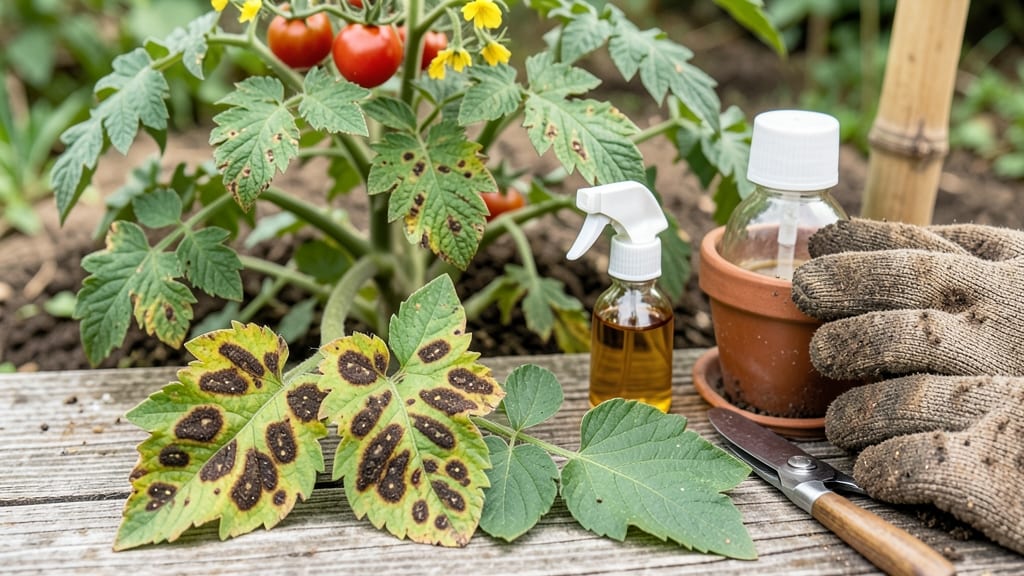
When tomato leaves have brown spots, it’s not just an eyesore—it’s your plants’ way of screaming for help. 🌱 I’ve battled early blight, bacterial spot, and environmental stress, and I’ll show you how to diagnose the problem fast and stop it before it ruins your harvest. The good news?
Most brown spots are treatable with the right mix of copper spray, proper spacing, and smart watering. Early blight starts at the bottom leaves with concentric rings, while bacterial spot creates tiny, water-soaked dots. Both spread when leaves stay wet too long.
With copper spray applications every 7-10 days and pruning infected foliage, you’ll see new growth emerge within 1-2 weeks. The key is acting before the spots merge—once they cover half a leaf, recovery gets harder. This works for backyard gardens, containers, and even greenhouse tomatoes.
Let’s get those plants back to thriving!
Root Causes Of Brown Spots
Brown spots on tomato leaves aren’t just unsightly—they’re a cry for help from your plants. Understanding the why behind these discolored patches is the first step to saving your harvest. Below, we break down the most common culprits, complete with the science and signs to watch for.
Fungi like Alternaria, Septoria, and early blight (Alternaria solani) thrive in warm, humid conditions and are the #1 cause of brown spots on tomato leaves. These pathogens don’t just appear—they spread via spores, often carried by wind, water, or even contaminated tools.
- How it starts: Tiny fungal spores land on leaves, germinate, and penetrate through natural openings (like stomata) or wounds.
Over 3–7 days, they create concentric rings or irregular brown patches with yellow halos. - Key identifiers: - Spots often have dark borders (a hallmark of Alternaria). - Leaves may develop tan or gray centers as the fungus matures. - Severe cases lead to premature leaf drop, weakening the plant’s ability to photosynthesize. - Why it’s worse at night: High humidity (especially >75%) and overnight dew create the perfect fungal buffet.
Poor air circulation in dense plantings accelerates the problem.
Tomatoes hate soggy feet. Excess moisture—whether from overwatering, heavy clay soil, or lack of drainage—creates the perfect breeding ground for root rot and foliar diseases like Phytophthora (a water mold).
- The science: Waterlogged soil cuts off oxygen to roots, stressing the plant.
Weakened roots can’t absorb nutrients efficiently, leading to chlorosis (yellowing) and brown, water-soaked spots on leaves. - Red flags: - Spots are soft, mushy, or blackened (not dry like fungal spots). - Leaves may wilt suddenly even when soil is wet. - Roots smell rotten if you dig them up. - Why it spreads: Poor drainage turns your garden into a fungal sauna.
Even if you’re not overwatering, frequent light waterings (especially overhead) keep leaves damp for too long.
If your tomato plants are suddenly covered in crispy, brown edges (especially on younger leaves), the sun might be the culprit. Heat stress or sun scorch occurs when leaves absorb too much direct sunlight, particularly after sudden temperature spikes.
- How it happens: Tomatoes need partial shade during peak afternoon heat (especially in hot climates).
When leaves bake in intense sun, cell membranes rupture, causing necrotic (dead) brown patches along leaf edges. - Key differences from disease: - Spots are dry, papery, and often on upper leaves (sun-exposed side). - Happens suddenly during heatwaves, not gradually. - Older leaves may show bleaching before browning. - Why it’s fixable: Unlike fungal issues, sun scorch is physical damage, not infectious.
Providing afternoon shade (with shade cloth or row covers) can prevent further harm.
Pests like aphids, spider mites, or tomato hornworms don’t just chew leaves—they inject toxins or create entry points for secondary infections. Their feeding leaves behind speckled brown spots or holes that mimic disease.
- Common offenders: - Aphids: Leave sticky residue (honeydew) that fosters sooty mold (black fungal growth). - Spider mites: Cause stippling (tiny brown dots) and webbing on undersides. - Hornworms: Chew large, irregular holes with frass (droppings) nearby. - How to tell: Look for pests themselves or webby strands.
Unlike fungal spots, these often have active movement (mites, caterpillars) or sap trails.
Sometimes, human error causes brown spots. Over-fertilizing (especially with high salt or nitrogen) or using harsh pesticides can burn leaves, while deficiencies in magnesium or potassium lead to interveinal chlorosis (brown between veins).
- Nutrient deficiencies to watch:
- Magnesium deficiency: Brown V-shaped patterns between leaf veins (common in sandy soils).
- Potassium deficiency: Yellowing edges that turn brown and crispy (often on older leaves).
- Chemical burn signs:
- Spots appear immediately after treatment (e.g., copper spray too concentrated).
- Leaves may curl or blister before browning.
- Why it’s reversible: Adjust your fertilizer (use balanced 10-10-10 or Epsom salt for magnesium) or flush soil with water if salts have built up.
Extreme weather—hail, frost, or high winds—can physically damage leaves, creating brown spots that look like disease. Unlike fungal issues, these spots are irregular, jagged, or torn.
- Hail damage: Leaves have dented, bruised spots that turn brown over days.
- Frost damage: Blackened or mushy edges, often on lower leaves.
- Windburn: Dry, papery brown patches on exposed leaves.
Pro tip: 🌡️ If spots appear overnight or after a storm, check for physical trauma before blaming pathogens.
Fixing Brown Spots on Tomato Leaves
Now that you know the likely culprits behind those pesky brown spots on your tomato leaves, it’s time to take action! Whether it’s fungal diseases like early blight, bacterial issues, or environmental stress, each problem has a targeted solution.
Below, we’ll break down the fixes by cause, along with easy prevention tips to keep your plants thriving.
Fungal infections are the most common cause of brown spots on tomato leaves, and they spread quickly if left unchecked. Here’s how to tackle them:
🔥 Remove Infected Leaves and Foliage
Start by pruning away any leaves with brown spots—especially the lower ones. Fungi thrive in damp, crowded conditions, so removing affected foliage reduces the risk of spread. Pro tip: Use sterilized pruners (wipe with rubbing alcohol) to avoid transferring spores to healthy leaves.
🍳 Apply Copper Spray (Best Organic Fix)
Copper-based fungicides (like copper sulfate or copper hydroxide) are highly effective against fungal diseases.
Mix 1 tablespoon of copper fungicide per gallon of water and spray both the tops and undersides of leaves. When to apply: Early morning or late evening (avoid direct sunlight, which can burn leaves). Frequency: Every 7–10 days until the problem clears.
🌡️ Improve Air Circulation and Reduce Moisture
Fungi love humidity! Space plants 18–24 inches apart and avoid overhead watering (use drip irrigation instead). If possible, prune branches to allow airflow. Bonus: Mulch with straw (not wet mulch) to keep soil dry and reduce splashing spores onto leaves.
✨ Preventative Sprays (Baking Soda or Neem Oil)
For early blight prevention, mix 1 teaspoon of baking soda + 1 tablespoon of vegetable oil + a drop of dish soap per quart of water.
Spray weekly as a preventive measure. For neem oil: Mix 1 tablespoon per quart of water + a few drops of soap and spray every 5–7 days during humid weather.
Bacterial infections cause water-soaked spots that turn brown and may ooze. Unlike fungi, bacteria can’t be cured—only managed and prevented.
🔪 Remove and Destroy Infected Leaves Immediately
Bacteria spread fast, so snip off and dispose of spotted leaves in the trash (not compost). Avoid touching healthy leaves with pruners.
👨🍳 Use Copper or Antibacterial Sprays
Copper fungicides also work on bacteria. For a stronger approach, try a commercial bacterial spray (like Copper Soap or Serenade Garden Bacteria Control). Application: Spray every 5–7 days until new growth appears.
🌧️ Avoid Watering in the Evening
Bacteria thrive in moist conditions, so water early in the day (before 10 AM) to let foliage dry quickly.
🎯 Rotate Crops and Sterilize Tools
If bacterial spot was severe, don’t plant tomatoes in the same spot next year. Also, sterilize pots, tools, and containers with bleach solution (1 part bleach to 9 parts water).
Sometimes, brown spots aren’t from pests or disease—they’re a sign of stress from heat, poor soil, or chemical exposure.
💡 Shade Cloth for Sunburnt Leaves
If leaves are crispy and brown on edges, they’re suffering from sun scorch. Provide 30% shade cloth during peak afternoon sun (12 PM–4 PM).
🥗 Boost Soil Health with Compost & Fertilizer
Brown spots from nutrient deficiency (like magnesium or potassium lack) can be fixed with:
- Epsom salt (magnesium sulfate) – 1 tablespoon per gallon of water, spray foliarly.
- Banana peel tea (potassium) – Steep peels in water for a week, then use as fertilizer.
- Balanced organic fertilizer (5-5-5 or 10-10-10) – Apply every 4–6 weeks.
🚫 Check for Herbicide Drift
If brown spots appear suddenly and uniformly, nearby weed killer use may be the culprit. Move plants away from treated areas and flush soil with water if possible.
Once your tomatoes are healthy again, keep them that way with these habits: ✅ Crop rotation – Don’t plant tomatoes in the same spot yearly. ✅ Resistant varieties – Choose blight-resistant tomatoes like ‘Mountain Merit’ or ‘Defiant PhR’. ✅ Healthy soil – Test soil pH (aim for 6.0–6.8) and amend with compost. ✅ Early intervention – Catch spots early before they spread!
By following these steps, your tomato plants should bounce back stronger than ever—and with fewer brown spots to worry about! 🍅💚
Frequently asked questions
Why do tomato leaves get brown spots near the edges first?
Edge browning is usually a sign of heat stress or nutrient deficiency. When tomato plants suffer from sun scorch, the leaf edges dry out first because they receive the most direct sunlight. For potassium deficiency, edges turn brown and crispy because potassium helps regulate water movement in plant cells.
Can I still harvest tomatoes if the leaves have brown spots?
Yes, but focus on removing infected leaves first. If spots are from fungal diseases like early blight, the fruit itself is usually safe to eat (just wash thoroughly). However, if spots are from bacterial infections or chemical burns, harvest and enjoy any ripe tomatoes quickly—they won’t improve.
How often should I spray copper fungicide for prevention?
For prevention, spray every 7-10 days during humid weather or when you see early signs of spots. Start applications when tomato plants are 6-8 inches tall and continue until harvest. Always spray early morning or evening to avoid leaf burn from sunlight.
Will removing all spotted leaves stop the problem?
No—removing leaves alone won't stop fungal/bacterial spread. You must combine pruning with copper spray and improved airflow. The spores remain on tools and soil, so sterilize pruners with rubbing alcohol and avoid overhead watering to prevent re-infection.
Can I use vinegar spray instead of copper for brown spots?
No, never use plain vinegar—it's too harsh and will burn leaves. However, you can make a diluted vinegar solution (1 tablespoon white vinegar + 1 teaspoon baking soda + 1 quart water) for preventive fungicide, but it's less effective than copper. Always test on a small leaf first.