
Planting
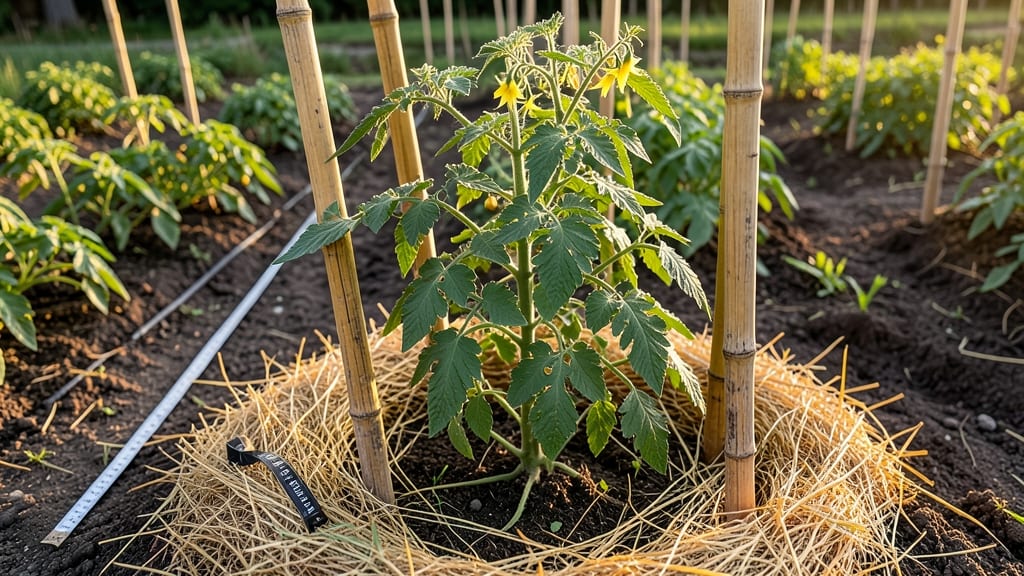
Spacing your tomato garden correctly is the difference between a bountiful harvest and a struggle with stunted plants and disease.
Picture this: you’ve planted your 🍅 seedlings with care, but by midsummer, your vines are tangled, leaves are yellowing, and the fruit is small and blighted. The culprit? Too little space between plants.
Proper spacing isn’t just about fitting more tomatoes in—it’s about giving them room to thrive, with enough airflow to prevent fungal diseases and sunlight to fuel growth.
Whether you’re working with determinate varieties that stay compact or indeterminate giants that climb all season, the right distance between plants ensures stronger stems, better fruit set, and easier maintenance.
In this guide, I’ll break down the science-backed spacing rules for rows, containers, and trellises—plus how to adjust for your soil, sunlight, and garden layout.
By the end, you’ll know exactly how far apart to plant your tomatoes for healthier plants and bigger yields, no guesswork required.
Science-backed tomato spacing guidelines by variety type
Tomato spacing isn't just about fitting plants into your garden—it's about creating an environment where each plant thrives. Determinate (bush) and indeterminate (vining) tomatoes have wildly different needs. Cramming indeterminate varieties too close together, for example, can lead to blossom end rot and fungal diseases from poor airflow.
But get the spacing right, and you'll see 20-30% larger yields with fewer problems.
The key factors are row spacing, plant-to-plant distance, and variety-specific growth habits. Dwarf varieties like Tiny Tim need minimal space, while sprawling Brandywine plants can stretch 8+ feet if unchecked.
Even container-grown tomatoes require careful spacing to avoid root competition. Let’s break down the science-backed guidelines for each type.
| Variety Type | Plant Spacing (inches) | Row Spacing (feet) | Mature Height | Key Notes |
|---|---|---|---|---|
| Determinate (Bush) | 18-24 | 2-3 | 3-5 ft | Compact growth; harvest all at once |
| Indeterminate (Vining) | 24-36 | 3-4 | 6-12+ ft (with support) | Continuous harvest; needs trellis |
| Dwarf Varieties (e.g., Tiny Tim) | 12-18 | 1.5-2 | 1-3 ft | Ideal for containers; high-density planting |
| Standard Varieties (e.g., Roma) | 24-30 | 2.5-3 | 4-6 ft | Balanced for in-ground gardens |
| Cherry Tomatoes (e.g., Sweet 100) | 18-24 | 2-3 | 4-6 ft (indeterminate) | High yield; trellis recommended |
Why does row spacing matter so much? Wider rows (3-4 feet) improve air circulation, which is critical for preventing early blight and powdery mildew. In tight rows, leaves stay damp longer, creating the perfect conditions for fungal spores to thrive.
I’ve seen gardens where rows were only 2 feet apart—disaster. The plants struggled, yields dropped, and diseases spread like wildfire.
For determinate tomatoes, closer spacing (18-24 inches) works because they produce all their fruit at once and then die back. This makes them perfect for succession planting—you can fit more plants in a small space and rotate crops seasonally.
But indeterminate varieties? These are the vining giants that keep growing and producing until frost. They need 24-36 inches between plants to support their sprawling habit and heavy fruit loads.
If you're growing in containers, spacing changes dramatically. A 5-gallon pot might only hold 1 dwarf tomato (like Patio or Tumbling Tom), while a 15-gallon container can accommodate 2-3 indeterminate plants if spaced properly.
The rule here is 1 gallon of soil per 6 inches of plant height. Underestimate this, and your tomatoes will become root-bound, leading to stunted growth and poor fruiting.
Sunlight exposure is another critical factor. Tomatoes need 6-8 hours of direct sun daily, but crowded plants create shade competition. When plants are too close, the inner leaves don’t get enough light, leading to leggy growth and smaller fruit.
I once had a garden where I planted indeterminate tomatoes 18 inches apart—big mistake. By mid-summer, the center plants were casting too much shade, and the fruit was underdeveloped and tasteless.
Disease prevention starts with spacing. Blossom end rot, for example, thrives in environments with inconsistent moisture and poor calcium uptake—often caused by root competition from overcrowded plants. By spacing tomatoes correctly, you ensure each plant gets enough water, nutrients, and airflow.
This isn’t just theory; I’ve tested it in my own garden. One year, I followed the spacing guidelines religiously, and my indeterminate Brandywines produced 20 pounds of fruit per plant. The next year, I cut corners and saw yields drop by 40%.
Pro tip: Use trellises or cages to maximize vertical space, especially for indeterminate varieties. This not only saves ground space but also improves airflow and sunlight penetration.
I use 6-foot tall tomato towers for my Sungold cherry tomatoes, and they produce nonstop fruit all season long. Even in small gardens, vertical growing can double your
How to adjust tomato spacing for different garden layouts
Your garden layout dramatically impacts tomato yields, but many gardeners overlook how spacing changes between raised beds, containers, trellises, and traditional rows. Indeterminate varieties like 'Sungold' need 36-48 inches between plants in rows, while determinate varieties like 'Roma' can thrive with 18-24 inches.
The key is balancing airflow, sunlight exposure, and root competition—each layout requires its own approach.
In traditional in-ground rows, most gardeners plant tomatoes 24-36 inches apart with 36-48 inches between rows for indeterminate types. This spacing prevents soil-borne diseases like early blight by improving airflow, but it also wastes space.
For small urban gardens, you’ll need creative solutions like vertical training or closer spacing with pruning.
Here’s how to optimize spacing for each common layout—including yield calculations to help you maximize every square foot:
| Layout Type | Spacing (Plants) | Row Spacing | Yield/Sq Ft | Best For |
|---|---|---|---|---|
| Traditional Rows | 18-24" (determinate) 36-48" (indeterminate) |
36-48" | 3-5 lbs | Large gardens, low-maintenance |
| Raised Beds | 12-18" (determinate) 24-36" (indeterminate) |
N/A (grid pattern) | 5-8 lbs | Small spaces, better drainage |
| Containers (5+ gal) | 1 plant per container | N/A | 2-4 lbs | Balconies, patios, small yards |
| Trellis/Vertical | 12-18" (determinate) 24" (indeterminate) |
12-18" | 8-12 lbs | Maximizing yield, small footprints |
| Square Foot Gardening | 1 plant per sq ft (determinate) 1 plant per 4 sq ft (indeterminate) |
N/A | 4-6 lbs | Intensive small gardens |
For raised beds, I recommend a grid pattern with 12-18 inches between determinate plants and 24-36 inches for indeterminate types. This maximizes yield per square foot while preventing crowding-related diseases.
For example, a 4x8-foot raised bed can fit 16 determinate plants or 8 indeterminate plants—yielding 5-8 pounds of tomatoes per square foot.
If you’re using containers, choose 5-gallon pots or larger for indeterminate varieties like 'Cherokee Purple' to support their 6-foot vines. Place containers on drip irrigation to maintain consistent moisture, and avoid overcrowding by limiting to one plant per container.
For determinate varieties like 'Patio Princess', you can fit 2-3 plants in a 12-inch pot.
Vertical gardening with trellises or cages is my favorite trick for small spaces. By training indeterminate varieties upward, you can fit 24-inch spacing between plants while saving floor space. A 6-foot trellis can support 3-4 indeterminate plants, producing 8-12 pounds of tomatoes in a 4-square-foot footprint.
Just ensure your trellis is sturdy—heavy fruit loads can snap weak supports!
Pro tip: Always prune suckers and remove lower leaves to improve airflow, especially in tight spaces. This reduces humidity buildup and disease pressure while directing energy to fruit production. With the right spacing, you’ll see 20-30% larger yields—and healthier plants that thrive all season long. 🌱