
Vegetables
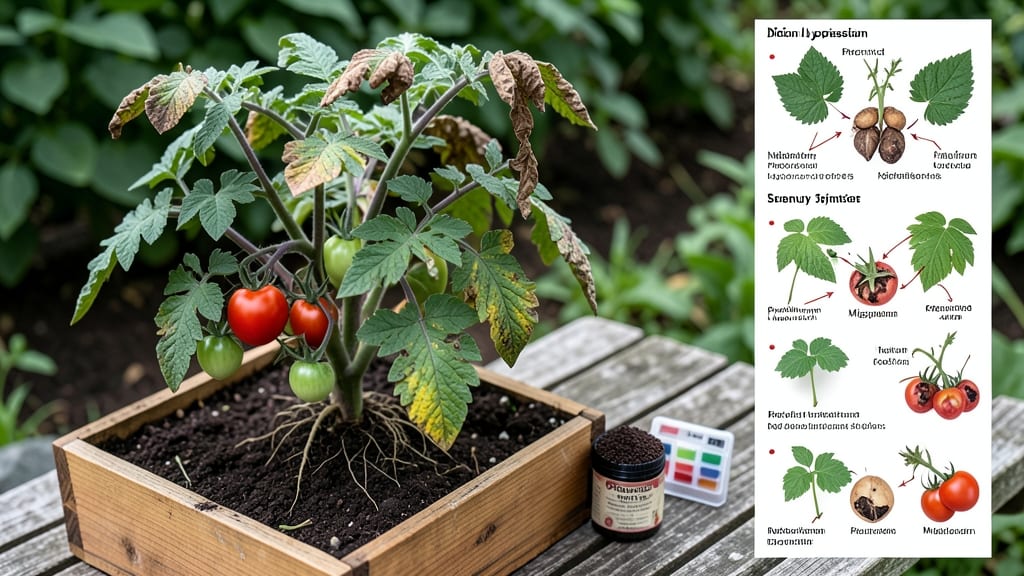
Your tomato plants are screaming for help—but you might not know what they're saying with a tomato deficiency chart that turns leaf symptoms into actionable fixes. 🌱 That yellowing leaf or purple stem isn't just "what tomatoes do"—it's a nutrient deficiency, and fixing it early means the difference between a 20-pound harvest and a sad handful of fruit.
This chart transforms those warning signs into quick solutions, so you can diagnose problems faster than you can say "blossom end rot."
The most common deficiencies—like nitrogen, potassium, or magnesium—show up in predictable patterns. Yellowing between veins? Likely magnesium. Brown edges on older leaves? Probably potassium. I've seen gardeners waste weeks guessing when a quick soil test or simple amendment could've saved their season.
The good news? Most fixes take 10 minutes and cost less than $5.
By the end, you'll spot symptoms before they spread, know exactly which fertilizer to grab, and even prevent future problems with simple soil care. No more guessing—just healthy plants that produce heavier, tastier tomatoes all season. Let's decode those leaves once and for all.
Works for backyard gardens, containers, or even balcony setups—anywhere tomatoes grow. The same principles apply whether you're growing heirlooms or cherry varieties. Here's how to turn those warning signs into a bountiful harvest.
Root Causes of Tomato Troubles
Understanding why your tomato plants develop deficiencies is the first step to reviving them. 🌱 These issues often stem from imbalances in nutrients, environmental stress, or poor growing conditions. Below, we break down the key culprits behind common tomato deficiencies—so you can diagnose and fix them fast.
Tomatoes thrive on a precise mix of macronutrients (N-P-K) and micronutrients, but when one element is missing or overabundant, symptoms appear. Here’s how imbalances trigger deficiencies:
🔥 Nitrogen Deficiency: The Yellowing Culprit
Nitrogen is the building block of chlorophyll, the pigment that gives leaves their green hue.
Without enough nitrogen, your tomato plants may show: - Pale yellow leaves (starting at the older, lower leaves) - Stunted growth or weak stems - Slower fruit production - Why it happens: - Soil depletion (nitrogen leaches out quickly, especially in sandy soils or after heavy rain). - Overwatering flushes nitrogen away before roots can absorb it. - Poor organic matter (compost or aged manure boosts nitrogen naturally). - Improper fertilization (using too much phosphorus/potassium-heavy fertilizer without balancing nitrogen).
💡 Pro Tip: Test your soil’s nitrogen levels with a DIY kit or send a sample to a lab. If deficient, apply blood meal, fish emulsion, or a balanced 10-10-10 fertilizer at planting and mid-season.
🍅 Phosphorus Starvation: The Hidden Growth Killer
Phosphorus fuels root development, flowering, and fruit ripening.
A deficiency slows these processes, leading to: - Dark green or purple-tinged leaves (especially on undersides) - Weak, sparse root systems - Delayed flowering or small, poor-quality tomatoes - Why it happens: - Cold or waterlogged soil locks phosphorus, making it unavailable. - High pH (alkaline soil) binds phosphorus, preventing uptake. - Over-fertilizing with nitrogen without phosphorus balance. - Old or compacted soil lacks organic phosphorus sources.
💡 Pro Tip: Boost phosphorus with bone meal, rock phosphate, or a 5-10-10 fertilizer. For alkaline soils, lower the pH with sulfur to improve absorption.
💪 Potassium Shortage: The Weakness Revealer
Potassium strengthens cell walls, disease resistance, and fruit quality.
A deficiency often looks like: - Yellowing leaf edges (but green veins—a classic "scorched" look) - Weak stems prone to snapping - Blossom end rot (even with calcium issues) - Why it happens: - Leaching (potassium washes out easily in sandy or acidic soils). - Overwatering dilutes nutrient availability. - Improper fertilizer ratios (too much nitrogen, not enough potassium). - High sodium levels (from tap water or poor-quality fertilizer) block uptake.
💡 Pro Tip: Use potassium sulfate, wood ash, or banana peel tea to replenish levels. Mulch heavily to retain moisture and reduce leaching.
Sometimes, deficiencies aren’t about nutrients—they’re about stress. These factors can mimic or worsen nutrient issues:
💦 Overwatering or Poor Drainage: The Suffocation Problem
Too much water drowns roots, preventing them from accessing nutrients—even if they’re in the soil.
Signs include: - Yellowing leaves (like nitrogen deficiency, but roots are mushy) - Wilting despite wet soil - Fungal diseases (like blight) from excess moisture - Why it happens: - Heavy clay soil holds water but suffocates roots. - Lack of drainage (no gravel or raised beds). - Overhead watering (leads to fungal issues and nutrient runoff).
💡 Pro Tip: Amend soil with perlite or compost to improve drainage. Water deeply but infrequently (1–2 inches per week) and use drip irrigation to target roots.
☀️ Extreme Heat or Cold: The Metabolism Disruptor
Tomatoes are warm-season crops, but temperature swings throw off nutrient uptake:
- Heat stress (above 90°F/32°C):
- Yellowing between veins (like iron deficiency, but no nutrient issue)
- Blossoms drop (poor pollination)
- Fruits crack or turn white
- Cold stress (below 50°F/10°C):
- Purple stems/leaves (phosphorus-like symptoms, but roots are cold-damaged)
- Slow growth or stunted plants
- Why it happens:
- Roots can’t absorb nutrients when soil temps drop below 55°F (13°C).
- Heat reduces microbial activity, slowing nutrient breakdown in soil.
💡 Pro Tip: Mulch with straw to regulate soil temperature. Provide shade cloth in extreme heat and row covers in cold snaps.
🌧️ pH Imbalances: The Locked-Up Nutrients
Soil pH affects nutrient availability.
Tomatoes prefer slightly acidic soil (pH 6.0–6.8): - Too acidic (pH < 5.5): - Aluminum/manganese toxicity (brown spots, crinkled leaves). - Phosphorus and calcium become unavailable. - Too alkaline (pH > 7.0): - Iron, zinc, and manganese deficiencies (yellowing between veins). - Nitrogen and phosphorus lock up. - Why it happens: - Natural soil composition (e.g., volcanic soil is acidic; limestone soil is alkaline). - Over-fertilizing with lime (raises pH) or sulfur (lowers pH) without testing.
💡 Pro Tip: Test your soil’s pH with a kit. Adjust gradually:
- To lower pH (more acidic): Add elemental sulfur or peat moss.
- To raise pH (less acidic): Use wood ash or crushed limestone.
Sometimes, unseen invaders steal nutrients or damage roots, causing deficiency-like symptoms:
🐜 Root-Knot Nematodes: The Underground Vandals
These microscopic worms pierce roots, reducing nutrient absorption.
Signs: - Stunted growth despite fertile soil. - Yellowing leaves (like nitrogen deficiency, but roots have galls). - Wilting even when soil is moist. - Why it happens: - Infested soil (nematodes survive for years). - Poor crop rotation (tomatoes are susceptible if planted after other nightshades).
💡 Pro Tip: Plant resistant varieties (e.g., ‘Nematex’ tomatoes). Solarize soil (cover with clear plastic for 4–6 weeks) or use neem oil as a preventative spray.
🍄 Fungal Infections: The Nutrient Blockers
Fungi like verticillium wilt or fusarium clog xylem vessels, preventing water/nutrient transport.
Symptoms: - Yellowing leaves (starting at older leaves, like nitrogen deficiency). - Wilting in one branch (but not others). - Dark streaks in stems (if split open). - Why it happens: - Poor drainage (fungi thrive in soggy soil). - Old garden beds with lingering spores. - Stressed plants (from overwatering or nutrient imbalance).
💡 Pro Tip: Remove infected plants immediately. Rotate crops (avoid planting tomatoes in the same spot for 3 years). Use copper fungicide as a preventative.
| Symptom | Likely Cause | Fix It With |
|---|---|---|
| Yellow old leaves | Nitrogen deficiency | Blood meal, fish emulsion |
| Yellow edges, green veins | Potassium deficiency | Potassium sulfate, banana peel tea |
| Purple stems/leaves | Phosphorus deficiency | Bone meal,
Fixing Your Tomato Plants Now
Diagnosing the issue is half the battle—now it’s time to roll up your sleeves and get your tomatoes back on track! Below is a cause-to-cure guide, complete with quick fixes and long-term prevention tips to keep your plants thriving.
Think of this as your emergency repair manual for tomato troubles.
If your leaves are screaming for help with yellowing, browning, or stunted growth, it’s time to feed them right. Here’s how to fix the most common deficiencies:
🌱 Nitrogen (N) Deficiency: Revive Lush Green Leaves
Symptoms: Pale, yellow lower leaves (but veins stay green). Fix It: - Quick Boost: Apply a balanced fertilizer (10-10-10 or 5-5-5) or compost tea around the base of the plant.
Aim for ½ to 1 teaspoon per gallon of water. - Organic Option: Use fish emulsion or blood meal (high in nitrogen) every 2–3 weeks during the growing season. - Prevention: Side-dress with well-rotted manure or alfalfa meal at planting and mid-season.
💚 Phosphorus (P) Deficiency: Spark Root & Flower Growth
Symptoms: Dark green or purple-tinged leaves, weak stems, few flowers. Fix It: - Fast Fix: Mix bone meal or rock phosphate into the soil at planting (follow package rates).
For potted tomatoes, dissolve 1 teaspoon of bone meal in water and water deeply. - Liquid Help: Use a phosphorus-rich fertilizer (like 0-20-20) every 4–6 weeks during flowering. - Prevention: Add compost (rich in organic phosphorus) before planting. Avoid overwatering, which leaches phosphorus away.
🟢 Potassium (K) Deficiency: Strengthen Stems & Fruit
Symptoms: Yellowing leaf edges (scorching), weak stems, poor fruit set. Fix It: - Emergency Rescue: Sprinkle wood ash (½ cup per plant) or greensand around the base.
Water well to activate. - Liquid Fix: Use a potassium sulfate or banana peel tea (steep peels in water for 24 hours) every 2 weeks. - Prevention: Mulch with potassium-rich materials like wood chips or use a balanced fertilizer (like 5-5-5) regularly.
🟡 Magnesium (Mg) Deficiency: Bring Back the Green
Symptoms: Yellowing between leaf veins (interveinal chlorosis), starting on older leaves. Fix It:
- Quick Spray: Mix 1 tablespoon of Epsom salt (magnesium sulfate) in 1 gallon of water and spray foliar feed on leaves every 7–10 days.
- Soil Boost: Work Epsom salt into the soil at 1 tablespoon per plant (repeat monthly).
- Prevention: Test soil pH—magnesium absorbs best in slightly acidic soil (6.0–6.8).
🔴 Calcium (Ca) Deficiency: Prevent Blossom End Rot
Symptoms: Brown, leathery spots on fruit (blossom end rot), weak new growth. Fix It:
- Foliar Feed: Spray 1 tablespoon of calcium nitrate or crushed eggshells in 1 gallon of water on leaves and soil.
- Soil Fix: Mix crushed eggshells or gypsum into the top 2 inches of soil.
- Prevention: Mulch heavily (straw or grass clippings) to keep soil moist—calcium uptake drops in dry soil.
🟠 Iron (Fe) Deficiency: Fix Yellowing in Acid-Loving Plants
Symptoms: Young leaves turn pale yellow (veins stay green), stunted growth. Fix It:
- Foliar Spray: Mix 1 teaspoon of iron chelate or ferrous sulfate in 1 gallon of water and spray leaves weekly until improved.
- Soil Fix: Lower soil pH with sulfur or pine needles (aim for pH 6.0–6.5).
- Prevention: Avoid over-fertilizing with nitrogen, which competes with iron uptake.
Sometimes, the problem isn’t nutrients—it’s too much or too little of something else.
💦 Overwatering or Poor Drainage: Drain the Drama
Symptoms: Yellowing leaves, mushy stems, root rot (black, foul-smelling roots). Fix It:
- Stop Watering Immediately: Let soil dry out 1–2 inches deep before watering again.
- Improve Drainage: Add perlite, sand, or compost to heavy soil.
Elevate pots if needed. - Prevention: Water deeply but infrequently (1–1.5 inches per week). Use drip irrigation to avoid wetting leaves.
☀️ Sunburn or Heat Stress: Shield Your Plants
Symptoms: White or brown patches on leaves, sunscald (scorched fruit). Fix It:
- Shade Relief: Use lightweight shade cloth (30–50%) during peak sun (11 AM–3 PM).
- Water Wisely: Water early morning to cool leaves and soil.
- Prevention: Choose heat-tolerant varieties (like ‘Solar Fire’ or ‘Heatmaster’).
Mulch with straw to keep roots cool.
🌬️ Wind or Physical Damage: Protect Delicate Leaves
Symptoms: Torn leaves, leaf curl, or stunted growth. Fix It:
- Windbreak: Install trellises, burlap screens, or plant windbreaks (like corn or sunflowers).
- Prune Gently: Remove damaged leaves with clean scissors to reduce stress.
- Prevention: Stake or cage tomatoes early to support growth.
If bugs or pathogens are the culprits, act fast to save your harvest.
🐜 Aphids/Spider Mites: Blast Them Away
Symptoms: Sticky residue (honeydew), yellow stippling, or webbing. Fix It:
- Spray Down: Blast off pests with a strong stream of water (morning or evening).
- Soap Solution: Mix 1 tablespoon mild soap + 1 quart water, spray every 3–4 days.
- Prevention: Introduce ladybugs or lacewings.
Use reflective mulch to deter pests.
🍄 Fungal Diseases (Blight, Powdery Mildew): Stop the Spread
Symptoms: Brown spots, white powder, or leaf drop. Fix It:
- Copper Fungicide: Spray copper-based solution (follow label) weekly until cured.
- Baking Soda Spray: Mix 1 tsp baking soda + 1 tbsp oil + 1 quart water (spray undersides).
- Prevention: Space plants 18–24 inches apart for airflow.
Remove infected leaves immediately.
- Test Your Soil: Use a home soil kit ($10–$20) to check pH and nutrients before planting.
- Rotate Crops: Avoid planting tomatoes in the same spot yearly to prevent disease buildup.
- Companion Plant: Grow basil, marigolds, or nasturtiums nearby to deter pests and improve growth.
- Harvest Early: Pick tomatoes before they ripen if disease is spreading, then let them ripen indoors.
Remember: Tomatoes are forgiving—most deficiencies can be reversed with the right care. Monitor your plants weekly, adjust as needed, and soon you’ll be swimming in juicy, healthy tomatoes! 🍅🌟
Frequently asked questions
How do I know if my tomato plant has a nutrient deficiency instead of a disease?
Check the leaf pattern first: deficiencies show predictable discoloration (like yellowing between veins for magnesium), while diseases often cause spots, lesions, or irregular patterns. Also, deficiencies affect older leaves first (nitrogen) or new growth (iron), while diseases spread randomly. Examine stems for dark streaks (fungal wilt) or galls (nematodes).
Can I use the same soil amendments for potted tomatoes as in-ground plants?
Most amendments work for both, but potted tomatoes need more frequent feeding since nutrients deplete faster. Use half the recommended dose of granular fertilizers and double-check drainage—containers dry out quickly. For pots, mix compost + perlite (50/50) at planting, and use liquid fertilizers every 2 weeks instead of slow-release granules.
Why does my tomato plant show deficiency symptoms even after adding fertilizer?
Three likely reasons:
- pH problems (locks nutrients—test your soil!),
- overwatering (flushes nutrients away), or
- root damage (from pests/disease blocking absorption). Try foliar sprays (like Epsom salt for magnesium) to bypass soil issues, and check for mushy roots (root rot) or galls (nematodes).
How often should I check my tomato plants for deficiencies?
Inspect leaves every 7–10 days during active growth (spring-fall). Focus on new leaves (for iron/zinc) and older leaves (for nitrogen/potassium). Early detection means faster fixes—waiting until symptoms spread can take weeks to reverse. Keep a simple chart (like our deficiency guide) handy to track changes.