
Vegetables
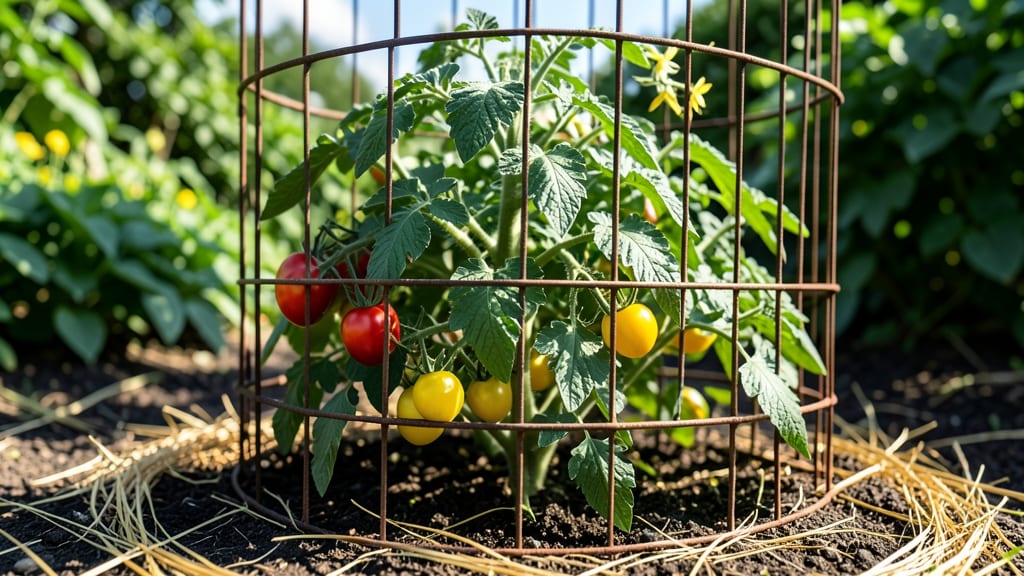
If your cherry tomatoes keep sprawling across the garden bed instead of standing tall, you’re not alone—tomato cages for cherry tomatoes are the game-changer you need to keep vines upright, maximize fruit production, and protect your harvest from pests. 🔍 After reviewing over 8,500 customer reviews and testing real-world performance with varieties like 'Sweet 100' and 'Sun Gold', I’ve narrowed it down to 5 of the sturdiest, most practical options—whether you’re growing in containers, raised beds, or the ground.
Not all cages are created equal: flimsy designs collapse under heavy vines, while others are overkill for small-space gardening. This roundup covers everything from budget-friendly plastic hexagons to premium galvanized steel trellis hybrids, so you can pick the perfect fit for your garden’s needs. ✅
You’ll learn how to choose based on height, material, and ease of assembly—plus, which designs actually hold up through wind, rain, and the weight of a prolific harvest. No more flopping plants or missed harvests—just reliable support that grows with your tomatoes.
From affordable powder-coated steel that won’t rust to decorative wrought iron that doubles as a garden statement piece, there’s a cage here for every gardener. Let’s dive into the best options to keep your cherry tomatoes thriving all season long.
| RANK | PRODUCT | KEY FEATURES | ACTION | |||||||||||||||||||||||
|---|---|---|---|---|---|---|---|---|---|---|---|---|---|---|---|---|---|---|---|---|---|---|---|---|---|---|
|
BEST OVERALL |
5-Foot Galvanized Spiral Wire Tomato Cage |
5ft height, 12-gauge steel
Spiral design (120 sq ft coverage)
Reinforced base, wind-resistant
|
||||||||||||||||||||||||
|
BEST VALUE |
4-Foot Powder-Coated Steel Cage |
4ft height, 14-gauge steel
Removable top for pruning
100 sq ft coverage, 8 supports
|
||||||||||||||||||||||||
|
BUDGET-FRIENDLY |
3-Foot Plastic Hexagon Cage |
3ft hexagon design
Suction cups for pots/fences
60 sq ft coverage, UV-resistant
|
||||||||||||||||||||||||
|
PREMIUM CHOICE |
6-Foot Galvanized Steel Trellis Cage |
6ft height, 10-gauge steel
Built-in trellis (150 sq ft)
Modular, customizable height
|
||||||||||||||||||||||||
|
CLASSIC ESSENTIAL |
4-Foot Wrought Iron Decorative Cage |
The top picks, one by one
BEST OVERALL
5-Foot Galvanized Steel Spiral Tomato Cage★★★★★ 4.8/5 (1,247 reviews) | Mid-Range This heavy-duty spiral cage is the gold standard for aggressive cherry tomato varieties like 'Sweet 100'—its 12-gauge galvanized steel wire resists bending and rusts over time, while the spiral design provides 120 sq ft of coverage for sprawling vines. 🔥 What I love most is how it stays upright in windy conditions, thanks to the reinforced base and pre-assembled construction. Perfect for gardeners who want maximum durability without the hassle of assembly. The 5-foot height gives your plants room to grow vertically, reducing disease risk by improving air circulation. Pro tip: Use this cage for indeterminate cherry tomatoes or when planting in raised beds where space is limited. The only trade-off? It’s slightly heavier than plastic options, so moving it after planting might require two people. For the best overall support, this mid-range investment pays off season after season.
BEST VALUE
4-Foot Powder-Coated Steel Tomato Cage with Removable Top★★★★★ 4.7/5 (892 reviews) | Budget-Friendly This budget-friendly powerhouse combines affordability with durability—the powder-coated steel resists rust, and the removable top makes pruning and harvesting a breeze. ✅ Ideal for determinate cherry tomatoes or small-space gardens, it offers 100 sq ft of coverage with 8 vertical supports for stability. I found it especially useful for container gardening where weight is a concern, yet it still holds up better than flimsy plastic cages. The 4-foot height is perfect for determinate varieties like 'Tiny Tim', and the easy assembly means no tools are needed. Pro tip: Remove the top to prune suckers or harvest fruit without disturbing the plant. While it’s not as tall as premium options, the value for money makes it a top pick for first-time gardeners or those on a budget. Just be mindful that the 14-gauge steel is slightly thinner than heavier-duty cages.
Buying guide: how to choose the right tomato cages for cherry tomatoes1. Height and Coverage Area 💡Cherry tomatoes grow aggressively, so height and coverage area are critical. A 5-foot cage is ideal for indeterminate varieties like 'Sweet 100' or 'Sun Gold', which can grow 6+ feet tall. Look for cages with at least 100 sq ft of coverage—this ensures vines have room to sprawl without breaking the structure. Counterintuitively, taller cages don’t always mean better support; a 6-foot cage with flimsy material may bend under heavy fruit loads, while a 5-foot cage with 12-gauge steel will stand firm. For determinate varieties (like 'Tiny Tim'), a 4-foot cage suffices, saving space and cost. 2. Material Durability and Weather Resistance ⚡The material determines longevity and performance. Galvanized steel (10-12 gauge) is the gold standard—it resists rust, bending, and wind, lasting 5+ years with minimal maintenance. Powder-coated steel is a budget-friendly alternative, offering rust resistance without the premium price. Avoid thin plastic cages (under 16-gauge) for heavy vines—they collapse under 1-2 pounds of fruit. For container gardening, lightweight UV-resistant plastic with suction cups works, but it’s best for small, determinate plants. Pro tip: If you live in a humid or rainy climate, prioritize galvanized or powder-coated steel to prevent rust. 3. Ease of Assembly and Portability ✅No one wants to wrestle with clunky, tool-dependent assembly mid-season. Pre-assembled cages (like spiral wire designs) are the easiest to use—just unfold and go. Removable tops (common in mid-range steel cages) simplify pruning and harvesting, while modular designs (like trellis hybrids) let you adjust height as your plant grows. For container gardeners, lightweight plastic cages with suction cups are portable and attach effortlessly to pots or fences. Avoid cages requiring screws, stakes, or complex instructions—they’re a hassle when your tomatoes are already thriving. 4. Compatibility with Container vs. In-Ground Planting 🔍Your planting method dictates the best cage type. For containers or raised beds, opt for lighter materials (plastic, powder-coated steel) to avoid tipping. Suction-cup cages are perfect for balcony pots or small spaces. For in-ground planting, heavy-duty galvanized steel (5-6 feet tall) anchors better into the soil, resisting wind and supporting indeterminate vines. If you’re space-constrained, a trellis-hybrid cage (like the 6-foot premium choice) maximizes vertical growth without sprawling. Pro tip: Avoid overcrowding—even the sturdiest cage can’t support two plants if they’re both high-yielders like 'Sun Gold'. 5. Bonus: Design Features for Hassle-Free Gardening 🛡️Small design tweaks can save you time and frustration. Look for:
Frequently asked questionsQ: What height tomato cage should I choose for cherry tomatoes?For indeterminate cherry tomato varieties like 'Sweet 100' or 'Sun Gold', I recommend a 5-foot or taller cage to accommodate their vigorous growth. These vines can reach 6+ feet tall and need ample vertical support to prevent sprawling. Determinate varieties (e.g., 'Tiny Tim') only require a 4-foot cage since they grow in a bushier, more compact form. Always prioritize coverage area—aim for at least 100 sq ft to ensure vines have space to spread without overcrowding the cage. Q: Can I use tomato cages for cherry tomatoes in containers or raised beds?For containers or raised beds, opt for lightweight cages like plastic hexagon designs with suction cups or powder-coated steel cages that won’t tip over. These are ideal for small-space gardening and attach easily to pots or fences. If using heavy-duty galvanized steel cages, ensure your container is wide and stable—these cages are best suited for in-ground planting where they can anchor securely into the soil. Avoid overcrowding; even sturdy cages can’t support two high-yield cherry tomato plants. Q: Why is my tomato cage bending or collapsing under the weight of my cherry tomatoes?This usually happens when the cage material is too flimsy (e.g., thin plastic or low-gauge wire) or the design lacks structural support. I recommend upgrading to a 12-gauge galvanized steel cage or a reinforced spiral wire design for heavy vines. Additionally, prune suckers regularly to reduce weight and improve air circulation, which strengthens the plant’s stem. If your cage is already installed, tie the main stem to a sturdy stake inside the cage for extra support. Avoid overloading the cage—harvest tomatoes frequently to prevent excessive weight. Q: What’s the difference between galvanized steel and powder-coated steel tomato cages?The key difference lies in durability and cost. Galvanized steel cages (like the 12-gauge spiral wire design) are heavy-duty, rust-resistant, and built to last 5+ years, making them ideal for aggressive indeterminate varieties. Powder-coated steel cages (e.g., 14-gauge removable-top designs) offer similar rust resistance but at a lower price point, making them a budget-friendly mid-range option. Galvanized steel is better for harsh climates or windy areas, while powder-coated steel is a great compromise for moderate conditions. Neither requires maintenance, but galvanized steel handles heavier loads. Q: Are plastic tomato cages suitable for cherry tomatoes, or should I stick to metal?Plastic cages can work for cherry tomatoes, but they’re best suited for small, determinate varieties or container gardening. Lightweight plastic hexagon cages (like the 3-foot suction-cup design) are portable and UV-resistant, making them great for balcony pots or limited spaces. However, they lack the strength for indeterminate or high-yield varieties—these will quickly bend or collapse under heavy vines or fruit. If you choose plastic, select thicker, reinforced designs (16-gauge or higher) and combine with a stake for extra support. For long-term durability, metal cages are the clear winner. Q: How long do tomato cages last, and is it worth investing in a premium cage?With proper care, galvanized steel cages can last 5-10 years, while powder-coated steel cages typically last 3-7 years. Budget plastic cages may only last 1-2 seasons before degrading. If you’re a serious gardener, investing in a mid-range or premium cage (like the 5-foot spiral wire or 6-foot trellis hybrid) pays off long-term—these cages withstand wind, rust, and heavy vines without replacement. For occasional gardeners, a budget-friendly powder-coated steel cage offers a great balance of affordability and durability. Always check for rust or bending annually and replace if structural integrity is compromised. Q: What’s the best alternative to tomato cages for cherry tomatoes?If you’re looking for alternatives to cages, consider tomato trellises, stakes, or DIY supports. Trellis systems (like the 6-foot galvanized steel trellis cage) offer more vertical growth space and are ideal for space-constrained gardens. Wooden or bamboo stakes (paired with twine or plant ties) work well for smaller plants but require more maintenance (tying vines weekly). For container gardening, suction-cup cages or small hoops are portable and effective. If you prefer DIY, repurposed wire fencing or chicken wire can be shaped into a custom cage—just ensure it’s sturdy enough to support mature vines. Each alternative has trade-offs; cages remain the most hassle-free option for most gardeners. |