
Pruning
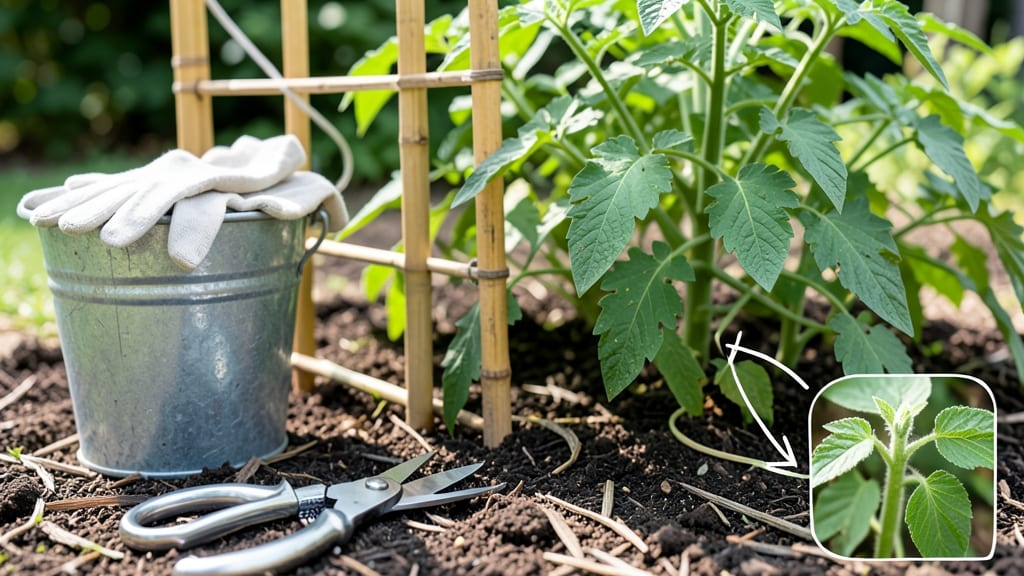
Step-by-step photo how to prune tomato plants turns a handful of fruits into a bucketful—without stunting your plant's growth. ✂️ I learned this the hard way after snipping too aggressively and watching my vines struggle, but now I’ve perfected a method that boosts yield and keeps plants strong. The secret lies in timing, technique, and knowing exactly where to cut.
You’ll need just three tools: sharp pruning shears, clean gloves, and a small notebook to track progress. Start pruning when plants reach 18–24 inches tall—this is when they’ve developed 4–6 true leaves and are ready to direct energy upward.
The goal? Remove suckers (those little shoots between stems) while preserving the main stem and branches that hold the most fruit.
By following these steps, you’ll end up with healthier vines, more flowers, and tomatoes that ripen faster—all while avoiding the leggy, weak plants that happen when pruning goes wrong.
The photos in this guide show exactly where to cut, so you’ll never second-guess again. Even my black thumb can’t mess this up.
Works for indeterminate varieties (like Roma or Beefsteak) and even determinate types with a few adjustments. Let’s get those plants producing like never before—without sacrificing their future growth. Ready to see the difference?
📚 In This Guide
- What you need
- Instructions
- Tips and common mistakes
- Wrapping up and next steps
What you need
- ● Pruning shears or sharp bypass pruners – Choose sterilized, sharp tools (avoid dull scissors or garden shears).
- ● Gloves – Heavy-duty gardening gloves to protect against thorns and dirt.
- ● Disinfectant (rubbing alcohol or bleach solution) – 1 part bleach to 9 parts water to sterilize tools between cuts.
- ○ Twine or plant ties – Optional but helpful for securing stems after pruning.
- ● Garden twine or soft plant supports – For indeterminate varieties (if you’re training vines upward).
- ● Small bucket or bag – For collecting pruned branches (compost or discard).
- ● Mature tomato plants – At least 12–18 inches tall (wait until after flowering if pruning determinate varieties).
- ● Sunny, dry day – Avoid pruning after rain to prevent disease spread.
- ● Basic knowledge of tomato types – Determinate (bush) vs. indeterminate (vining) affects pruning style.
- ● Hand lens or magnifying glass – For spotting pests or diseases before pruning.
- ○ Pruning sealant (optional) – For large cuts to prevent disease entry.
- ● Camera or phone – To document progress (great for tracking growth!).
How to prune tomato plants for maximum yield
Here's the method I rely on to boost fruit production without stunting your plants.
✂️ Step 1: Identify and Remove Suckers Early
Suckers are the small shoots that grow in the crotch between the main stem and a branch. These energy vampires divert nutrients from your fruit. I start checking for them when plants reach about 2 feet tall, using my fingers to gently feel for tiny bumps in the leaf axils. The key is early removal—suckers left too long become thick and woody, making them harder to snap off cleanly.
Pinch off suckers with your thumb and forefinger, twisting sharply to avoid leaving a stub. Never cut with scissors—you risk introducing disease through open wounds. I work from the bottom up, removing all suckers below the first flower cluster first. This ensures the plant focuses energy on developing existing fruit rather than new growth.
☀️ Step 2: Prune for Airflow and Sun Exposure
After removing suckers, step back and assess your plant's structure. You want a pyramid shape with branches spaced 12-18 inches apart. This spacing prevents branches from rubbing together, which causes sunscald and disease. Use clean, sharp pruning shears to trim any branches growing inward or crossing others.
Pay special attention to the lower leaves—remove any touching the soil to prevent rot and pest issues. I aim to keep the bottom 6-8 inches of stem bare, which also improves airflow and reduces humidity at the base. This isn't just about looks; proper airflow is your first line of defense against fungal diseases like early blight.
🌱 Step 3: Balance Fruit Load for Quality Over Quantity
Here's where it gets strategic: you'll need to thin fruit clusters to prevent overburdening the plant. When clusters form, leave only 3-5 tomatoes per truss, removing smaller or deformed ones first. This ensures the remaining fruit gets maximum nutrients and sunlight. I use my fingers to gently twist off unwanted tomatoes at the base of the stem—no cutting needed.
Watch for signs of overproduction: leaves curling, yellowing, or wilting indicate the plant is struggling. If you see this, remove one fruit cluster per plant to let the plant recover. Real talk: it's tempting to leave every tomato, but overloaded plants produce smaller, lower-quality fruit. Think of this as quality control, not sacrifice.
⏰ Step 4: Time Your Pruning for Optimal Growth
Prune in the early morning when temperatures are cool and evaporation is low. Avoid pruning in extreme heat or late in the day—open wounds left exposed overnight attract pests. I schedule my pruning sessions for weekdays when I can monitor the plants for stress signs immediately afterward.
Stop pruning 4-6 weeks before your first frost date. At this point, the plant needs to focus on ripening existing fruit rather than producing new growth. You'll know you've waited too long when new suckers appear rapidly after your last pruning session—that's the plant's way of telling you it's time to let it be.
Tips & tricks for pruning tomato plants like a pro
These practical insights will help you avoid common mistakes and maximize your tomato plant's potential without the guesswork.
Timing is Everything: In Step 1, when you're checking for suckers, I recommend doing this inspection every 3-5 days once plants hit that 2-foot mark. Suckers grow faster than you think—what looks like a tiny bump yesterday could be a 2-inch stem today. The earlier you catch them, the easier they are to remove cleanly. Pro tip: I use a small flashlight to peek into leaf axils on cloudy days when natural light makes them harder to spot.
Tool Selection Matters: While the instructions mention using your fingers for suckers, invest in a pair of bypass pruners for Step 2's structural pruning. The clean cuts you get prevent tearing and reduce stress on the plant. I keep my pruners in a 1:10 bleach solution between uses to prevent disease spread. For the lower leaves in Step 2, you can actually use your fingers—just twist them off at the base rather than cutting.
Visual Cues for Fruit Thinning: In Step 3, when deciding which tomatoes to keep, look for these signs: the largest, healthiest-looking fruits in each cluster should stay. Smaller tomatoes often don't ripen properly, and deformed ones rarely improve. I also check for even spacing—aim for about 2 inches between remaining tomatoes in the cluster. This prevents overcrowding, which leads to sunburned shoulders and cracked fruit.
Post-Pruning Care: After your pruning session, give your plants a light application of balanced fertilizer (10-10-10 works well) to compensate for the stress. I also water deeply in the morning to help the plant recover. Watch for new suckers appearing within 7-10 days—this is normal and means your plant is healthy and growing vigorously.
Pro Tips for Step By Step Photo How To Prune Tomato Plants
- These practical insights will help you avoid common mistakes and maximize your tomato plant's potential without the guesswork.
- Timing is Everything: In Step 1, when you're checking for suckers, I recommend doing this inspection every 3-5 days once plants hit that 2-foot mark.
- Tool Selection Matters: While the instructions mention using your fingers for suckers, invest in a pair of bypass pruners for Step 2's structural pruning.
Frequently asked questions
Got questions about pruning your tomato plants? You’re not alone! Here are some of the most common concerns—and their straightforward answers—to help you prune like a pro.
When is the best time to prune tomato plants?
Prune indeterminate tomatoes (like cherry or beefsteak varieties) throughout the growing season, starting when plants are 12–18 inches tall. For determinate tomatoes (bush varieties), minimal pruning is needed—just remove suckers if desired. Always prune in the morning when plants are dry to reduce disease risk.
Do I really need to prune determinate tomato plants?
Not necessarily! Determinate tomatoes produce fruit on all branches and don’t benefit from heavy pruning. Focus on removing diseased or damaged leaves and a few suckers (if any) to improve airflow. Over-pruning can stress the plant and reduce yield.
What if I prune too much? Can I fix it?
If you’ve over-pruned, don’t panic! Stop immediately and let the plant recover. Reduce watering slightly to prevent stress, and fertilize lightly with a balanced fertilizer (like 10-10-10) to encourage regrowth. Most tomato plants are resilient—just avoid heavy pruning for a few weeks.
Why do my tomato plants keep getting pests after pruning?
Pruning improves airflow, which can actually reduce pests—but if you’re still seeing issues, check for hidden culprits like aphids or whiteflies on undersides of leaves. Use neem oil or insecticidal soap for organic control, and prune early in the day to let plants dry faster (pests love moisture!).
Can I prune tomato plants in hot or cold weather?
Avoid pruning during extreme heat (above 90°F) or cold snaps (below 50°F). Stress from pruning + temperature swings can shock the plant. Stick to mild, overcast days for the best results—your tomatoes will thank you with healthier growth!
Still unsure? Snap a photo of your plant and compare it to our step-by-step guide—you’ve got this!
Wrapping up and next steps
Pruning your tomato plants might feel intimidating at first, but with the right steps and a little confidence, you’ll soon be harvesting bushels of juicy, flavorful tomatoes! 🌱 Remember, the key is to encourage airflow, remove suckers early, and focus on strong stems—your plants will thank you with bigger, healthier fruit.
Now that you’ve mastered the technique, why not take it a step further? Try experimenting with vertical growing techniques or companion planting to maximize your garden’s potential. Happy gardening—your future salads are waiting! 🍅✨