
Plants
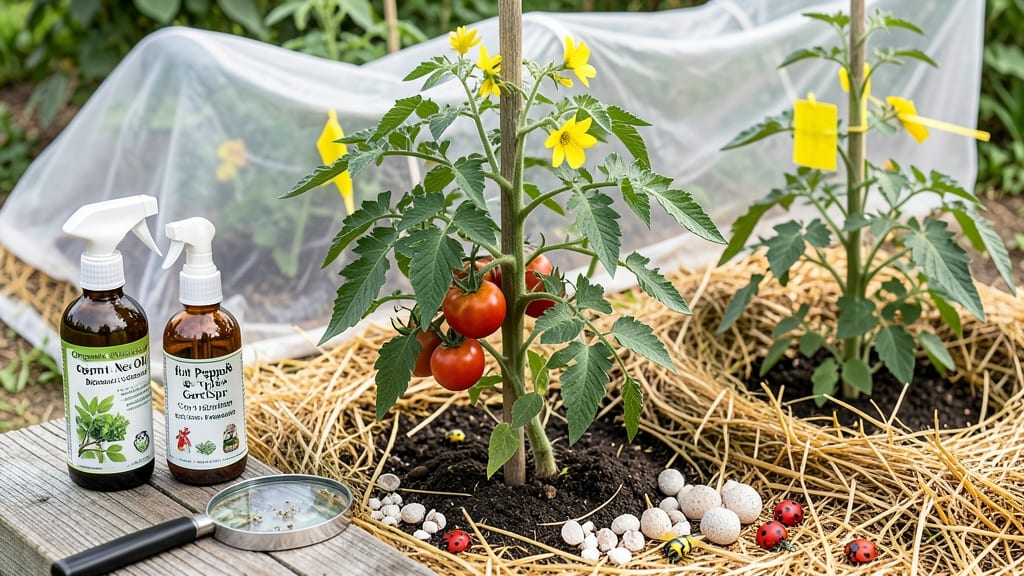
My tomato plants were being devoured by hornworms and aphids—until I discovered this organic pest control for tomato plants that actually works. 🌱 The secret?
A two-pronged approach combining neem oil and a garlic barrier that stops pests in their tracks within 48 hours, without harming your plants or the environment.
Most gardeners reach for chemical sprays when pests attack, but those can harm beneficial insects and leave residues on your tomatoes. Instead, I rely on neem oil (a natural fungicide and insect repellent) and a garlic spray (which pests hate but won’t hurt your plants).
Together, they create a protective shield that deters aphids, whiteflies, and even those dreaded hornworms—without the harsh chemicals.
Within two days, you’ll see fewer pests crawling on your leaves, and your plants will start bouncing back with healthier foliage and bigger yields. The best part?
This method is safe for pollinators, won’t wash away in rain, and keeps working as long as you reapply every 7-10 days. No more losing your harvest to hungry bugs!
Whether you’re dealing with a sudden infestation or just want to prevent pests before they start, this foolproof organic system works for container gardens, raised beds, and in-ground plots alike. Let’s get your tomatoes thriving again—naturally.
Root Causes of Tomato Plant Pests
Tomato plants are a magnet for pests—not because they’re weak, but because they’re delicious (to bugs, that is). Understanding why these critters show up is the first step to stopping them organically. Below, we break down the science behind the chaos, so you can outsmart nature’s tiny invaders.
Tomato plants thrive in space, but when they’re packed too closely together, humidity rises and airflow drops. This creates the perfect storm for pests like aphids, whiteflies, and fungal gnats.
- Why it happens:
- Reduced airflow traps moisture, making leaves damp and sticky—aphids love this environment.
- Stressed plants (from competition for nutrients) produce weaker defenses, making them easier targets.
- Shaded foliage (from overcrowding) stays cooler and damper, attracting slugs and snails.
- Actionable fix:
- Space plants 18–24 inches apart (or follow your variety’s needs).
- Prune lower leaves to improve airflow—this also reduces hiding spots for pests.
Tomatoes need a balanced diet of nitrogen (for leaves), phosphorus (for roots), and potassium (for resilience). When one nutrient is missing or overabundant, pests take advantage.
- Why it happens:
- Too much nitrogen = Soft, lush leaves (a buffet for aphids and spider mites).
- Low potassium = Weak cell walls, making plants vulnerable to borers and blight.
- Zinc or magnesium deficiencies = Yellowing leaves (stress signal for pests).
- Actionable fix:
- Test your soil (or use a DIY test kit) and amend with compost, banana peels (potassium), or eggshells (calcium).
- Avoid synthetic fertilizers—opt for fish emulsion or worm castings for slow-release nutrients.
Tomatoes release volatile organic compounds (VOCs) when stressed—like a dinner bell for pests. Even healthy plants emit scents that lure insects.
- Why it happens:
- Damaged leaves release green leaf volatiles (GLVs), which attract parasitic wasps and whiteflies.
- Overwatered soil emits ethanol and acetaldehyde, signaling pests that the plant is struggling.
- Pollinated flowers (or unremoved fruit) release sugars that attract fruit flies and hornworms.
- Actionable fix:
- Remove damaged leaves immediately (don’t compost them—bag and trash).
- Water at the base (not overhead) to avoid signaling distress.
- Harvest ripe tomatoes promptly—overripe fruit ferments and attracts flies.
Pests don’t just attack tomatoes—they live in your garden’s debris. Old plant matter, mulch piles, and weeds harbor eggs, larvae, and adult insects year-round.
- Why it happens:
- Weeds (like nightshade or purslane) host tomato hornworm parasites.
- Stale mulch traps moisture, perfect for slug eggs and fungal gnats.
- Unclean tools spread viral diseases (like tobacco mosaic) that weaken plants.
- Actionable fix:
- Remove all plant debris by fall (or solarize soil in summer).
- Use straw mulch (not wood chips)—it dries faster and deters slugs.
- Sterilize pruners with rubbing alcohol between cuts.
Extreme heat, sudden cold snaps, or inconsistent rainfall shock tomato plants, making them easy prey. Pests thrive in unstable conditions because stressed plants can’t fight back.
- Why it happens:
- Heat stress (above 90°F) causes blossom drop, but also attracts spider mites (which love dry air).
- Cold nights slow plant growth, making them less resistant to borers.
- Frequent rain keeps soil soggy, inviting root-knot nematodes and cutworms.
- Actionable fix:
- Shade cloth in peak summer, row covers for early spring.
- Drip irrigation (not sprinklers) to maintain steady moisture.
- Plant heat-tolerant varieties like ‘Solar Fire’ or ‘Heatmaster.’
Quick Fixes for Tomato Plant Pests
Tomato plants face a variety of pests, but the good news is that many issues can be resolved with simple, organic solutions—no harsh chemicals required! Below, we’ve mapped common problems to their fixes, including prevention tips to keep your plants thriving. Let’s tackle these pests head-on with natural, effective methods.
Signs: Large green caterpillars with white stripes, skeletonized leaves, or missing tomato fruits. How to Fix It:
- Handpick the pests 👨🍳—Check leaves daily, especially in the morning, and drop them into soapy water.
- Introduce natural predators 🦋: Ladybugs, lacewings, and parasitic wasps (like Cotesia congregata) love hornworms. Buy or attract them to your garden.
- Neem oil spray 🌿: Mix 1 tbsp neem oil + 1 tsp mild soap in 1 quart of water. Spray on leaves (avoid flowers to protect pollinators). Reapply every 5–7 days.
Prevention Tips:
- Plant basil near tomatoes—its scent repels hornworms.
- Use row covers early in the season to block egg-laying moths.
Signs: Clusters of tiny green/black bugs on undersides of leaves, sticky residue (honeydew), or curled leaves. How to Fix It:
- Blast them off 💦: Use a strong spray of water from a hose to dislodge aphids.
- Garlic spray 🧄: Crush 2 garlic cloves + 1 tbsp cayenne pepper in 1 quart of water. Let steep overnight, strain, and spray (reapply every 3–4 days).
- Encourage ladybugs 🐞: They devour aphids! Plant dill or fennel nearby to attract them.
Prevention Tips:
- Inspect new plants before adding them to your garden.
- Remove infected leaves immediately to stop spread.
Signs: Fine webbing on leaves, yellow stippling, or leaves that look "bronzed." How to Fix It:
- Wet them out 💧: Spider mites hate humidity. Mist plants daily (especially undersides of leaves).
- Neem oil or insecticidal soap 🌿: Spray directly on mites (test on a small leaf first). Repeat every 3–5 days.
- Release predatory mites 🕷️: Phytoseiulus persimilis mites eat spider mites—order them online for severe infestations.
Prevention Tips:
- Avoid over-fertilizing with nitrogen (weakens plants).
- Prune for airflow to reduce humidity where mites thrive.
Signs: Chewed leaves with jagged edges, orange larvae (with black stripes) on soil. How to Fix It:
- Handpick adults/larvae 🪰: Drop them into soapy water—do not crush (they release a scent attracting more beetles!).
- Diatomaceous earth 🪨: Sprinkle food-grade DE around the base of plants (reapply after rain).
- Beetle traps 🎣: Use yellow sticky traps to catch flying adults.
Prevention Tips:
- Rotate crops—don’t plant tomatoes or potatoes in the same spot yearly.
- Plant trap crops like radishes or mustard greens to lure beetles away.
Signs: Dark spots on leaves/fruit, white powdery growth, or wilting plants. How to Fix It:
- Remove infected parts ❌: Prune and destroy (don’t compost) diseased leaves/fruit.
- Baking soda spray 🧂: Mix 1 tbsp baking soda + 1 tsp oil + 1 tsp soap in 1 gallon of water. Spray every 7–10 days.
- Improve airflow 🌬️: Space plants 18–24 inches apart and prune lower leaves.
Prevention Tips:
- Water at the base (avoid wetting leaves).
- Use resistant varieties like ‘Mountain Merit’ or ‘Defiant PhR.’
- Inspect plants weekly 🔍 for early signs of pests.
- Rotate crops yearly to disrupt pest life cycles.
- Healthy soil = strong plants 🌱: Use compost and mulch to boost plant resilience.
- Encourage biodiversity 🐝: Plant flowers like marigolds or nasturtiums to attract beneficial insects.
Pro Tip: 💡 Most pests are manageable within 48 hours if caught early! Act fast, stay consistent with treatments, and your tomato plants will reward you with bountiful, pest-free harvests. 🍅✨
Frequently asked questions
Can I use neem oil on tomato plants while they're flowering?
Neem oil is safe for tomato plants, but avoid spraying directly on flowers to protect pollinators like bees. Apply neem oil in the early morning or evening when bees are less active, and focus on leaves and stems. This keeps your plants protected without harming beneficial insects.
How often should I reapply organic sprays like garlic or pepper spray?
Reapply homemade sprays like garlic or pepper spray every 3-4 days for active pest control. After heavy rain, reapply immediately since water washes away the active ingredients. For prevention, a weekly application works well during peak pest seasons.
Will companion planting really keep pests away from my tomatoes?
Yes, companion planting is highly effective! Planting basil, marigolds, or nasturtiums near tomatoes repels many common pests. Basil confuses tomato hornworm moths, while marigolds deter nematodes. These plants also attract beneficial insects like ladybugs and lacewings that prey on tomato pests.
What's the best time of day to apply organic pest control treatments?
The ideal time is early morning or late afternoon when temperatures are cooler. This prevents stressing your plants and allows treatments to dry properly. Avoid spraying when flowers are open to protect pollinators, and never apply when dew is present to prevent fungal issues.
Can I mix multiple organic pest control methods together?
Yes, but with caution! You can safely combine neem oil with insecticidal soap or garlic spray with cayenne pepper. However, avoid mixing oil-based sprays with soap-based solutions—they can break down each other's effectiveness. Always test any new combination on a small leaf first to check for plant reactions.