
Planting
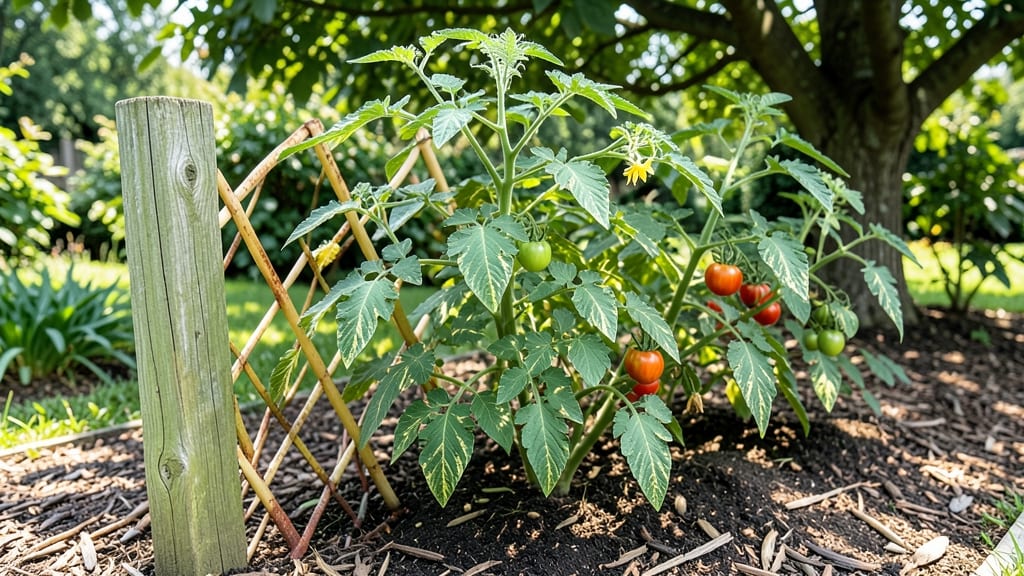
Growing the Mr. Stripey tomato plant means harvesting striped, beefsteak-sized fruit that looks like edible art. 🌱 This indeterminate variety climbs like a jungle vine but delivers flavor so rich you’ll forget store-bought tomatoes exist.
The secret to its success? Trellising early, feeding consistently, and protecting those gorgeous striped beauties from cracking in heavy rains.
Start with well-draining soil mixed with compost—Mr. Stripey thrives in full sun (6+ hours daily) and warm climates (zones 5-10). Plant deep, burying stems up to the first leaves, and space plants 3 feet apart to avoid crowding.
The vines grow aggressively, so install a sturdy trellis or cage at planting time—this isn’t a plant you’ll want to retrofit later.
Water at the base, keeping soil consistently moist but never soggy, and fertilize every 2-3 weeks with a balanced tomato feed. Prune suckers regularly to direct energy into fruit production, and watch for early blight—this variety’s thick leaves make it slightly more vulnerable.
With the right care, you’ll harvest 10-15 pounds of striped tomatoes per plant by midsummer.
Harvest when fruit is fully colored but still firm, and store in the fridge for up to 2 weeks. The real magic? Slicing into those striped beauties and seeing the marbled flesh inside—worth every minute of care. Ready to grow tomatoes that double as conversation starters?
📚 In This Guide
- What you need
- Instructions
- Tips and common mistakes
- Wrapping up and next steps
What you need
- ● Mr Stripey tomato seeds or seedlings – 1-3 plants (depending on space and desired yield). Choose organic, heirloom seeds for best results!
- ● Large containers or garden bed – Minimum 5-gallon pots (or deeper) for container growing, or a sunny, well-draining garden spot with at least 6-8 hours of sunlight daily.
- ● High-quality potting mix – A lightweight, nutrient-rich blend (e.g., 60% compost, 30% coconut coir, 10% perlite) to prevent root rot.
- ● Tomato cages or sturdy stakes – 6-8 ft tall to support the vining growth (Mr Stripey can reach 6+ feet!).
- ● Balanced fertilizer – 10-10-10 or 5-5-5 (organic options like fish emulsion or compost tea work too!).
- ○ Mulch (optional but recommended) – Straw or shredded leaves to retain moisture and suppress weeds.
- ● Gloves & knee pads – For comfy gardening!
- ● Watering can or hose with a gentle spray nozzle – Avoid blasting leaves to prevent disease.
- ● Pruning shears – For trimming suckers and shaping the plant.
- ● pH testing kit – Aim for 6.0-6.8 pH in soil for optimal nutrient uptake.
- ○ Drip irrigation or soaker hose (optional) – Ensures consistent moisture without wetting foliage.
How to grow a thriving Mr Stripey indeterminate tomato plant
This heirloom beauty needs the right support and care to reach its full towering potential—here’s how to coax those striped fruits from a sturdy, productive vine.
🌱 Step 1: Start Seeds Indoors for Early Vigorous Growth
Begin seeds 6-8 weeks before your last frost date in sterile seed-starting mix (never garden soil). Fill small pots—2-3 inches deep—and press the mix down lightly to remove air pockets. Plant 2 seeds per pot at a depth of ¼ inch, just below the soil surface. Cover them with a fine layer of mix and mist gently until the surface looks evenly damp but not soggy.
Place pots in a warm spot (75-85°F) with a humidity dome or plastic wrap to retain moisture. A seedling heat mat speeds germination to 5-10 days. Watch for the first true leaves (not the initial cotyledons) before removing the dome—this prevents damping-off disease that can wipe out seedlings overnight. Once they emerge, move them to a bright, south-facing window or under grow lights for 14-16 hours daily. Without enough light, seedlings stretch leggy and weak.
☀️ Step 2: Transplant and Provide Strong Support Early
After the last frost, transplant seedlings outdoors on an overcast day to reduce shock. Bury them deeper than the root ball—up to the first true leaves—to encourage strong root development. Mr Stripey’s indeterminate vines will grow 6-10 feet tall, so install a tall cage (6+ feet) or trellis immediately. I use wooden dowels for heavy vines—they won’t bend like plastic cages under the weight of fruit.
Space plants 3-4 feet apart in full sun (6+ hours daily). Mulch heavily around the base with 2-3 inches of organic mulch to retain moisture and suppress weeds. Water deeply at the base once a week, aiming for 1 inch of water per week—more during fruit set. Avoid wetting leaves to prevent disease. You’ll know the plant is thriving when it produces new leaves daily and flowers appear 4-6 weeks after transplanting.
🌿 Step 3: Prune and Train for Maximum Airflow and Fruit
Prune aggressively to focus energy on fruit production. Remove suckers (side shoots in the leaf axils) weekly—they drain energy from the main stem. Leave 1-2 strong suckers near the bottom to develop into secondary stems, but prune the rest. Pinch off the top growth once the plant reaches your trellis height to redirect energy downward. This ensures larger, striped fruits instead of a bushy, unproductive vine.
Train vines upward by tying them gently to the support with soft plant ties every 12-18 inches. Avoid tight ties—they can girdle the stem as the plant thickens. When flowers appear, remove the first few clusters to encourage stronger early growth. Once the plant is established, fertilize lightly with a balanced tomato fertilizer (10-10-10) every 2-3 weeks—too much nitrogen leads to leafy growth at the expense of fruit.
⏰ Step 4: Harvest and Extend the Season
Mr Stripey tomatoes ripen unevenly, so check plants daily once fruit starts coloring. Harvest when they’re fully red with striped patterns—they won’t ripen further off the vine. Use pruning shears to cut stems cleanly, leaving a small portion attached to prevent disease entry. Store ripe tomatoes at room temperature for 3-5 days or refrigerate for longer shelf life.
To extend the harvest, prune back the plant after the first frost by cutting the main stem at 4 feet tall. Cover with a frost blanket on cold nights—Mr Stripey often produces a second flush of flowers in fall with proper care. If frost kills the plant, don’t worry—indeterminate varieties like this one focus all their energy on fruit production before dying back. Save seeds from the best tomatoes for next year!
Tips & tricks for growing towering Mr Stripey tomato plants
Real talk: Growing an indeterminate variety like Mr Stripey isn't just about planting seeds and hoping for the best—it's about creating the perfect environment from day one. These are the game-changing details that separate a struggling vine from a towering, fruit-loaded masterpiece.
Seedling Heat Factor: That 75-85°F range for germination isn't just arbitrary—it's the Goldilocks zone for Mr Stripey seeds. I learned this the hard way after ruining three batches with inconsistent heat. Place your pots on a seedling heat mat if your home runs cooler than 70°F, and keep them away from drafts. The goal is consistent warmth, not just any warmth. Watch those seedlings closely after 5-10 days—if they don't emerge within 14 days, they're likely not viable.
Lighting Strategy: The 14-16 hours of daily light in Step 1 is non-negotiable for preventing leggy seedlings. If your south-facing window doesn't provide enough light (you'll know because seedlings stretch toward the light), supplement immediately with grow lights. I use LED grow lights on a timer—cheaper than you think and far more effective than regular bulbs. Leggy seedlings won't recover; they'll always be weak, no matter how much you prune later.
Support System: Don't wait until the plant is already struggling to install support. Mr Stripey's indeterminate growth means it will reach 6-10 feet—so your 6-foot cage or trellis needs to be in place before the first true leaves appear. I've seen too many gardeners try to retrofit supports later, only to watch their plants flop over under the weight of fruit. Wooden dowels are my go-to because they won't bend like plastic cages when those striped beauties start hanging heavy.
Pruning Precision: When it comes to those weekly sucker removals, less is more. Leave just 1-2 strong suckers near the base to develop into secondary stems—they'll help support the plant's weight. And here's what nobody tells you: use sharp, clean pruners and make cuts at a 45-degree angle just above a leaf node. Ragged cuts invite disease, and cutting too close can damage the stem. The goal is clean, precise cuts that heal quickly.
Pro Tips for Mr Stripey Tomato Plant
- Real talk: Growing an indeterminate variety like Mr Stripey isn't just about planting seeds and hoping for the best—it's about creating the perfect environment from day one.
- Seedling Heat Factor: That 75-85°F range for germination isn't just arbitrary—it's the Goldilocks zone for Mr Stripey seeds.
- Lighting Strategy: The 14-16 hours of daily light in Step 1 is non-negotiable for preventing leggy seedlings.
Frequently asked questions
How tall can Mr Stripey tomato plants grow?
Mr Stripey is an indeterminate variety, meaning it can grow 6–10 feet tall (or even higher with proper support!). Use sturdy cages, trellises, or stakes to guide its vertical growth and maximize fruit production. Prune suckers regularly to encourage airflow and focus energy on fruit development.
When should I plant Mr Stripey seeds or seedlings?
Start seeds 6–8 weeks before your last frost date indoors (around March–April for most U.S. zones). Transplant seedlings outdoors after soil temps reach 55°F+ and nighttime temps stay above 50°F. Harden off seedlings for 7–10 days before moving them to the garden for best success.
Why aren’t my Mr Stripey tomatoes ripening?
Common culprits include cool temperatures (below 60°F), overcrowding, or nutrient deficiencies. Ensure plants get 6+ hours of sunlight daily, space them 18–24 inches apart, and fertilize with a balanced tomato feed (like 10-10-10) every 2–3 weeks. Blossom end rot? Boost calcium with crushed eggshells or lime.
Can I grow Mr Stripey in containers?
Choose a 5-gallon+ container with drainage holes and fill it with lightweight potting mix. Use a tall trellis or cage to support the plant’s height. Container-grown tomatoes may need more frequent watering and fertilizer, so monitor soil moisture daily. Just ensure the pot stays stable—these plants get heavy!
How do I protect Mr Stripey from pests or diseases?
Prevent issues with crop rotation and healthy soil. Watch for hornworms (handpick them!) and aphids (spray with soapy water). For fungal diseases like early blight, prune lower leaves for airflow and apply copper fungicide preventatively. Avoid overhead watering to keep foliage dry.
Still stumped? Drop your Mr Stripey growing challenges in the comments—we’re happy to help!
Wrapping up and next steps
Growing Mr Stripey tomato plants is a rewarding journey that turns your garden into a vibrant, flavorful haven! 🌱 With its indeterminate nature, this variety thrives in vertical spaces, offering a bountiful harvest of striped, sweet tomatoes.
Whether you're a seasoned gardener or a curious beginner, embracing this plant’s unique charm will leave you eager to experiment—and maybe even share your harvest with neighbors!
Ready to dive in? Start by sketching your setup—whether it’s a trellis, cage, or tower—then gather your supplies and plant with confidence. Soon, you’ll be savoring homegrown tomatoes straight from Mr Stripey’s lush vines. Happy growing! 🍅✨