
Flowers
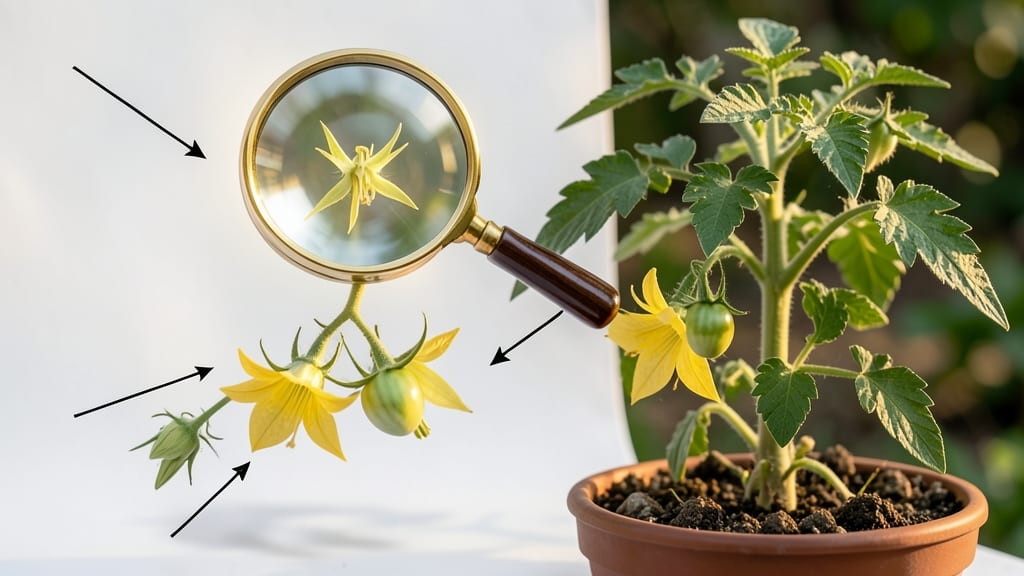
Identifying male and female tomato flowers is the secret to fat, flavorful fruits. 🌱 The difference isn't obvious at first glance, but once you spot these key features—like the tiny fruit bud at the base of a female flower—you'll prune and pollinate like a pro.
I used to waste energy on flowers that would never set fruit until I learned this trick. Male flowers show up first and look like tiny starbursts with no hidden surprises. Female flowers, though, have that telltale swollen ovary at the base where the fruit will form.
This tiny bump is your golden ticket to better harvests. Once you see it, you'll notice it everywhere. Knowing the difference helps you prune wisely: keep female flowers for fruit, but remove excess males when plants are young to focus energy.
You'll also spot when pollination is struggling—like when female flowers drop before setting fruit—and take action with a gentle shake or hand-pollination. This skill works for all tomato varieties, from cherry to beefsteak. Master it, and you'll transform your garden from a hit-or-miss experiment to a reliable fruit factory.
Let's get those flowers talking to each other!
📚 In This Guide
- What you need
- Instructions
- Tips and common mistakes
- Wrapping up and next steps
What you need
- ● Tomato plants – Healthy, flowering plants (indeterminate or determinate varieties work best).
- ● Magnifying glass or loupe – A 10x magnification tool helps inspect tiny flower details clearly.
- ● Notebook & pen – To jot down observations or track flower types.
- ○ Camera (optional but helpful) – A smartphone with a macro mode or a basic digital camera for close-up shots.
- ○ Gloves (optional) – Lightweight gardening gloves to protect your hands from thorns or dirt.
- ● Grow light or bright LED lamp – For examining flowers in low-light conditions.
- ● Pruning shears – If you plan to remove male flowers to encourage fruit production.
- ● Field guide or app – Like iNaturalist or a tomato-specific gardening app for quick reference.
- ● Spray bottle with water – To gently mist flowers if they’re dusty or hard to see.
Quick visual tricks to identify male and female tomato flowers
Here's how to spot the difference in seconds—no guesswork, just science.
🌱 Step 1: Locate the Flower Cluster
Start by examining the flower clusters on your tomato plant. Look for small buds that haven't yet opened fully. These are your best candidates for identification. I always check the newest growth first because older flowers may already be pollinated or setting fruit.
Gently hold the stem between your thumb and forefinger to stabilize the plant. You'll notice some flowers grow directly from the main stem, while others sprout from leaf axils (the angle between a leaf and the stem). Both types can be male or female, so don't assume based on position alone.
☀️ Step 2: Examine the Flower Structure
Once you've found a bud, wait until it opens slightly—just enough to reveal the center. Here's where the magic happens: female flowers have a tiny fruit-like structure called an ovary at their base. It looks like a miniature tomato, usually green or pale yellow, nestled just below the petals.
Male flowers, on the other hand, have no ovary. Their stems are slender and bare, ending directly at the flower's base. I like to think of them as "naked stems"—no hidden surprises below the petals. This visual difference is your primary clue, so take a moment to compare a few flowers side by side.
🌿 Step 3: Check for Pollen and Fruit Development
For flowers that are already open, look for pollen on the male flowers' anthers. These are the yellow dust-covered structures in the center. When pollen is present, it's a clear sign you're dealing with a male bloom. Female flowers may show signs of pollination too, but their defining feature remains that little ovary at the base.
Watch for fruit development over the next few days. Female flowers that receive pollen will swell slightly at the base as the ovary begins to grow. This is your confirmation—no need for further inspection. Real talk: if you're growing indeterminate varieties, female flowers often appear later in the season, so keep checking new growth.
⏰ Step 4: Time Your Observations
Morning is the best time to identify flowers because that's when they're most likely to be open and receptive. Early light also helps you see details more clearly. I make it a habit to scan my plants for 5-10 minutes each morning, jotting down notes about flower positions and characteristics.
Don't stress if you can't identify every flower immediately. Focus on the newest growth first, as these flowers will contribute most to your fruit set. Remember, even if you miss a few, your plant will continue producing flowers throughout the season. The key is consistency—check regularly and you'll quickly build intuition for what to look for.
Tips & tricks for quick tomato flower identification
Here's what nobody tells you about making this foolproof in your garden—no guesswork needed.
Use a Magnifying Glass: For those tricky early buds where the ovary isn't clearly visible, a simple 10x magnifying glass (or even a phone with macro mode) reveals the tiny details. I keep mine clipped to my gardening apron—it's changed how I identify flowers in seconds. The ovary on female flowers looks like a miniature tomato, while male stems are clean and smooth. This tool eliminates second-guessing when the light isn't ideal.
Compare Side by Side: The instructions mention comparing flowers, but here's the secret: use your fingers to gently separate two flowers growing close together. Hold one in each hand and compare their stems. Female flowers will have that slight swelling at the base even before opening fully, while male stems remain completely straight. This tactile comparison works even when buds aren't fully open yet.
Morning Light is Your Best Friend: The 5-10 minutes of morning observation in Step 4 is golden—literally. Dew drops act like tiny magnifying glasses, making details pop. I've found that even cloudy mornings with diffused light reveal details better than bright afternoon sun. If you're short on time, prioritize these morning checks over afternoon inspections. The difference in visibility is night and day.
Track Your Progress: Keep a small notebook by your garden bench and jot down flower positions using plant markers or even toothpicks labeled "M" or "F." After a few days, you'll notice patterns—some varieties produce more female flowers at certain times of year. I track mine weekly and adjust my pruning strategy accordingly. This simple habit turns identification into a game where you start predicting flower types before they even open.
Pro Tips for Identify Male And Female Tomato Flowers
- Here's what nobody tells you about making this foolproof in your garden—no guesswork needed.
- Use a Magnifying Glass: For those tricky early buds where the ovary isn't clearly visible, a simple 10x magnifying glass (or even a phone with macro mode) reveals the tiny details.
- Compare Side by Side: The instructions mention comparing flowers, but here's the secret: use your fingers to gently separate two flowers growing close together.
Frequently asked questions
Got questions about spotting male and female tomato flowers? You’re not alone! Here are some of the most common queries—and their easy answers—to help you master the basics like a pro.
Why do tomato plants even have male and female flowers?
Tomato plants produce male and female flowers to optimize reproduction and fruit production. Female flowers (with tiny fruit bumps) are essential for setting tomatoes, while male flowers (just petals) help pollinate nearby plants. Some varieties focus energy on female flowers for heavier yields—like determinate types—while others balance both for continuous harvests.
When is the best time to identify male vs. female flowers?
Check your tomato flowers in the morning when they’re fully open and turgid (plump). Early blooms may not be fully formed, but once they’re 3–5 days old, you can easily spot the differences. Pro tip: Use a magnifying glass if your flowers are tiny or crowded!
What if my tomato plant only has male flowers? Will it still produce fruit?
If your plant is mostly male flowers, don’t panic! Some varieties (like indeterminate types) prioritize male flowers early to boost pollination. However, if no female flowers appear within 2–3 weeks, check for stress (heat, drought, or poor soil) or pests. A light pinch of blossom set spray (like calcium or gibberellic acid) can sometimes help.
How does temperature affect male vs. female flower production?
Extreme heat (90°F/32°C+) can cause a condition called male sterility, where flowers form but fail to set fruit. Cooler temps (70–80°F/21–27°C) encourage female flowers. If your plant is struggling, try shade cloth or mulch to stabilize soil temps. Morning watering also helps prevent stress.
Can I manually pollinate tomato flowers to improve fruit set?
If you’re growing in greenhouses or notice poor pollination (common in rainy or windless weather), gently tap the male flower stems against female flowers to transfer pollen. For stubborn cases, use a small paintbrush to dab pollen from male to female flowers. Best time: early morning when flowers are fresh.
Wrapping up and next steps
Mastering the art of spotting male vs. female tomato flowers is a game-changer for gardeners! With these simple visual tricks, you’ll dramatically improve fruit set and enjoy a bountiful harvest. 🌱 Start by practicing these techniques—your tomatoes (and future gardening adventures) will thank you!
Now that you’re armed with knowledge, take the next step: head to your garden, grab a magnifying glass, and put your skills to the test. Tag a friend who loves gardening and share your newfound expertise—happy growing! 🌿