
How To
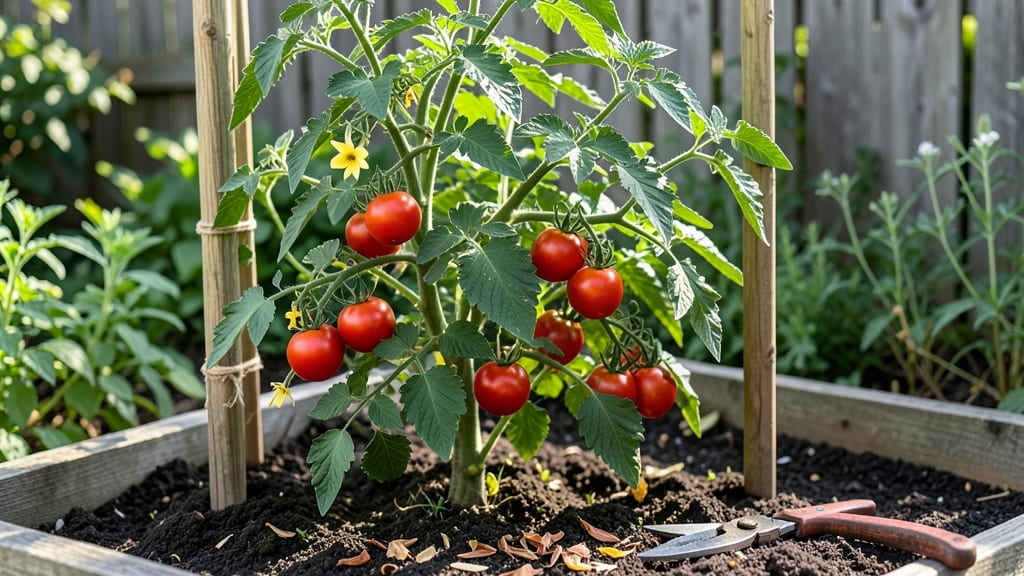
Let tomato plants grow 6-8 feet tall for indeterminate varieties, but stop determinates at 4-5 feet—that’s where the magic happens. 🌱 I learned the hard way that letting vines sprawl too long invites disease and weakens fruit production, while pruning just right boosts yield and keeps plants manageable.
The key is balancing height with support and airflow.
Indeterminate tomatoes need strong 6-foot cages or bamboo stakes, while determinates thrive in 4-foot cages—both prevent sprawl that blocks sunlight and attracts pests. Prune suckers (those little shoots in leaf junctions) weekly to direct energy to fruit, not endless vines. Overgrown plants? Trim aggressively to save the harvest.
📚 In This Guide
- What you need
- Instructions
- Tips and common mistakes
- Wrapping up and next steps
What you need
- ● Tomato plants: Start with healthy seedlings or seeds (check if they’re indeterminate or determinate—this affects height management!).
- ● Growing containers or garden bed: For indeterminate varieties: A 5-gallon pot or larger (or a tall cage/stake setup).
- ● For determinate varieties: A 3–5 gallon pot or well-spaced garden bed (18–24 inches apart).
- ● Support structures: Indeterminate: 6–10 ft tall tomato cages (or sturdy bamboo stakes, trellises, or wooden posts).
- ● Determinate: 3–5 ft cages or stakes (or none if bushy enough).
- ● Pruning shears: Sharp, clean bypass pruners (sterilize with rubbing alcohol between cuts to prevent disease!).
- ● Garden twine or soft plant ties: 10–20 ft of twine (for securing vines to supports).
- ● Balanced fertilizer: 10-10-10 or 5-5-5 NPK ratio (follow package instructions for application).
- ● Mulch: Straw, grass clippings, or shredded leaves (2–3 inches thick to retain moisture).
- ● Watering can or hose with a gentle nozzle: (Avoid overhead watering to prevent disease.)
- ● Plant markers: Label varieties to track growth habits (especially useful if growing multiple types!).
- ● Copper tape or fungicide spray: For indeterminate plants prone to blight (apply early in the season).
- ● Grow lights or sun lamp: If starting indoors (provides 12–16 hours of light/day).
- ● Compost or worm castings: Boosts soil health and nutrient uptake.
- ● Harvest basket or bucket: Makes picking ripe tomatoes easier (and keeps them from rolling away!).
Instructions for managing tomato plant height by type
Here's how to determine the perfect height for your tomato plants based on their growth habit.
🌱 Step 1: Identify Your Tomato Variety Type
First, check whether you're growing indeterminate or determinate tomatoes—this changes everything. Indeterminate varieties keep growing all season, often reaching 6-12 feet or more, while determinate types stop at 3-5 feet. Look at your seed packet or plant tag for this info, or research your variety online.
If you're unsure, observe your plant's growth pattern: indeterminate tomatoes produce vines with no natural stopping point, while determinates form compact bushes with a single flush of fruit. This distinction is critical because pruning and support needs differ completely between types.
☀️ Step 2: Set Up Support Structures Based on Height Potential
For indeterminate varieties, install a strong trellis, cage, or stake system immediately after transplanting. These plants need vertical support because their uncontrolled growth can reach 10+ feet in ideal conditions. I recommend 6-foot cages for most backyard gardens, but taller varieties may need 12-foot stakes or overhead trellises.
Determinate tomatoes, on the other hand, only need 3-4 foot cages or simple stakes, since they naturally top out at that height. The key is to provide support before the plant reaches half its mature height—waiting until it's already leaning means you'll struggle to keep it upright.
✂️ Step 3: Prune Indeterminate Plants Strategically
For indeterminate varieties, prune suckers (the shoots that form in the leaf axils) to control height and improve air circulation. Remove suckers when they're pencil-sized—larger ones will waste plant energy. I aim to keep the main stem strong and unobstructed, allowing side shoots only where they won't shade lower fruit.
Leave 1-2 main stems for bushier growth (but never more than 3) and prune lower leaves up to 12 inches from the ground to prevent soil-borne diseases. This encourages upward growth while keeping the plant at a manageable 6-8 feet height in most home gardens.
⏰ Step 4: Harvest at Peak Height for Determinate Varieties
Determinate tomatoes naturally reach their mature height 4-6 weeks after flowering, so plan to harvest when they're fully colored but still firm. These plants produce one main flush of fruit, so timing is everything. Watch for clustered fruit near the top—this is your cue that the plant has finished growing vertically.
After the first harvest wave, you can prune back determinate plants by 1/3 to encourage a smaller second flush, but don't expect the same yield. The goal is to keep the plant compact—never let it exceed 5 feet, as this strains the stem and reduces fruit quality.
🌿 Step 5: Adjust for Space and Climate Constraints
If you're growing in a small space or hot climate, limit indeterminate height to 5-6 feet by pruning aggressively. In cooler regions, these plants may grow taller naturally, so monitor their progress and adjust support as needed. I've seen cherry tomatoes reach 15 feet in ideal conditions—when in doubt, provide extra support rather than risk breakage.
For determinate varieties, never let them exceed their mature height—this stresses the plant and reduces fruit quality. If you notice stems bending under fruit weight, add extra stakes immediately. The goal is balanced growth, not maximum height.
Tips & tricks for perfect tomato plant height management
Mastering tomato plant height isn't about letting them grow wild—it's about strategic guidance that maximizes yield without sacrificing plant health. Here's what I've learned from years of trial and error in the garden.
Variety-Specific Growth Limits: The 6-8 foot height range for indeterminate tomatoes in Step 3 isn't arbitrary—it's the sweet spot where you get maximum fruit production without overburdening the plant's structure. I've seen plants exceed 12 feet, but they often produce smaller, less flavorful fruit at the top. For determinate varieties, that 3-5 foot limit in Step 1 is non-negotiable—they simply can't support their own weight beyond that point without breaking.
Support System Timing: The instructions emphasize setting up support before plants reach half their mature height, and I can't stress this enough. I've watched too many gardeners struggle with top-heavy indeterminate plants that suddenly snap under fruit weight. Install your 6-foot cages or stakes immediately after transplanting—don't wait for the plant to start leaning. This prevents the need for emergency reinforcements later in the season.
Pruning Precision: When it comes to removing suckers in Step 3, size matters. That pencil-sized guideline isn't just about convenience—smaller suckers have less developed vascular systems, so removing them wastes minimal plant energy. Larger suckers would require significant resources to develop, potentially reducing your main fruit production. I also recommend using sharp, clean pruners to make clean cuts at the base of suckers, which helps prevent disease entry points.
Climate Adaptation: The 5-6 foot height limit for indeterminate plants in small spaces or hot climates might seem restrictive, but it's actually a strategic choice. In these conditions, plants grow faster and produce fruit earlier, so containing their height prevents the plant from putting all its energy into vertical growth rather than fruit development. I've found that aggressive pruning in these environments actually increases overall yield by focusing the plant's resources where they'll do the most good.
Pro Tips for How Tall To Let Tomato Plants Grow
- Mastering tomato plant height isn't about letting them grow wild—it's about strategic guidance that maximizes yield without sacrificing plant health.
- Variety-Specific Growth Limits: The 6-8 foot height range for indeterminate tomatoes in Step 3 isn't arbitrary—it's the sweet spot where you get maximum fruit production without overburdening the plant's structure.
- Support System Timing: The instructions emphasize setting up support before plants reach half their mature height, and I can't stress this enough.
Frequently asked questions
Got questions about tomato plant height?
You’re not alone! Here are answers to the most common queries—whether you’re a first-time gardener or a seasoned green thumb looking for a refresher.
How tall can indeterminate tomato plants grow if left unpruned?
Indeterminate varieties can reach 10–20 feet or more in ideal conditions! Without pruning, they’ll grow vertically like vines, producing fruit along the stem. However, unchecked growth can lead to sprawling plants that need heavy staking or caging. Pruning helps manage size and improve air circulation.
When should I stop letting my tomato plant grow taller?
For indeterminate types, stop letting them grow when you’re nearing your last frost date or when new growth slows in late summer. For determinate varieties, growth naturally stops once they flower and fruit. Prune to remove suckers (side shoots) to redirect energy to fruit production.
Can I let determinate tomato plants grow too tall?
Determinate tomatoes are bred to stay compact (usually 3–5 feet tall). Letting them grow beyond their natural height won’t harm them, but it can make harvesting difficult and increase disease risk. Support with cages or stakes early to prevent flopping.
What if my tomato plant grows too tall but isn’t producing fruit?
If your plant is leggy with few flowers, it may need more sunlight or balanced fertilizer (high in phosphorus). Prune back overly long stems to encourage bushier growth, and move the plant to a sunnier spot if possible. Heat stress or poor pollination can also stall fruiting.
Is there a way to control height without pruning?
Yes! Use tomato cages, stakes, or trellises to guide growth upward naturally. For indeterminate types, top the plant at your desired height (e.g., 6 feet) to signal it to stop climbing. Avoid over-fertilizing with nitrogen, which promotes leafy (not fruity) growth.
What happens if I let my tomato plant grow uncontrollably?
Unchecked growth can lead to weak stems, disease spread (like blight), and difficulty harvesting. Overly tall plants may also outgrow their support, causing them to collapse. Regular pruning and monitoring are key to keeping plants healthy and productive!
Wrapping up and next steps
Finding the perfect height for your tomato plants boils down to knowing whether they’re indeterminate (let them climb!) or determinate (keep them pruned). With the right support—like cages, stakes, or trellises—you’ll maximize yield and airflow, leading to healthier, happier plants. 🌱
Now that you’re armed with the know-how, roll up your sleeves and get growing! Start by choosing the right variety for your space, then watch your tomatoes thrive. Next step: Pick your favorite recipe and enjoy the fruits of your labor—literally! 🍅