
Planting
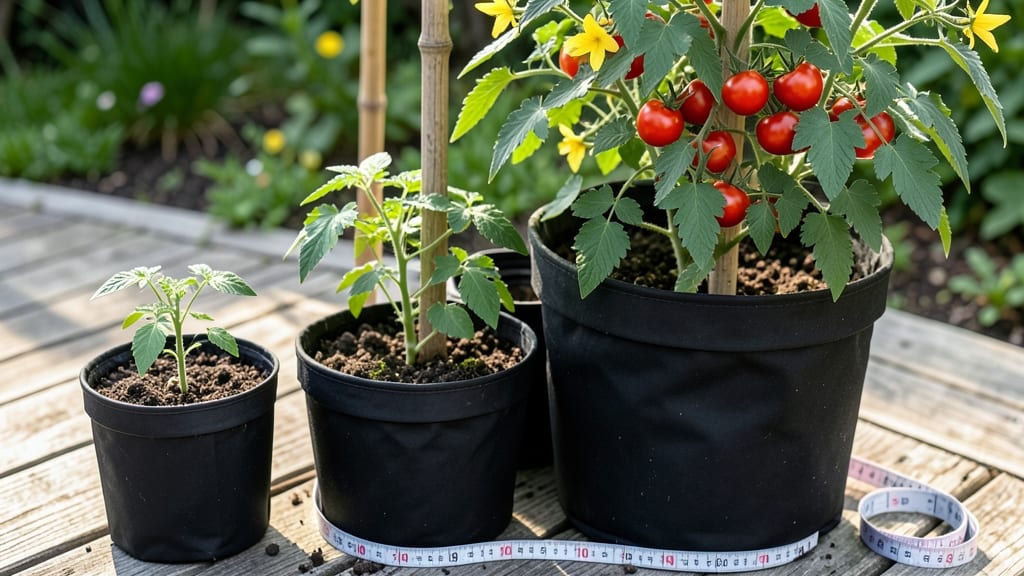
For tomato plants, pot size depends on variety: compact bush or dwarf types grow best in 1- to 3-gallon containers, while tall vining varieties need at least 5 gallons to support root growth and fruit production. Larger containers reduce competition for nutrients and keep plants stable.
Container size directly impacts tomato plant health because roots need room to spread and access nutrients. 🌱 Smaller pots limit growth, leading to stunted plants and fewer fruits, while oversized containers can cause soil moisture issues.
I've found that adding a layer of gravel at the bottom improves drainage, which is especially important for larger pots where water can pool. For patio gardens, consider using fabric grow bags—they're lightweight and allow roots to breathe better than rigid plastic.
When selecting a pot, think about maturity too. A 3-gallon container might work for a cherry tomato early on, but that same plant could outgrow it by midsummer. 🌿 Many gardeners start with slightly larger pots and trim excess soil around the roots to prevent overwatering.
For indeterminate varieties like Sungold tomatoes, I always recommend upgrading to 7-gallon containers by early summer to avoid root-bound stress.
💡 In This Article
- Tomato Root Space Requirements by Growth Type
- Choosing the Right Pot Size for Different Tomato Varieties
Tomato root space requirements by growth type
The root system of tomato plants determines their container needs. Bush varieties like 'Roma' or 'Patio Princess' develop compact root balls that fit well in 1- to 3-gallon pots, while indeterminate vines like 'Sungold' or 'Brandywine' can spread roots 2-3 feet deep and need 5+ gallons.
This difference stems from their growth habits: bush types focus energy on fruit production above ground, while vining types invest heavily in root expansion to support their towering stature.
Root volume directly impacts nutrient uptake through a process called osmotic absorption. In larger pots, roots can explore more soil volume, accessing water and minerals more efficiently.
For example, a 5-gallon pot provides about 1 cubic foot of soil space, which is roughly 30% more root zone than a 3-gallon container. 🌱 This extra space prevents nutrient depletion that causes yellowing leaves—a common issue in crowded containers.
The deeper soil also maintains more stable moisture levels, reducing the risk of blossom-end rot.
Container depth matters just as much as width. Indeterminate varieties need pots with at least 12-18 inches of depth to support their vertical growth. Shallow containers force roots to grow in a confined space, leading to root circling—where roots spiral around the container edges in search of nutrients.
This condition stresses the plant and reduces fruit production by up to 40% compared to properly sized containers with deep soil profiles.
Another key factor is the root-to-shoot ratio. In smaller pots, the plant's aboveground growth (shoots) outpaces root development, creating an imbalance. This imbalance triggers the plant's survival response: it prioritizes root growth over fruit production, often resulting in fewer but larger tomatoes.
For optimal yield, maintain a 1:1 ratio of root volume to shoot mass by choosing appropriately sized containers from the start.
Consider this real-world example: A 3-gallon pot might support a 3-foot-tall bush tomato, but the same pot would stunt a 6-foot indeterminate vine. The vine's roots would become root-bound within weeks, causing the plant to drop flowers and fruits prematurely. 🌿 The solution?
Start vining varieties in 5-gallon containers and upgrade to 7-gallon by midsummer when roots begin circling the container edges.
For balcony growers, this means planning ahead. A 1-gallon pot might work for a single cherry tomato plant, but adding a second plant would quickly create competition.
The roots of two plants in one container would share the same nutrient pool, leading to chlorotic leaves (yellowing between veins) and reduced fruit set. Always calculate 1 gallon per plant as a minimum, then add 2-3 extra gallons for vining varieties.