
How To
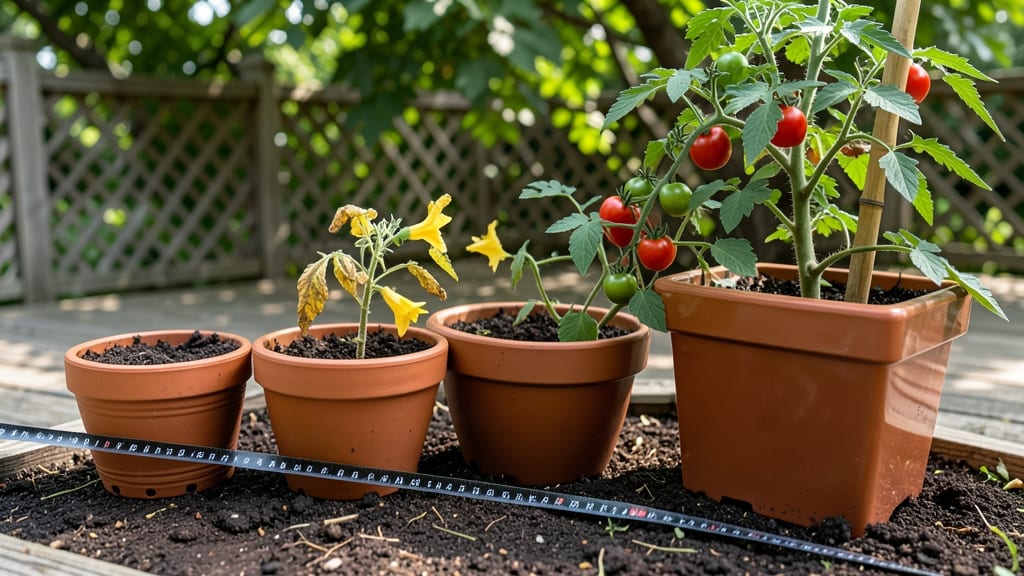
A tomato plant needs a pot that matches its growth habit — 5-gallon containers for dwarfs and 15+ gallons for sprawling vines — or you risk stunted roots and fewer fruits.
Picture this: you’ve just planted your 🍅 seedlings, dreaming of a bountiful harvest, only to watch them struggle in a pot that’s too small. The leaves yellow, the vines wilt, and the tomatoes never quite ripen. That’s the reality of underpotting, and it’s more common than you’d think.
But here’s the good news: the right container size isn’t just about volume. It’s about drainage, material, and even the variety you’re growing.
Whether you’re working with cherry tomatoes that stay compact or heirlooms that climb like jungle vines, we’ll break down the exact pot dimensions you need — and how to avoid the mistakes that kill container tomatoes.
By the end, you’ll know not just how big a pot to choose, but also how to spot the warning signs of root stress early. Let’s get your tomatoes the space they deserve.


Tomato pot size requirements by variety: dwarf to vining types
Choosing the right pot size for your tomato plants is one of the most critical decisions you'll make for a successful harvest. Too small, and your vines will struggle to support heavy fruit loads; too large, and you risk overwatering or wasted space.
The key lies in matching your tomato variety with the proper container dimensions, accounting for both root depth and volume capacity.
Tomatoes are divided into two main growth types: determinate (bush) varieties that grow to a fixed height and indeterminate (vining) types that keep growing until frost. Each requires different pot sizes to thrive.
For example, a cherry tomato like 'Sweet 100' needs far less space than a heirloom variety like 'Brandywine,' which can reach 6 feet or more with proper support.
Beyond variety, consider your growing season length and container material. Fabric grow bags, for instance, allow roots to breathe but dry out faster than ceramic or plastic pots. Meanwhile, deep containers (18+ inches) are essential for vining types to support their extensive root systems and heavy fruit production.
Let's break down the science-backed pot size requirements for each tomato type.
| Tomato Type | Minimum Pot Size | Ideal Pot Size | Root Depth | Volume per Plant | Notes |
|---|---|---|---|---|---|
| Cherry Tomatoes (Determinate) | 5-gallon bucket | 7-10 gallons | 12-18 inches | 1-2 gallons | Compact but prolific; use 1 plant per pot |
| Bush Tomatoes (Determinate) | 7-gallon container | 10-15 gallons | 18-24 inches | 2-3 gallons | Examples: 'Roma,' 'Celebrity'; support stems at 3-4 ft |
| Indeterminate Vines | 10-gallon container | 20-30 gallons | 24-36 inches | 3-5 gallons | Examples: 'Sungold,' 'Beefsteak'; prune suckers regularly |
| Heirloom Varieties | 15-gallon container | 30-50 gallons | 30+ inches | 5+ gallons | Heavy fruit load; use trellis for support |
*Gallon measurements are approximate; adjust for multi-plant containers
For cherry tomatoes, a 5-gallon pot is the absolute minimum, but I’ve found that 7-10 gallons yields far better results—especially in hot climates where soil dries out quickly. These compact varieties produce clusters of fruit, so adequate space prevents overcrowding and fungal diseases like blossom end rot.
Place drainage holes at the bottom and add a 3-inch layer of gravel to improve aeration.
When growing bush tomatoes like 'Roma' or 'Celebrity,' aim for at least a 10-gallon container, but 15 gallons is ideal for heavy producers. These varieties stop growing at a fixed height (typically 3-4 feet), making them perfect for patio gardens.
I recommend using self-watering containers to maintain consistent moisture, as bush types are more sensitive to drought stress during fruiting.
Indeterminate vines like 'Sungold' or 'Brandywine' are the most demanding when it comes to pot size. These varieties grow continuously until frost, producing fruit all season long. A 20-gallon container is the minimum, but I’ve seen incredible yields in 30-gallon fabric grow bags. For these heavy feeders, mix in compost at planting and top-dress with worm castings every 4-6 weeks.
Heirloom tomatoes often require the largest containers
5 Critical signs your tomato pot is too small (and how to fix it)
Even with the best tomato varieties and growing conditions, a pot that’s too small will sabotage your harvest. Root-bound stress shows up in subtle (but serious) ways—like yellowing leaves or stunted growth—before your plants look like they’re thriving.
I’ve seen indeterminate tomatoes wither in 5-gallon pots when they needed 15+ gallons, and cherry tomatoes produce half the fruit because their roots were crowded.
Here’s the kicker: root-bound plants often look healthy above ground while their roots circle the pot like a tangled mess. By the time you notice blossom drop or poor fruit set, it’s already too late for that season.
The good news? Recognizing these 5 warning signs early gives you time to upgrade containers and save your harvest.
⚠️ How Big a Pot for Tomato Plant?
Minimum size: 5-gallon pot for bush tomatoes (1–3 ft tall), 10-gallon pot for semi-dwarf varieties (3–5 ft), 15+ gallons for indeterminate vines (6+ ft). Depth matters too: Roots need 12–18 inches of soil to support heavy fruit loads. Fabric grow bags or self-watering containers are ideal for larger varieties.
First, watch for yellow lower leaves that refuse to green up, even with fertilizer.
This is your plant’s way of saying, “My roots are cramped!” When roots hit the pot’s edges, they can’t absorb nutrients or water efficiently, causing chlorosis (yellowing) from the bottom up. Cherry tomatoes in 1-gallon pots often show this first—don’t ignore it!
Next, check for stunted growth or slow vine elongation. If your indeterminate tomato grows only 6 inches in a month (when it should grow 12+ inches), its roots are likely root-bound. Measure the pot’s diameter: if roots circle the edges like a spiral, it’s time to upgrade.
Pro tip: Gently remove the plant and check—if roots are dense and white with no soil between them, they’ve outgrown their home.
Blossom drop is another red flag. When tomato flowers fall off without setting fruit, it’s often due to stress from overcrowded roots. The plant diverts energy to survival instead of reproduction. Bush varieties may drop 30–50% of their flowers in small pots, while indeterminate types can lose entire clusters.
To test, gently tug on a flower—if it detaches easily, your pot is too small.
Fix it fast with these steps: Choose a pot 2–3 sizes larger (e.g., upgrade from 5 to 15 gallons for vining types), use well-draining potting mix, and water deeply before transplanting to reduce shock. Fabric grow bags are perfect for this—they expand slightly as roots grow and prevent compacted soil.
Add a slow-release fertilizer to the new mix to give your plant a nutrient boost while it adjusts.
Finally, keep an eye on fruit quality. Small, underripe tomatoes or cracked skins often signal root stress.
When roots can’t support the plant’s needs, the vine prioritizes survival over fruit development. Heirloom varieties are especially sensitive—if your Brandywine tomatoes stay green or split open, your pot is likely the culprit. Upgrade now, and you’ll see plump, flavorful tomatoes in just 2–3 weeks.