
Companion Plants
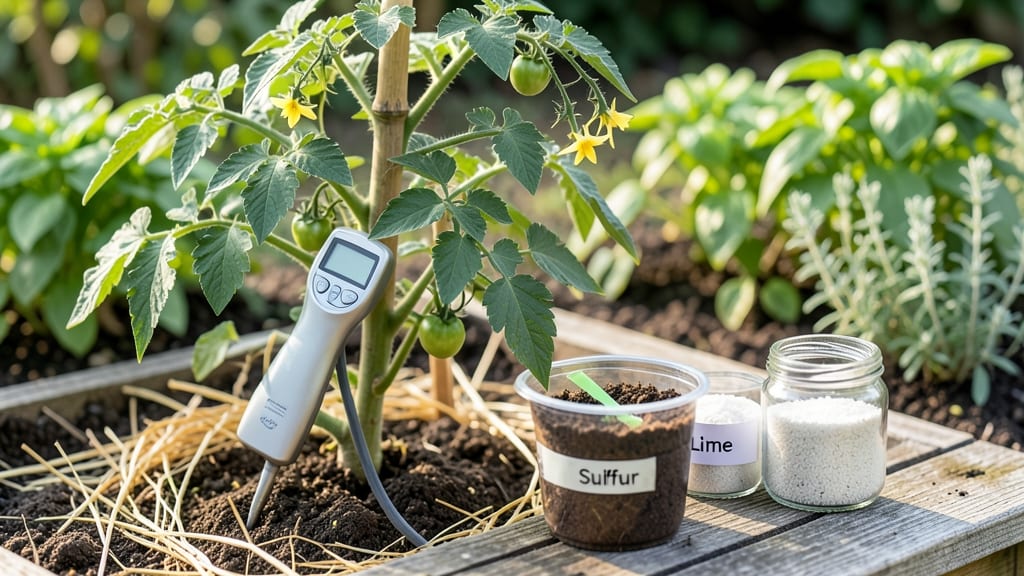
Tomato plants thrive in slightly acidic to neutral soil, with an ideal pH range of 6.0 to 6.8, where essential nutrients like nitrogen, phosphorus, and potassium become most accessible for robust growth and fruit development.
Tomatoes aren't picky about soil acidity but perform best in that sweet spot between 6.0 and 6.8. 🌱 When soil pH strays too low (below 5.5) or too high (above 7.5), nutrient deficiencies like iron chlorosis or calcium leaching can stunt growth or cause blossom-end rot.
I've seen firsthand how a simple soil test can save a struggling tomato patch—just a few adjustments can make all the difference in yield and plant vigor.
Most garden soils naturally lean toward neutral, but urban or clay-heavy soils often need amendments. For example, adding elemental sulfur lowers pH gradually, while crushed limestone raises it safely. The key is patience—soil pH changes take time, so test before planting and monitor regularly. 💫
💡 In This Article
- Optimal Soil pH for Tomato Plant Growth
- Adjusting Soil pH for Tomato Gardens
Optimal soil pH for tomato plant growth
Tomatoes thrive in slightly acidic to neutral soil because their root systems rely on specific pH levels to unlock essential nutrients.
At a pH of 6.0 to 6.8, the soil chemistry creates ideal conditions for nutrient availability—particularly nitrogen, phosphorus, and potassium, which are critical for leaf growth and fruit development. 🌱 This range also prevents toxic aluminum and manganese buildup that occurs in overly acidic soils (below 5.5), while avoiding calcium and magnesium deficiencies common in alkaline soils (above 7.5).
Nutrient uptake works like a chemical reaction: at the right pH, minerals dissolve into forms the plant can absorb. For example, iron becomes more available in slightly acidic conditions, preventing yellowing leaves (chlorosis) that often plagues tomatoes in alkaline soils.
Meanwhile, phosphorus—vital for root and flower development—binds tightly in highly acidic soil, making it inaccessible. The balance is delicate, but nature has perfected it in the wild where tomatoes grow.
What makes this range so crucial is how pH affects microbial activity in the soil. Beneficial bacteria and fungi that help break down organic matter into plant-available nutrients thrive at 6.0-6.8. These microbes create a symbiotic relationship with tomato roots, enhancing nutrient cycling and disease resistance.
When soil pH strays too far from this range, the microbial ecosystem weakens, reducing the plant's ability to access even the nutrients that are present.
Consider this: in a pH 5.0 soil, manganese and iron become toxic to tomato roots, while at pH 8.0, calcium and phosphorus become locked away. Both extremes lead to stunted growth or poor fruit set.
The ideal pH range acts like a Goldilocks zone—just right for all the chemical processes that keep tomatoes healthy and productive. 💫
Real-world example: I once had a tomato plant in a raised bed with pH 7.2 (slightly alkaline) that showed signs of blossom-end rot—a classic calcium deficiency symptom. After lowering the pH to 6.5 with elemental sulfur and compost, the plant recovered within weeks, producing heavy, healthy fruit.
This shows how critical the pH balance is for preventing common tomato problems.
Another key factor is how different tomato varieties respond. Heirloom tomatoes often tolerate slightly wider pH ranges than hybrid varieties, which are bred for consistency and may be more sensitive.
Always check your specific variety's requirements, as some modern hybrids perform best at the upper end of the 6.0-6.8 range. 🌿