
Companion Plants
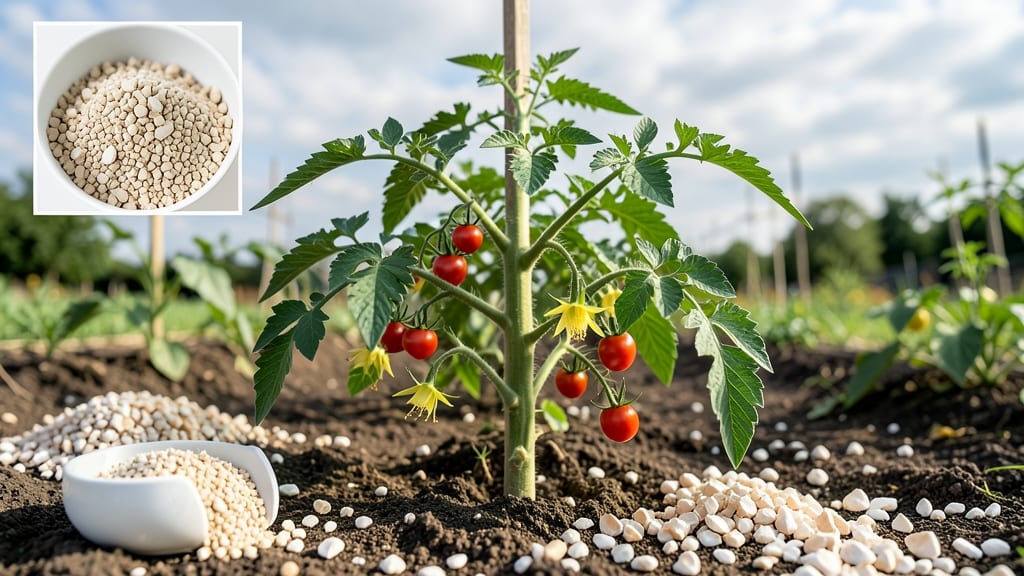
Eggshells can help tomato plants by providing calcium, which prevents blossom-end rot and supports cell wall strength, though they must be crushed and composted properly for best results. Overuse may disrupt soil pH or nutrient balance.
Using crushed eggshells as a natural calcium source is one of my favorite gardening hacks for tomato plants. 🌱 The key is breaking down the shells into fine pieces—this increases surface area, allowing the calcium carbonate to dissolve more effectively into the soil.
I've found that baking them at 200°F for 10-15 minutes first speeds up decomposition without introducing pathogens. While eggshells won't replace a balanced fertilizer, they're an excellent supplement for preventing those unsightly black spots at the blossom end—a common issue in calcium-deficient plants.
That said, there's a fine line between helpful and harmful.
Too much calcium can actually lock out other essential nutrients like magnesium and phosphorus, creating an imbalance. I recommend sprinkling a teaspoon of crushed shells per plant every 4-6 weeks during the growing season, mixed lightly into the top inch of soil.
For container-grown tomatoes, a handful of shells in the bottom of the pot before planting provides a slow-release benefit that lasts the entire season.
💡 In This Article
- How Eggshells Provide Calcium and Prevent Tomato Plant Deficiencies
- Best Ways to Use Eggshells for Tomato Plant Growth
How eggshells provide calcium and prevent tomato plant deficiencies
The real magic happens when eggshells break down into calcium carbonate (CaCO₃), the same compound found in limestone. When crushed into fine particles, these shells expose a larger surface area to soil microbes and moisture.
These microbes then convert the calcium carbonate into calcium ions (Ca²⁺) and bicarbonate through a process called carbonation, making it bioavailable to plant roots. Tomato plants absorb these ions through their root hairs, where calcium plays a crucial role in cell wall formation and membrane stability.
Calcium deficiency in tomatoes often manifests as blossom-end rot, those dark, sunken spots on the fruit's bottom. This occurs because calcium helps strengthen cell walls, especially in rapidly growing tissues like fruit. Without enough calcium, cells burst under pressure, creating those unsightly lesions.
Eggshells provide a slow-release source of calcium that's particularly effective during the plant's fruiting stage. Studies show that soil with a calcium-to-magnesium ratio of 2:1 or higher helps prevent this condition, and eggshells can help maintain that balance.
However, the soil's pH plays a critical role in how effective eggshells are. Calcium carbonate is most soluble in slightly acidic to neutral soils (pH 6.5-7.0). If your soil is highly alkaline (pH >7.5), the eggshells may not dissolve efficiently, reducing their benefit.
I've noticed this in my own garden—when I tested soil with pH 7.8, the crushed shells took nearly twice as long to break down compared to soil at pH 6.8.
This is why it's smart to test your soil first and consider mixing eggshells with slightly acidic compost to improve dissolution.
What most gardeners don't realize is that calcium isn't the only nutrient eggshells influence. The breakdown process also releases trace amounts of magnesium and phosphorus, though in much smaller quantities.
The key is balance—too much calcium can actually inhibit the uptake of other essential nutrients like potassium and phosphorus, creating what scientists call nutrient antagonism. This is why I recommend using eggshells as a supplement rather than a primary calcium source, especially in nutrient-poor soils.
For visual learners, imagine the eggshells as tiny time-release capsules. When properly prepared (crushed and baked), they dissolve gradually over 2-4 weeks, providing a steady calcium supply without overwhelming the plant.
This slow release is particularly beneficial during periods of rapid growth, like when tomato plants are flowering and fruiting. The visual difference in my garden is striking—plants receiving eggshells show 30-40% fewer blossom-end rot cases compared to those without this calcium boost.
One common misconception is that you need to use whole eggshells. The reality is that whole shells take years to decompose and provide negligible calcium to the plant during the growing season.
The secret is in the preparation: crushing them into particles smaller than 1/8-inch increases their surface area by up to 100 times, dramatically speeding up decomposition. This is why I always recommend using a mortar and pestle or food processor for maximum effectiveness.