
Companion Plants
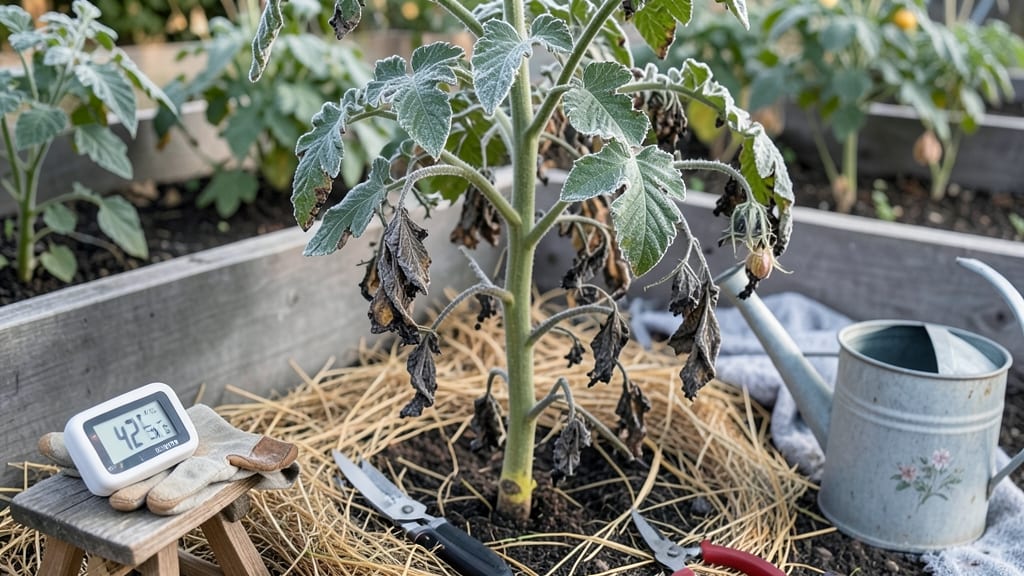
Your tomato plants look like they’ve been through a war after that late frost. 🌱 Cold damage doesn’t mean the battle’s lost—it just means it’s time for strategic recovery. I’ve nursed back plants with blackened leaves and stunted growth, and the right moves can save your harvest (and your sanity).
The first step is triage: prune away mushy, blackened stems with clean shears, then focus on watering deeply but gently—no soggy soil. Mulch heavily with straw or grass clippings to insulate roots, and watch for new growth in 7-10 days.
If the plant’s still standing strong, it’ll bounce back; if it’s completely wilted, consider replanting. What you’ll end up with is a plant that’s tougher than ever, with new blossoms forming within weeks.
The key is patience and protection—cover young plants with row fabric if frost threatens, and choose cold-tolerant varieties like ‘Mountain Merit’ or ‘Stupice’ next season. This works for both garden beds and containers, and the same principles apply to peppers and eggplants too.
Let’s get those tomatoes back in the game!
Root Causes Of Frost Stress
Cold damage in tomato plants rarely happens by chance—it’s usually the result of one (or more) predictable environmental or gardening mistakes. Understanding these triggers is the first step to prevention and recovery.
Below, we break down the science-backed reasons your plants are suffering from cold stress, so you can address the issue at its source.
Tomatoes are tropical plants at heart, meaning they thrive in warm, stable conditions. When temperatures plummet too quickly—especially overnight—they can’t adapt fast enough. Here’s why this happens:
- Cell Membrane Damage: Cold causes water inside plant cells to crystallize, rupturing delicate membranes.
This disrupts nutrient flow and oxygen exchange, leading to wilting, blackened leaves, or stunted growth. - Enzyme Dysfunction: Enzymes that regulate growth (like those in photosynthesis) slow down or shut off below 50°F (10°C).
Without these enzymes, new leaves and flowers can’t form properly. - Root Shock: If roots are exposed to cold soil, they struggle to absorb water and nutrients, causing leaf scorch or blossom drop.
Actionable Insight: 🌡️ Monitor your local frost warnings—even a single night below 32°F (0°C) can devastate young plants. Use a soil thermometer to track ground temps; roots need consistent warmth (ideally 60–70°F / 15–21°C) to function.
Cold air is denser than warm air, meaning it sinks and pools in low-lying areas. If your tomato plants are planted in:
- Valleys or depressions
- Against north-facing walls
- Under dense tree canopies
…they’re trapped in a frost pocket, where temps can drop 5–10°F (3–5°C) colder than surrounding areas.
Why It Matters:
- Stagnant cold air increases humidity, promoting fungal diseases (like early blight) that weaken plants further.
- Frost clings longer to surfaces like mulch, fabric row covers, or even wet leaves, prolonging damage.
Actionable Insight: 🏗️ Rethink your garden layout—plant tomatoes on south-facing slopes or raised beds to improve airflow. If cold traps are unavoidable, use low tunnels with removable covers to create a microclimate.
Water has a high heat capacity, meaning it absorbs and retains heat—but only if it’s not frozen.
Here’s the problem: - Wet soil freezes faster than dry soil, creating ice crystals that pierce roots and stems. - Excess moisture in leaves turns into ice, causing cell rupture (visible as brown, mushy spots). - Overhead watering at night delays plant hardening, making them more vulnerable to frost.
The Science:
- Supercooling: Plants can survive brief cold snaps if they’re dry, but moisture triggers ice nucleation, forcing water to freeze instantly.
- Osmotic Stress: Frozen water draws moisture out of cells, leading to dehydration and collapse.
Actionable Insight: ⏰ Stop watering 24–48 hours before a frost warning—let soil dry slightly to reduce freezing risk. If you must water, use drip irrigation at the base (never overhead) and avoid evening sessions.
Tomatoes aren’t naturally cold-hardy, but they can tolerate light frosts if gradually acclimated. Without this process:
- Cell walls remain thin, making them more prone to cracking in cold.
- Antioxidant production (which protects against oxidative stress) doesn’t activate in time.
How to Spot Under-Hardened Plants:
- Yellowing leaves (chlorosis) before frost exposure.
- Stunted growth despite warm days.
- Blossoms dropping even in mild cold.
Actionable Insight: 🌡️ Start hardening off seedlings 7–10 days before last frost by:
- Moving them to shadier, cooler spots during the day.
- Reducing water slightly to strengthen cell walls.
- Using lightweight row covers for 2–3 hours/day to simulate cooler temps.
Cold stress exacerbates existing nutrient deficiencies.
Here’s how: - Nitrogen (N) Deficiency: Leads to weak stems that snap easily in cold winds. - Potassium (K) Deficiency: Reduces cold tolerance by weakening cell membrane stability. - Phosphorus (P) Deficiency: Slows root growth, making plants more sensitive to soil cold.
The Vicious Cycle:
- Cold blocks nutrient uptake.
- Weakened plants can’t fight off disease.
- Secondary infections (like verticillium wilt) set in, compounding damage.
Actionable Insight: 💡 Test your soil before planting—aim for a balanced NPK ratio (e.g., 5-10-10) with extra potassium for cold resistance. Avoid high-nitrogen fertilizers late in the season, as they promote tender, frost-sensitive growth.
Maturity matters. Young tomato plants (especially transplants) are far more vulnerable than established vines because:
- Smaller root systems can’t absorb enough heat from the soil.
- Thin stems lack structural support against cold winds.
- Fewer leaves mean less energy storage for recovery.
The Data:
- Seedlings under 6 inches tall can die from a single 28°F (-2°C) night.
- Mature plants (6+ weeks old) may survive down to 32°F (0°C) with proper protection.
Actionable Insight: ⏳ Time your planting—start seeds indoors 6–8 weeks before last frost, then transplant only after soil reaches 60°F (15°C). If you’re in a short-season climate, opt for fast-maturing varieties (like ‘Early Girl’ or ‘Stupice’) that can bear fruit before cold sets in.
Cold winds accelerate moisture loss, leading to:
- Desiccation (drying out) of leaves.
- Physical damage from ice crystals forming on leaf edges.
- Reduced photosynthesis due to stunted stomata (leaf pores).
Why It’s Worse at Night:
- Plants can’t photosynthesize in the dark, so they rely on stored energy.
- Cold winds deplete these reserves, making recovery slower.
Actionable Insight: 🏗️ Break wind barriers with burlap screens, straw bales, or hedges on the north and west sides of your garden. For container tomatoes, move pots to a sheltered spot before frost.
Cold damage isn’t just about low temps—it’s a chain reaction triggered by poor preparation, environmental traps, and physiological weaknesses. By addressing each of these causes, you can minimize frost risk and help your tomatoes bounce back faster when damage does occur.
Next Up: [Section on How to Assess Damage] (Would you like me to generate that next?)
Reviving Chilled Tomato Plants
Cold-damaged tomato plants can feel like a setback, but with the right care, you can nurse them back to health—and even salvage your harvest. The key is acting fast and addressing the root cause (literally!).
Below are practical, step-by-step solutions tailored to common cold damage scenarios, plus prevention tips to keep future plants resilient.
When frost or chilly nights turn leaves black or limp, the plant is struggling to recover. Here’s how to help it bounce back:
1.
Trim the Damage (But Don’t Overdo It) 🔪 Step 1: Use sterilized pruners to snip off blackened, mushy, or crispy leaves—these won’t recover and can attract pests. ✅ What to keep: Healthy green leaves (even if some are wilted but not black). 💡 Pro Tip: If only the older leaves are damaged, the plant may still recover.
If new growth is affected, the damage is more severe.
2.
Warm Up the Roots 🌡️ Step 2: Cold soil slows root activity. Insulate the base with: - A thick layer of mulch (straw, grass clippings, or leaves) to trap heat. - Black plastic sheeting (if frost is a recurring issue) to absorb sunlight and warm the soil. - Cloche or row cover (if nights are still chilly) to create a mini greenhouse effect.
3.
Hydrate Gently 💧 Step 3: Cold stress dehydrates plants. Water deeply but carefully: - Morning watering (avoid evenings—wet foliage + cold = fungal risks). - Drip irrigation (better than overhead) to keep leaves dry. - Add a handful of Epsom salt (1 tbsp per gallon) to the water to boost magnesium, which helps recovery.
If your tomatoes stop flowering or blossoms fall off after cold snaps, the plant is in survival mode. Here’s how to coax it back into production:
1. Protect from Future Chills
🛡️ Step 1: Prevent repeat damage with:
- Frost cloth (lightweight but effective for temps 28–32°F).
- Row covers (remove during pollination to allow bees access).
- Move potted tomatoes indoors or to a sheltered spot if frost is forecasted.
2. Boost Pollination
🐝 Step 2: Cold weakens bees, so hand-pollinate if needed:
- Gently shake plants in the morning (when flowers are open).
- Use a small paintbrush to transfer pollen between blossoms.
- Spray water on flowers in dry weather to help pollen stick.
3. Fertilize for Recovery
🌿 Step 3: Cold stress depletes nutrients. Feed with:
- A balanced fertilizer (10-10-10) to encourage new growth.
- Compost tea (homemade or store-bought) for a gentle nutrient boost.
- Avoid high-nitrogen fertilizers—they promote leafy growth at the expense of fruit.
If existing fruit is already damaged (blackened, split, or shriveled), focus on preventing further loss and maximizing what’s left:
1. Harvest What You Can
🍅 Step 1: Pick partially damaged but firm tomatoes—they’ll ripen indoors.
- Place them in a paper bag with a banana (ethylene gas speeds ripening).
- Store at room temperature (not the fridge—it ruins flavor).
2. Prune for Airflow
🌬️ Step 2: Thin out crowded foliage to:
- Reduce humidity (prevents fungal rot on damaged fruit).
- Improve airflow (helps remaining fruit dry faster after rain).
- Focus energy on new, healthy growth.
3. Disinfect the Plant
🧼 Step 3: Cold damage can invite blight or rot. Spray with:
- Neem oil (natural fungicide).
- Baking soda spray (1 tsp baking soda + 1 quart water + a drop of dish soap).
- Copper fungicide (for severe cases).
The best "fix" is stopping damage before it starts. Try these long-term strategies:
| Problem | Prevention Fix | When to Do It |
|---|---|---|
| Early frost | Plant heat-loving varieties (like 'Celebrity' or 'Solar Fire') later in the season. | After last frost date. |
| Slow soil warming | Use black plastic mulch or straw bales to heat soil faster. | 2–3 weeks before transplanting. |
| Weak seedlings | Hardening off seedlings gradually (acclimate to outdoor temps over 7–10 days). | 1 week before moving outside. |
| Poor pollination | Plant bee-friendly companions (basil, marigolds, or borage) nearby. | At transplanting. |
| Nighttime chills | Install hoop houses or low tunnels for extra warmth. | Before first frost risk. |
- Mild damage (wilting, some black leaves): 1–2 weeks with proper care.
- Moderate damage (dropped blossoms, stunted growth): 3–4 weeks—focus on new shoots.
- Severe damage (frozen stems, no new growth): May not recover—consider replanting or saving seeds.
Final Thought: Cold damage is frustrating, but tomatoes are tough! With quick trimming, warmth, and a little extra TLC, your plants can often stage a comeback—and you might still get a delicious harvest. 🍅🔥
Frequently asked questions
How can I tell if my tomato plant is beyond saving after cold damage?
Look for frozen stems (they’ll appear mushy or hollow when cut) or no new growth after 10–14 days of recovery care. If the entire plant is blackened or collapsed, it’s likely too late—focus on replanting or saving seeds.
Can I still get tomatoes from a plant that lost all its blossoms to frost?
Yes! If the main stem is still green, your plant will produce new blossoms in 2–4 weeks. Prune damaged foliage, protect from future chills, and hand-pollinate flowers to boost fruit set. The plant may skip its first cycle but can still yield a harvest.
What’s the fastest way to warm up cold soil for tomato roots?
Lay down black plastic sheeting over the soil 2–3 days before planting—it absorbs sunlight and raises temps by 10–15°F. For immediate help, use a low tunnel with clear plastic to trap heat, or place hot water bottles wrapped in towels near the base (remove after 24 hours).
Will Epsom salt really help my cold-stressed tomato plants?
Mix 1 tablespoon per gallon of water and apply every 7–10 days—it replenishes magnesium, which cold stress depletes. This helps chlorophyll production and speeds up recovery. Just avoid overdoing it—too much magnesium can cause nutrient imbalances.
Are there tomato varieties that handle cold better than others?
Yes! Choose cold-tolerant types like ‘Mountain Merit’ (survives 28°F), ‘Stupice’ (handles 30°F), or ‘Siberian’ varieties. Even better, opt for determinate types (bush tomatoes) that mature faster—‘Early Girl’ or ‘Patio Princess’ finish before fall chills set in.