
Companion Plants
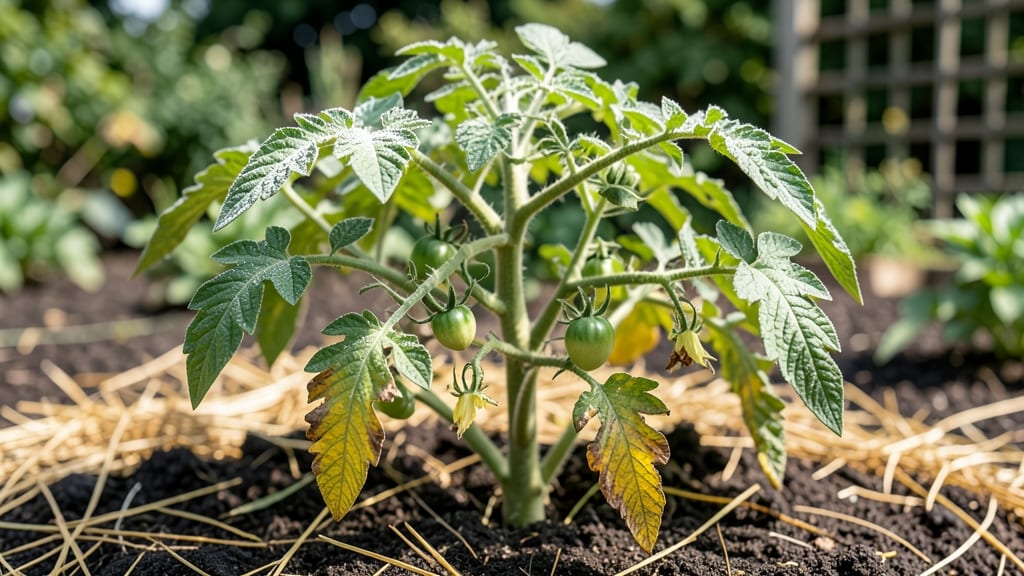
Those white spots on your tomato plants—why do my tomato plants have white spots?—aren’t just cosmetic—they’re likely powdery mildew, a fungal foe that thrives in humid conditions. 🌱 I’ve battled this same issue after my plants spent a week under a sudden downpour, and I’ll show you how to stop it before it ruins your harvest.
The key is acting fast: prune infected leaves, spray with a homemade mix of water and baking soda, and improve airflow around your plants. Most gardeners miss the airflow part—that’s what lets mildew spread like wildfire.
Within a week, you’ll see new growth free of those telltale white patches, and your tomatoes will bounce back stronger. The secret? Consistency in treatment and prevention. This works for both garden beds and containers, so don’t let mildew steal your summer’s best crop.
Let’s get those plants back to thriving!
Why it happens
White spots on your tomato plants can be alarming, but understanding the root causes helps you tackle the problem head-on. These spots often signal fungal infections, environmental stress, or even pest activity. Let’s break down the most common culprits and why they appear:
🍄 Fungal Infections: Powdery Mildew
The most frequent cause of white spots on tomato plants is powdery mildew, a fungal disease caused by pathogens like Oidium or Erysiphe. This fungus thrives in warm, humid conditions (between 60–80°F) and spreads rapidly when air circulation is poor.
The white, powdery patches you see are actually fungal spores and mycelium feeding on your plant’s surface, blocking sunlight and clogging pores. Over time, this weakens the plant, stunting growth and reducing fruit production.
Why it happens: Powdery mildew spores are always present in the environment, but they germinate and spread when:
- 🌡️ High humidity (especially overnight dew or poor airflow)
- 🌿 Overcrowded plants (shading and moisture trapped between leaves)
- 💧 Overhead watering (spores splash onto leaves)
- 🌱 Stressed plants (nutrient deficiencies or drought weaken defenses)
🐛 Pests: Spider Mites or Whiteflies
Tiny pests like spider mites or whiteflies can also leave behind white, powdery residues. Spider mites, for example, inject toxins into leaves, causing stippling (tiny white or yellow dots) and webbing. Whiteflies excrete a sticky substance called honeydew, which attracts sooty mold—a black fungus that thrives on their waste.
Both pests thrive in dry, hot conditions and multiply quickly on stressed plants.
Why it happens: These pests target plants when:
- 🌡️ Drought stress (plants lose turgor pressure, making them easier targets)
- 🌿 Lack of natural predators (ladybugs, lacewings, or birds are absent)
- 🍂 Dusty or dirty leaves (traps heat and provides hiding spots)
💦 Environmental Stress: Mineral Deposits
If your white spots look more like crusty or chalky residues rather than fuzzy patches, they might be mineral deposits from hard water or fertilizer buildup. When you water your plants with tap water high in calcium or magnesium, these minerals evaporate and leave behind white, powdery residues on leaves.
Similarly, over-fertilizing—especially with high-salt fertilizers—can cause salt burn, leading to white, crispy spots.
Why it happens: Mineral deposits form when:
- 💧 Hard water irrigation (check your water’s TDS—total dissolved solids)
- 🌱 Over-fertilization (excess salts draw moisture from plant tissues)
- 🌞 Evaporation in hot climates (minerals crystallize on leaf surfaces)
🌱 Nutrient Deficiencies: Calcium or Magnesium Issues
White or yellowish spots can also signal nutrient deficiencies, particularly calcium (blossom end rot’s cousin) or magnesium. While these deficiencies typically appear on fruit or older leaves, severe cases can cause white, necrotic spots on foliage.
Calcium deficiency, for example, disrupts cell wall integrity, leading to irregular white patches, especially in young leaves. Magnesium deficiency (chlorosis) may show as white or pale areas between leaf veins.
Why it happens: Nutrient imbalances occur when:
- 🌱 Poor soil structure (compacted or sandy soil limits root uptake)
- 💧 Overwatering or poor drainage (roots can’t access nutrients)
- 🍽️ Unbalanced fertilizer (too much nitrogen, not enough micronutrients)
Fixing White Spots Fast
Now that you’ve identified the culprit behind those pesky white spots on your tomato plants, it’s time to roll up your sleeves and get them back to their vibrant, healthy selves! The good news?
Most solutions are simple, cost-effective, and can be done with household items or garden staples. Below, we’ll map out practical fixes for each cause, along with prevention tips to keep your tomatoes thriving.
Fix It: ✅ Prune & Toss 🔪 Remove infected leaves immediately—don’t compost them! Place them in a sealed bag and toss in the trash to prevent spores from spreading. Focus on improving airflow by trimming dense foliage.
✅ Spray with Baking Soda 🍳 Mix 1 teaspoon baking soda + 1 quart water + a few drops of dish soap in a spray bottle.
Lightly coat the undersides of leaves (where mildew loves to hide) every 5–7 days until the spots fade. Why it works: Baking soda raises the leaf’s pH, making it inhospitable to fungi.
✅ Neem Oil or Hydrogen Peroxide 🌿 For stubborn cases, try a neem oil spray (1 tsp neem oil + 1 tsp mild soap per quart of water) or 3% hydrogen peroxide (1 part peroxide to 3 parts water). Spray in the early morning or evening to avoid burning leaves.
✅ Reflective Mulch Hack ✨ Lay white plastic mulch or even aluminum foil around the base of plants to reflect sunlight and deter mildew. Bonus: It warms the soil for faster growth!
Prevent It: 💡 Space plants 18–24 inches apart for airflow. 💡 Water at the base (not overhead) and avoid late watering (wet leaves overnight = mildew party). 💡 Rotate crops yearly to prevent soil-borne spores from lingering.
Fix It: ✅ Blast Off Spider Mites 🕷️💨 Spray plants with a strong stream of water to knock off mites, then follow up with insecticidal soap (mix 2.5 tbsp Castile soap + 1 quart water). Repeat every 3–4 days until gone.
✅ Sticky Traps for Whiteflies 🕊️🎯 Hang yellow sticky traps near plants to catch whiteflies. For a DIY fix, spray with soapy water (1 tsp dish soap per gallon) or neem oil.
✅ Encourage Predators 🐞🐝 Ladybugs and lacewings love eating tomato pests. Buy them online or attract them with dill, fennel, or marigolds planted nearby.
Prevent It: 💡 Inspect new plants before bringing them home—quarantine for a week if needed. 💡 Use row covers early in the season to block pests before they arrive.
Fix It: ✅ Move or Shade Plants ☀️🌳 If spots are on exposed leaves, provide partial shade (use shade cloth or move pots to a spot with morning sun only). For container plants, relocate them to a north-facing or east-facing area.
✅ Flush the Soil 💦🌱 Over-fertilized soil can cause salt burn. Water plants thoroughly with plain water (no fertilizer) for 2–3 days to leach out excess salts.
✅ Adjust pH if Needed 📊 Test your soil’s pH—tomatoes prefer 6.0–6.8. If too alkaline, amend with sulfur or peat moss; if too acidic, add lime.
Prevent It: 💡 Acclimate plants gradually to full sun (harden off seedlings over 1–2 weeks). 💡 Follow fertilizer instructions—more isn’t better!
No matter the issue, these quick wins will help your tomatoes bounce back: 🔥 Boost humidity (but avoid soggy leaves) with a pebble tray under pots. 🔥 Feed with compost tea or fish emulsion for a nutrient kick. 🔥 Harvest early if spots are severe—ripe tomatoes can still be saved for cooking!
Pro Tip: 🌡️ Monitor temperature—powdery mildew thrives in 70–80°F with high humidity. Use a fan on low near plants to keep air moving!
With these fixes, your tomato plants should be spot-free and thriving in 2–4 weeks. Stay consistent, and soon you’ll be feasting on juicy, blemish-free tomatoes! 🍅🔥
Frequently asked questions
Are white spots on tomato leaves always powdery mildew?
Not always! While powdery mildew is the most common cause, white spots can also signal spider mites, mineral deposits from hard water, or even nutrient deficiencies like calcium or magnesium issues. Check for fuzzy texture (mildew) or tiny webs (mites) to narrow it down.
How quickly can I expect to see results from baking soda spray?
With consistent treatment (every 5–7 days), you should notice improvement in 1–2 weeks. For severe cases, combine baking soda with neem oil for faster results. Remember to spray undersides of leaves where mildew hides!
Will cutting off infected leaves help stop the spread?
Yes, but only if you remove them completely—don't compost! Place infected leaves in a sealed bag and toss. Prune in the morning when leaves are dry to prevent spores from spreading via tools. Focus on improving airflow between plants.
Can I still eat tomatoes from plants with white spots?
It depends! If spots are from pests or mineral deposits, tomatoes are usually safe. For fungal infections, wash tomatoes thoroughly before eating. If spots are severe, harvest early—ripe tomatoes can still be used for cooking like sauces or salsas.
Why does my tomato plant have white spots but no other symptoms?
Early-stage powdery mildew or mineral deposits often appear as isolated white spots before spreading. Check leaf undersides for fuzzy growth (mildew) or wipe a spot with your finger—if it smudges (not fuzzy), it's likely mineral buildup from hard water.