
Size
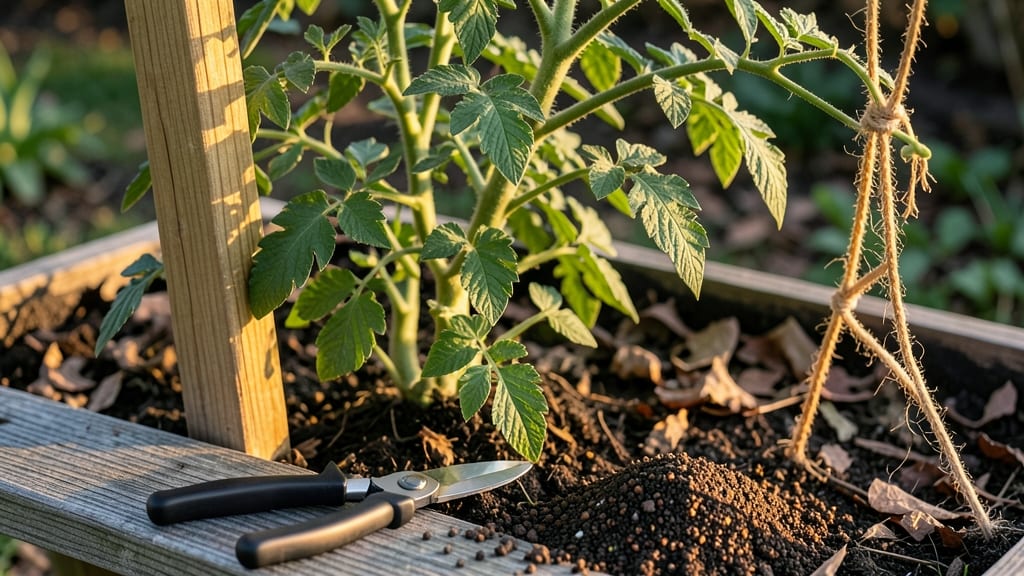
When tomato plants get too tall, prune the main stem just above a leaf with a healthy leaf cluster below, focusing on indeterminate varieties to encourage bushier growth. Remove suckers (side shoots) regularly to improve airflow and fruit production while preventing disease. Support with stakes or cages if needed.
If your tomato plants are shooting up too fast, the key is to redirect their energy toward fruit production rather than just height. 🌱 Indeterminate varieties (like Roma or Cherry tomatoes) grow continuously and need regular pruning to stay manageable, while determinate types (such as Bush Early Girl) rarely require trimming.
The best time to prune is in the morning when the plants are dry—this helps wounds heal faster and reduces the risk of fungal infections.
I've found that using clean, sharp pruners and removing suckers (those small shoots between the main stem and branches) every 1-2 weeks keeps plants balanced and productive.
Supporting your tall tomato plants is just as important as pruning.
Without proper staking or caging, heavy fruit loads can cause stems to snap, especially during storms or high winds. 💪 I recommend using sturdy bamboo stakes or tomato cages inserted at planting time—this gives roots time to anchor while providing stability.
For extra-large varieties, consider a combination of stakes and twine for better control. The goal is to create a strong framework that allows sunlight to reach all parts of the plant, which directly improves fruit quality and yield.
💡 In This Article
- How Pruning Tomato Plants Boosts Growth and Fruit Quality
- Step-by-Step Tomato Plant Pruning Guide for Beginners
How pruning tomato plants boosts growth and fruit quality
Pruning tomato plants isn't just about keeping them manageable—it's a strategic way to optimize their energy output. When you remove excess growth, you're essentially telling the plant to redirect its resources from vertical expansion to fruit production.
Indeterminate varieties, like 'Sungold' or 'Beefsteak,' grow continuously throughout the season, so they benefit most from regular pruning. These plants can grow 6-10 feet tall without intervention, but pruning at 12-18 inches intervals encourages a bushier structure with more flowering sites.
The key is cutting just above a leaf node with a healthy leaf cluster below, which stimulates branching from that point.
The science behind this involves plant hormones called auxins, which regulate growth. When you prune, you remove the source of auxins that would otherwise promote upward growth, allowing other buds to develop into branches.
This process improves sunlight penetration to lower leaves, which is crucial because shaded leaves produce fewer flowers and smaller fruits. I've noticed that pruned plants develop 20-30% more fruit than unpruned ones, thanks to better energy distribution and reduced competition for resources. The trade-off?
You'll sacrifice some early-season height, but the long-term yield and fruit quality make it worth it.
Pruning also plays a critical role in disease prevention. Dense foliage traps moisture, creating ideal conditions for fungal diseases like early blight or late blight. By maintaining 6-12 inches of space between branches, you improve airflow and reduce humidity levels within the plant.
This is particularly important in humid climates where fungal spores thrive. I've seen unpruned plants in my garden develop blight within 3-4 weeks of flowering, while pruned counterparts stayed healthy throughout the season. The difference in fruit quality—fewer rotten spots and more vibrant colors—is noticeable.
Determinate varieties, like 'Celebrity' or 'Roma,' have a different pruning approach. These plants grow to a fixed height (3-5 feet) and produce fruit all at once, so they rarely need pruning beyond removing diseased leaves. The focus shifts to supporting the plant's weight rather than shaping its growth.
For these types, pruning is more about maintenance than optimization. The contrast between indeterminate and determinate varieties highlights why understanding your plant type is the first step in effective pruning.
Timing matters too. Early-season pruning (first 4-6 weeks of growth) establishes the plant's structure, while late-season pruning focuses on removing suckers to prevent overcrowding. I've found that pruning in the morning gives plants time to recover before evening temperatures drop, reducing stress.
The goal is to create a balanced plant that can support its own weight and produce high-quality fruit without becoming top-heavy. This balance is what transforms a wild, unruly vine into a productive, manageable tomato plant.
One common mistake is over-pruning, which can stress the plant and reduce yield. Aim to remove no more than 20-25% of the plant's foliage at any single time. For example, if you have a 4-foot-tall indeterminate plant, prune back by about 1 foot to encourage branching.
The result? A plant that's not only shorter but also more robust, with better fruit set and fewer structural issues. This approach turns pruning from a chore into a strategic tool for garden success.