
Planting
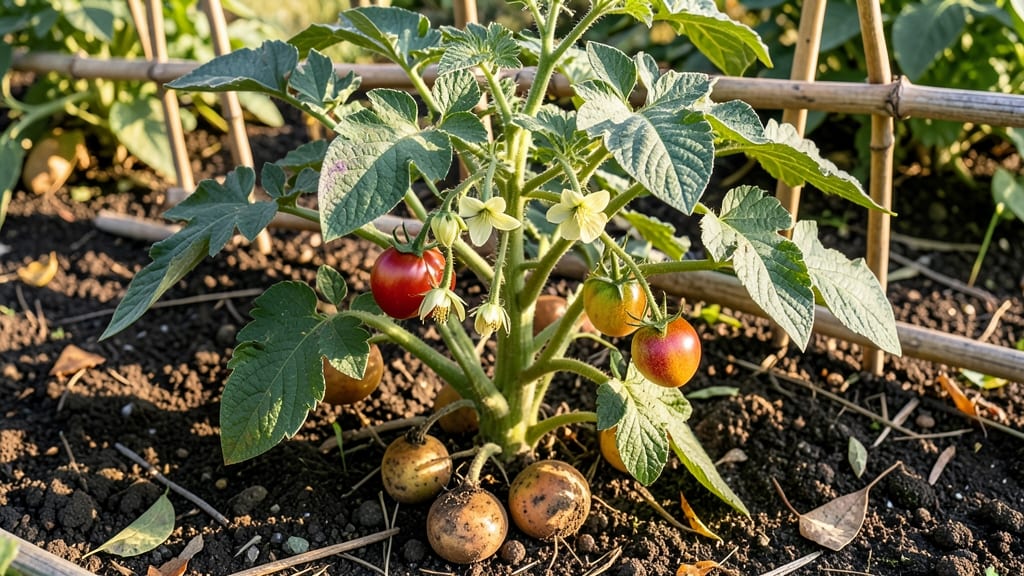
Growing tomato-potato hybrids means harvesting both fruit and tubers from the same plant. 🌱 I’ve watched these "pomatoes" transform my garden into a dual-purpose powerhouse, producing luscious tomatoes and crisp potatoes from a single plant.
The trick is giving them the right start—rich, well-draining soil and consistent moisture—so they don’t stress out during their two-phase growth cycle.
You’ll need a sunny spot with at least 6-8 hours of direct light daily, since these hybrids demand more energy than regular tomatoes. Plant seeds or young starts in late spring after the last frost, spacing them 2-3 feet apart to allow room for sprawling vines.
Mulch heavily to retain moisture and suppress weeds, which is critical because pomatoes are more prone to blight than standard potatoes.
By midsummer, you’ll see the first tomatoes ripening while tubers form underground. The real magic happens when you harvest: gently dig around the base of the plant to uncover potatoes while still letting the vines produce tomatoes.
With proper care, one plant can yield 5-10 pounds of potatoes and 10-15 tomatoes, making it a space-saving game-changer.
Watch for early signs of blight—these hybrids are more susceptible—and prune lower leaves to improve airflow. If you’ve ever struggled with garden space or wanted to maximize harvests, pomatoes are the answer. Start small, keep the soil moist, and prepare for a harvest that does double duty.
📚 In This Guide
- What you need
- Instructions
- Tips and common mistakes
- Wrapping up and next steps
What you need
- ● Tomato seeds (heirloom or hybrid) – 5–10 seeds (choose disease-resistant varieties like Cherry Tomato or Beefsteak)
- ● Potato tubers (organic, seed-grade) – 2–3 small, sprouted potatoes (e.g., Yukon Gold or Red Pontiac)
- ● Growing medium – 3–5 gallons of sterile potting mix (or a 50/50 blend of garden soil + compost)
- ● Containers or garden bed – Option 1: 5–7 gallon fabric grow bags (for drainage) or
- ● Option 2: A large raised bed (at least 12" deep) or in-ground plot
- ● Watering can or hose with a gentle spray nozzle (avoid overwatering!)
- ● Organic fertilizer – Balanced 10-10-10 or compost tea (for nutrient boost)
- ● Garden twine & stakes – 3–4 bamboo stakes or trellis supports (6–8 ft tall)
- ● Pruning shears – For trimming excess foliage or hybrid growth
- ● pH testing kit – To ensure soil pH is 6.0–6.8 (ideal for both plants)
- ● Mulch (straw or wood chips) – To retain moisture and suppress weeds
- ● Grow lights (LED, full-spectrum) – If starting indoors before last frost
- ● Plant labels & marker – To track tomato vs. potato growth phases!
- ● Sunlight: 6–8+ hours of direct sunlight daily (tomatoes thrive in heat; potatoes need warmth too!)
- ● Temperature: Start seeds indoors at 70–80°F; transplant after last frost date (soil temp ≥ 55°F)
- ● Space: Allow 18–24 inches between plants (hybrids can get bushy!)
- ● Patience: Hybrid plants may take 8–12 weeks to show signs of dual growth!
How to grow tomato-potato hybrid plants for dual harvests
This clever crossbreeding technique lets you grow both tomatoes and potatoes from the same plant—here's how to make it work in your garden.
🌱 Step 1: Select and Prepare Parent Plants
Choose one disease-resistant tomato variety (like 'Celebrity' or 'Early Girl') and one potato variety (like 'Yukon Gold' or 'Red Pontiac') that mature quickly—both should share similar growing seasons. Start tomato seeds indoors 6-8 weeks before last frost while planting potatoes directly outside 2-3 weeks before last frost.
Potatoes need cool soil (50-60°F) to sprout, while tomatoes thrive at 70-85°F. Use separate containers for each until grafting to prevent cross-contamination. I always label mine clearly—mixing them up at this stage ruins everything.
🌿 Step 2: Graft Tomato to Potato for Dual Growth
When tomato seedlings reach 4-6 inches tall with 4-5 true leaves, and potato plants develop 3-4 inch stems, it's time to graft. Cut a 45-degree angle on both stems just above a leaf node on the tomato and just below a leaf node on the potato. The cuts should match when pressed together.
Use grafting tape to secure the connection tightly, leaving the tomato leaves exposed and the potato roots buried. Place the grafted plant in bright indirect light for 7-10 days until the connection heals—you'll see new growth from the tomato top and potato roots establishing. Keep soil moist but not soggy during this critical phase.
☀️ Step 3: Transplant and Maintain Optimal Conditions
After the graft succeeds (when new leaves emerge from the tomato top and potato tubers begin forming), transplant to the garden in well-draining soil enriched with compost. Space plants 18-24 inches apart to accommodate both the tomato's vine growth and potato's tuber expansion.
Provide full sun (6-8 hours daily) and consistent moisture—potatoes need deep watering once a week, while tomatoes prefer 1-2 inches of water weekly. Mulch heavily with straw or grass clippings to retain moisture and prevent soil-borne diseases that could attack both crops.
✂️ Step 4: Prune and Support for Maximum Yields
Prune tomato suckers regularly to direct energy toward fruit production, but leave 2-3 main stems for structural support. Install cages or stakes immediately—hybrid plants can get top-heavy. For potatoes, hill soil around stems every 2-3 weeks to encourage tuber formation in the buried sections.
Watch for first tomato flowers around 60-70 days after transplanting. Once tomatoes set fruit, reduce water slightly to improve flavor. Harvest potatoes when top growth yellows (usually 90-120 days after planting), but leave a few to mature fully for seed potatoes if desired.
🌱 Step 5: Harvest and Store for Long-Term Use
Pick tomatoes when they reach full color and slight softness—hybrid plants often produce smaller fruits, so harvest frequently to encourage more production. For potatoes, dig carefully with a fork to avoid damaging tubers. Cure harvested potatoes in a dark, 50-60°F space for 1-2 weeks before storing in a cool (40-50°F), humid environment.
This dual-harvest method gives you tomatoes in summer and potatoes in fall from the same plant—just be prepared for slightly smaller yields than dedicated crops. The real magic? You're saving space while doubling your harvest potential.
Tips & tricks for perfect tomato-potato hybrid plants
These game-changing insights will help you maximize your dual-harvest garden while avoiding common pitfalls that sabotage even the most well-intentioned gardeners.
Timing Secret: The 6-8 weeks before last frost window for tomato seeds is non-negotiable—this ensures seedlings reach the 4-6 inch stage with 4-5 true leaves right when potatoes develop 3-4 inch stems. I've learned the hard way that rushing tomato seeds or delaying potato planting throws off the entire grafting schedule. Use a frost date calculator for your region to nail this timing.
Grafting Technique: When making those 45-degree angle cuts in Step 2, use a sharp razor blade—not scissors—to create clean, precise slices. The key is matching the vascular cambium layers (the green ring just under the bark) between tomato and potato. If the cuts don't align perfectly, the graft will fail. I keep a magnifying glass handy to verify this critical detail.
Healing Environment: During that 7-10 day healing period in bright indirect light, maintain 70-75°F temperatures and 80-90% humidity by placing a clear plastic bag over the grafted plant (with ventilation holes). This mimics greenhouse conditions and dramatically improves success rates. I use a small space heater with a humidifier when my garage gets chilly.
Post-Transplant Care: After transplanting, watch for wilting in the tomato top—this often signals root stress from the potato's water demands. I've found that giving the hybrid plants 1-2 inches of water every other day for the first two weeks helps them establish before settling into the once weekly deep watering routine for potatoes. The tomato's shallow roots need frequent moisture while the potato tubers benefit from deeper, less frequent watering.
Pro Tips for Tomato Potato Hybrid Plant
- These game-changing insights will help you maximize your dual-harvest garden while avoiding common pitfalls that sabotage even the most well-intentioned gardeners.
- Timing Secret: The 6-8 weeks before last frost window for tomato seeds is non-negotiable—this ensures seedlings reach the 4-6 inch stage with 4-5 true leaves right when potatoes develop 3-4 inch stems.
- Grafting Technique: When making those 45-degree angle cuts in Step 2, use a sharp razor blade—not scissors—to create clean, precise slices.
Frequently asked questions
Got questions about growing your own tomato-potato hybrid plant? You're not alone! Here are some of the most common queries—and their answers—to help you navigate this unique gardening adventure.
Can I grow a tomato-potato hybrid plant from store-bought seeds or tubers?
Unfortunately, no! Store-bought tomato seeds and potato tubers are bred for single-purpose traits and won’t produce hybrids on their own. You’ll need to source genetically compatible heirloom varieties or use specialized hybrid seeds from reputable plant breeders. Always check seed packets for hybrid labels or ask gardeners in forums for trusted sources.
How long does it take for a tomato-potato hybrid plant to produce edible tubers and fruit?
Patience is key—expect a longer wait than traditional plants! Tubers may start forming 3–4 months after planting, while tomatoes typically ripen 6–8 months later. Some hybrids take up to 10 months for both harvests. Plan ahead, especially in cooler climates, and consider starting seeds indoors for a head start.
Do tomato-potato hybrids need special growing conditions?
They thrive in warm, well-drained soil with full sun (6–8 hours/day), just like regular tomatoes and potatoes. However, they’re more sensitive to waterlogging—ensure good drainage to prevent rot. Mulch heavily to retain moisture and regulate soil temp. If growing in containers, use large pots (at least 15–20 gallons) to accommodate both root systems.
What do the tubers and tomatoes from a hybrid plant taste like?
Flavors vary by variety, but most hybrids produce mild, slightly sweet potatoes (similar to fingerlings) and small, tangy tomatoes with a balance of tomato and potato notes. Some describe them as “earthy-sweet” with a lighter starchiness than store-bought potatoes. Taste tests are hit-or-miss—try a few varieties to find your favorite!
Why aren’t my hybrid plant’s tubers forming, even after months of growth?
Several factors could be at play:
- Insufficient sunlight: Hybrids need bright light to trigger tuber formation.
- Poor soil: Amend with compost and avoid over-fertilizing with nitrogen (it promotes leaves over tubers).
- Temperature stress: Tubers form best in consistent 60–75°F soil temps. Use row covers if nights are chilly.
- Immature plant: Some hybrids need at least 4 months before tuber production begins.
Wrapping up and next steps
The tomato-potato hybrid plant is a game-changer for gardeners looking to maximize space and yields! 🌱 With its dual harvest potential and space-saving benefits, it’s perfect for small gardens, urban farms, or anyone eager to experiment.
Whether you’re a seasoned gardener or just starting, this innovative plant offers a fun and rewarding way to grow your own food.
Ready to give it a try? Start by gathering your supplies, follow the steps, and watch your garden thrive with two crops in one! Happy planting—your future harvest awaits! 🌟