
Size
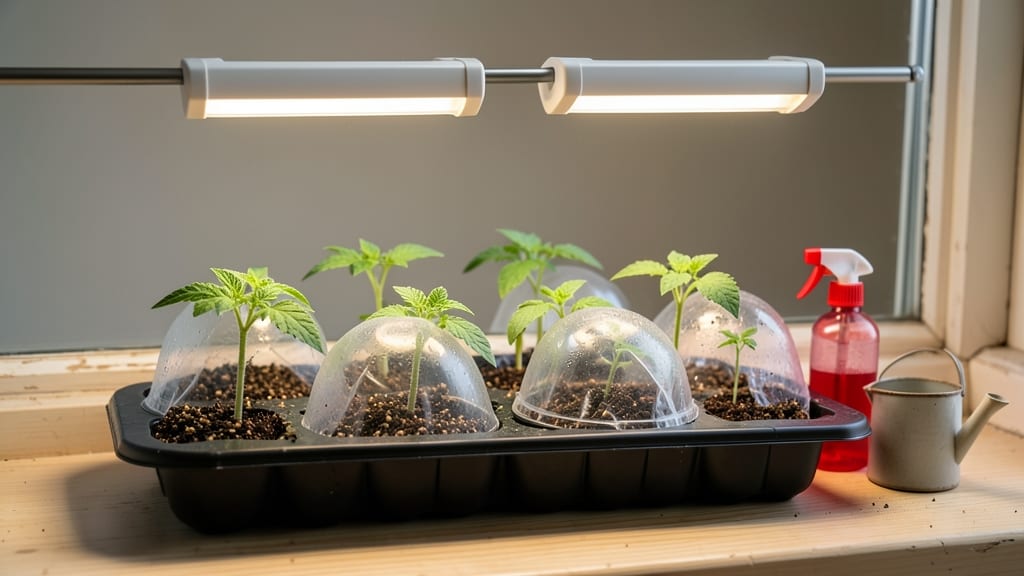
Starting tomato seeds indoors with grow lights means 7-day seedlings instead of 3-week store-bought plants. 🌱 I’ve lost count of the times I’ve bought leggy, weak transplants—until I discovered how grow lights transform weak starts into stocky, vibrant seedlings in a fraction of the time.
The secret isn’t complicated: it’s about light, warmth, and patience. Most beginners overwater or skimp on light, but with the right setup, you’ll see those first green hooks break the soil in less than a week.
You’ll need just five things: a seed-starting tray, sterile seed-starting mix, tomato seeds, a grow light (LED or fluorescent), and a heat mat if your home runs cool. The soil should be damp but not soggy—think of it like a wrung-out sponge.
Plant seeds ¼ inch deep, space them ¼ inch apart, and keep them warm (70–80°F) until they sprout. That’s when the grow light comes in: 14–16 hours of light daily, just 2–3 inches above the seedlings. Too high? They’ll stretch. Too low? They’ll burn.
By day 7, you’ll have tiny, dark-green seedlings reaching for the light, their stems thick and sturdy—not the spindly sticks you’d get from a window sill. The grow light does more than just speed up growth; it prevents the stretchy, weak stems that collapse when transplanted.
Once they’ve got two true leaves, you’ll harden them off for outdoor life. No more weaklings—just robust, ready-to-grow tomato plants that’ll outperform anything from a nursery.
This method works for any tomato variety—cherry, beefsteak, heirloom—and adapts to small spaces. Even if you’ve failed before, this foolproof approach turns first-time growers into seed-starting pros. The only mistake you’ll make? Waiting to try it. Let’s get those seeds sprouting!
📚 In This Guide
- What you need
- Instructions
- Tips and common mistakes
- Wrapping up and next steps
What you need
- ● Tomato seeds: 1–2 packets (choose heirloom or hybrid varieties suited to your climate zone).
- ● Seed-starting trays or pots: 2–4" deep, with drainage holes (biodegradable options like peat pots are great too!).
- ● Seed-starting mix: Lightweight, sterile, and well-draining (avoid garden soil—it’s too dense!).
- ● Grow lights: LED or fluorescent grow lights (full-spectrum, 20W–40W per tray or 12"–18" above seedlings).
- ● Adjustable light stand or shelf (to maintain 2"–4" distance from seedlings as they grow).
- ○ Humidity dome or plastic wrap: To retain moisture during germination (optional but highly recommended for the first 5–7 days).
- ● Misting bottle or spray nozzle: For gentle watering (avoid soaking the soil!).
- ● Timer: To regulate grow lights (14–16 hours of light/day).
- ○ Heat mat (optional): For faster germination (70–85°F range).
- ● 💡 Sanitize everything! Sterilize trays, tools, and soil mix with a 10% bleach solution (rinse well) to prevent mold.
- ● 🌡️ Check your lights: Ensure they emit blue (for veggie growth) and red (for flowering) wavelengths.
- ● ✨ Label your seeds: Use toothpicks or a permanent marker to avoid mix-ups!
Step-by-step instructions for starting tomato seeds indoors with grow lights
Here’s how to kickstart your tomato seedlings with precision lighting for fast, sturdy growth.
🌱 Step 1: Prepare Containers and Seed Starting Mix
Fill 4 biodegradable seedling pots (2-3 inches deep) with sterile seed-starting mix—never garden soil, which can harbor diseases. I press the mix down lightly to eliminate air pockets, then moisten it until it holds together when squeezed but doesn’t drip. The goal is a consistency like a damp sponge, not a soggy rag. This ensures roots can breathe while staying hydrated.
Place the pots in a seedling tray to catch excess water. If your tray lacks drainage, drill a few small holes in the bottom to prevent root rot. Label each pot with the tomato variety and planting date—trust me, you’ll forget which is which after a week of identical green sprouts.
💧 Step 2: Sow Seeds at the Right Depth and Temperature
Plant 1-2 seeds per pot at a depth of ¼ inch, roughly the diameter of the seed itself. Sowing too deep delays germination because the seedling must push through extra soil, exhausting its energy reserves. Cover lightly with a sprinkle of additional mix, then mist the surface with a spray bottle until evenly damp.
Cover the tray with a clear humidity dome or plastic wrap to retain warmth and moisture. Tomatoes germinate fastest at 75-85°F, so a seedling heat mat set to 10°F warmer than room temperature speeds things up. Expect sprouts in 5-7 days—but if your home runs cooler, germination may take 10-14 days. Patience here pays off.
☀️ Step 3: Position Grow Lights for Optimal Growth
The moment seedlings emerge, move them under a full-spectrum LED grow light positioned 2-4 inches above the tallest sprout. Raise the light as they grow to maintain that gap—you’ll see leggy stems if it’s too far away. Aim for 14-16 hours of light daily, using a timer to automate cycles if needed.
Watch for first true leaves (the second set after the initial cotyledons) as your signal to thin seedlings. If you planted two seeds per pot, snip the weaker one at soil level with clean scissors. Strong seedlings have thick stems, deep green color, and leaves spaced 1 inch apart. Leggy, pale plants need more light or a closer light source.
🌿 Step 4: Water and Fertilize for Strong Stems
Water from below by placing the seedling tray in ½ inch of warm water for 10-15 minutes. This prevents damping-off disease, which collapses stems overnight. After watering, let excess drain completely—soggy soil suffocates roots. You’ll know moisture is right when the soil surface looks slightly damp but not glistening.
After 2-3 weeks, when seedlings show 3-4 true leaves, fertilize with a half-strength liquid tomato fertilizer. I use a diluted dose because young roots are sensitive to salts. Feed every 7-10 days to avoid overloading tender systems. Over-fertilizing now leads to weak, floppy growth—you want sturdy plants ready for transplanting.
⏰ Step 5: Harden Off Before Transplanting
Two weeks before your last frost date, start hardening off seedlings by placing them outside in a sheltered, shaded spot for 1-2 hours the first day. Gradually increase outdoor time by 1 hour daily over 10-14 days, slowly introducing more sun and wind. This toughens stems and prevents transplant shock.
On the final day, transplant on an overcast afternoon to reduce stress. Bury seedlings deeper than the stem—up to the first true leaves—to encourage strong root development. Water deeply at the base, not overhead, to settle soil around roots. Your seedlings are now ready to thrive in the garden.
Tips & tricks for bursting tomato seedling growth with grow lights
Here's what nobody tells you about turning those tiny seeds into robust plants ready for transplanting.
Germination Temperature: The 75-85°F range isn't just a suggestion—it's the sweet spot where tomato seeds activate their germination enzymes. If your home runs cooler, place the seed tray on top of your refrigerator (not inside) to create a warm microclimate. I've seen germination times cut from 14 days to 5 days just by adding this simple heat source.
Light Positioning: That 2-4 inch gap between your grow light and seedlings isn't arbitrary—it's about finding the Goldilocks zone. Too close and you'll scorch tender leaves; too far and you get leggy, weak stems. I adjust mine every 3-4 days as seedlings grow, keeping the light just above the tallest leaf. A simple ruler on your light stand makes this easy to track.
Thinning Technique: When you're thinning seedlings at the true leaves stage, don't just pull the weaker one—snip it at soil level with clean scissors. This prevents disturbing the roots of your winner. I also recommend thinning to one seedling per pot immediately after germination if both sprouted. Two plants in one pot will compete for nutrients and light, leaving you with stunted growth.
Fertilizer Timing: The 2-3 week mark for first fertilization is critical because that's when seedlings develop their first true roots. I use a fish emulsion fertilizer at half-strength because it's gentle on young roots while providing essential micronutrients. Watch for dark green leaves and sturdy stems as your sign you're doing it right—any yellowing means you're overdoing it.
Pro Tips for Starting Tomato Seeds Indoors With Grow Lights
- Here's what nobody tells you about turning those tiny seeds into robust plants ready for transplanting.
- Germination Temperature: The 75-85°F range isn't just a suggestion—it's the sweet spot where tomato seeds activate their germination enzymes.
- Light Positioning: That 2-4 inch gap between your grow light and seedlings isn't arbitrary—it's about finding the Goldilocks zone.
Frequently asked questions
Got questions about growing tomato seeds indoors with grow lights? You’re not alone! Here are some of the most common concerns—and their straightforward answers—to help you set up for success.
When is the best time to start tomato seeds indoors?
Start seeds 6–8 weeks before your last frost date—this ensures seedlings are robust enough to transplant outdoors. For example, if your frost date is May 15, begin seeds around March 15–April 1. Use a local frost calculator to pinpoint your timeline.
How many hours of light do tomato seedlings need daily?
Seedlings thrive with 14–16 hours of light per day from grow lights. Use a timer to automate cycles—most LED grow lights mimic sunlight effectively. If seedlings stretch (elongate), they’re light-deprived; adjust height or duration immediately.
Can I use regular LED bulbs instead of grow lights?
While full-spectrum LED grow lights are ideal, you can use bright white or cool LED bulbs (5000K–6500K) as a budget-friendly alternative. Avoid warm bulbs (yellow/red)—they won’t support photosynthesis. Place bulbs 2–4 inches above seedlings for best results.
Why are my tomato seedlings turning leggy or weak?
Leggy seedlings usually mean too little light, overcrowding, or inconsistent warmth. Fix it by:
- Moving grow lights closer (2–3 inches) or increasing hours.
- Thinning seedlings to 1–2 inches apart to reduce competition.
- Ensuring temps stay 70–75°F during the day and 60–65°F at night.
What’s the best temperature range for germinating tomato seeds?
Tomato seeds germinate fastest at 70–85°F. Use a seedling heat mat (70–80°F) if your home runs cooler. Once sprouted, keep daytime temps 70–75°F and nights 60–65°F. Avoid drafts or cold windowsills!
Wrapping up and next steps
Starting tomato seeds indoors with grow lights is a rewarding way to kickstart your gardening season early—and you’ve got this! 🌱 With the right setup, you’ll see those tiny sprouts transform into sturdy seedlings in just 7 days.
Now that you’re armed with the best grow lights, timing, and care tips, it’s time to watch your green thumbs shine.
Ready for the next step? Transplant your seedlings outdoors once they’ve developed their second set of true leaves and nighttime temps stay above 50°F (10°C). Keep an eye on those little plants—they’re on their way to becoming your juiciest, most flavorful tomatoes yet!