
How To
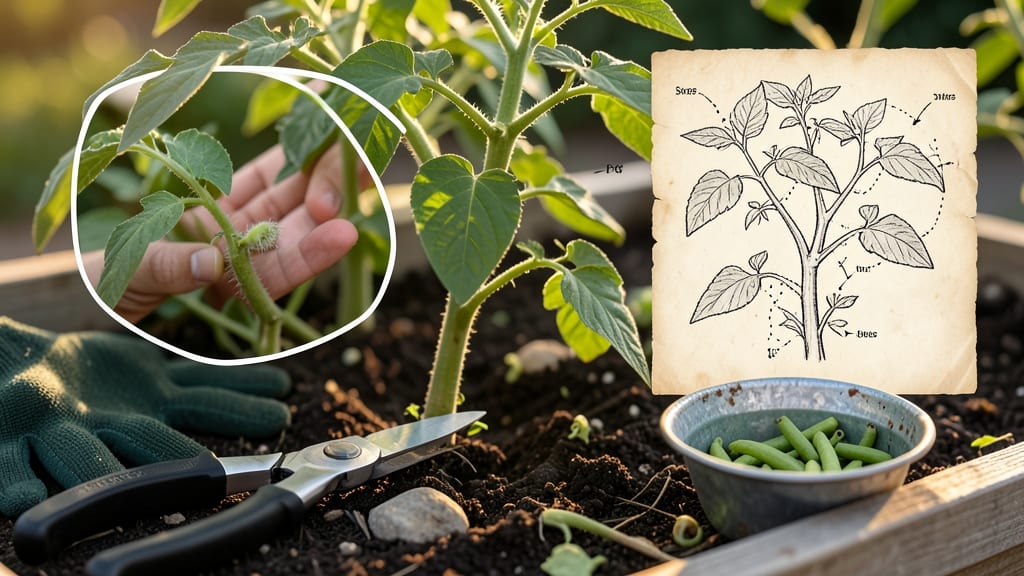
Pruning tomato plants for more fruit isn’t just trimming—it’s redirecting energy from leaves to fruit. ✂️ I’ve gone from sad, scraggly vines to heavy, productive plants just by making a few strategic cuts at the right time.
The key is timing: start when plants hit 12-18 inches tall, then keep pruning until 2-3 weeks before harvest to let fruit ripen.
You’ll need sharp bypass pruners, a small pair of gloves (tomato stems are tough!), and a spray bottle of 1:10 bleach-water mix to sterilize tools between cuts. The goal is to remove suckers—those little shoots growing between main stems and branches—and thin crowded foliage to improve airflow.
After pruning, stake or cage your plants immediately; they’ll need support for all that new fruit weight.
📚 In This Guide
- What you need
- Instructions
- Tips and common mistakes
- Wrapping up and next steps
What you need
- ● Pruning shears or scissors: Sharp, sterilized bypass pruners (avoid dull tools—they crush stems). Size: 4–6 inches for precision.
- ● Gloves: Heavy-duty gardening gloves (to protect against thorns and dirt). Tip: Opt for nitrile-coated for grip.
- ● Disinfectant (rubbing alcohol or bleach solution): 1 part bleach to 9 parts water (sterilizes tools between cuts).
- ● Garden twine or plant ties: 3–4 feet per plant (to support pruned branches). Material: Jute or soft plastic.
- ○ Stake or trellis: 5–6 feet tall (for indeterminate varieties). Optional: Cage for determinate tomatoes.
- ● Pruning spray (copper-based): To prevent fungal infections on open wounds.
- ● Plant food (balanced fertilizer): 10-10-10 or compost tea (post-pruning boost).
- ● Notebook & pen: To track pruning dates and plant responses.
- ● Mulch (straw or shredded leaves): 2–3 inches thick (retains moisture and deters weeds).
Step-by-step guide to pruning tomato plants for maximum fruit production
Here's the method I've used for years to turn lush tomato vines into fruit factories—no guesswork, just strategic cuts.
✂️ Step 1: Identify and Remove Suckers Early
Suckers are the small shoots that grow in the V-shaped junction between the main stem and a branch. These energy vampires drain your plant instead of letting it focus on fruit. Pinch them off cleanly with your fingers or sharp pruners when they're no bigger than a pencil—waiting too long means you're removing more growth than necessary.
Start checking for suckers when your plant reaches about 18-24 inches tall, usually 2-3 weeks after transplanting. I always work in the morning when the plant is turgid and cuts heal fastest. Remove suckers growing below the first flower cluster—these won't produce fruit anyway and just compete with your main harvest.
☀️ Step 2: Train Main Stem and Lateral Branches
Determinate tomatoes (the bush types) don't need pruning, but indeterminate varieties (the vining types) thrive when you train them. Remove all but the first 4-6 main stems from the bottom of the plant—these will become your primary fruit-bearing branches. The goal is to create a sturdy framework that supports heavy fruit loads without snapping.
For each remaining branch, leave only 2-3 fruit clusters per stem. Prune back any additional clusters to redirect energy to the ones you're keeping. You'll know you're doing it right when the remaining clusters swell noticeably within 7-10 days—that's your plant's way of saying "thank you for focusing my energy."
🌿 Step 3: Prune Lower Leaves for Airflow and Sunlight
Remove all leaves from the bottom 12 inches of the plant when your tomatoes start flowering. This might seem counterintuitive, but those lower leaves create a damp, shaded environment that breeds disease. The extra sunlight reaching the fruit also improves flavor and color development. I use clean, sharp pruners to make clean cuts just above a leaf node or branch.
Continue removing any leaves that touch the soil or block airflow as the plant grows. Focus on the lower third of the plant first, then work your way up as needed. You'll notice fewer yellowing leaves and better fruit set after this pruning—your plant will thank you with stronger stems and heavier yields.
⏰ Step 4: Adjust Pruning as Fruit Sets
Once your tomatoes start setting fruit, shift your focus to fruit load management. Remove any fruit clusters that appear beyond the 6th main stem—these late fruits won't mature before frost and just drain your plant. Also prune out any small fruit that develops when your plant is already carrying a heavy load, as this prevents blossom end rot.
Pay special attention to the top of the plant. When you see a flower cluster forming at the very tip, pinch it off immediately. This forces the plant to redirect its energy downward where it can ripen existing fruit. You'll see this work within 3-5 days as lower clusters swell noticeably while the top remains dormant.
🪴 Step 5: Support and Maintain Through Harvest
After your initial pruning, continue monitoring your plant weekly for new suckers or overcrowded branches. Use your fingers to pinch off any new growth in the V-shaped junctions—this is faster than pruners and prevents spreading disease. Support your plant with a sturdy cage or stakes as it grows to prevent stem breakage from heavy fruit loads.
Water at the base in the morning to keep leaves dry and reduce disease risk. You'll know your pruning is working when your plant produces larger, more flavorful tomatoes with fewer green shoulders. The key is consistent maintenance—don't let your plant get ahead of you with unchecked growth.
Tips & tricks for pruning tomato plants for maximum fruit
Strategic pruning transforms your tomato plants from leafy vines into fruit powerhouses—here's how to avoid common pitfalls and boost yields like a pro.
Timing is Everything: The 2-3 weeks after transplanting window for removing suckers is critical. I learned this the hard way—waiting too long means you're pruning larger shoots that compete for energy with your developing fruit clusters. Check plants weekly once they hit 18-24 inches, and always work in the morning when stems are firm and cuts heal fastest. This morning routine prevents disease entry through fresh wounds.
Visual Cues for Perfect Pruning: When training your indeterminate tomato varieties, look for these telltale signs: After pruning to 4-6 main stems, your remaining clusters should visibly swell within 7-10 days—this confirms you've redirected energy effectively. For leaf pruning, aim to expose 12 inches of stem from the base when flowers appear; you'll notice fewer yellowing leaves and better fruit set within 2 weeks of this adjustment.
Tool Selection Matters: While fingers work for small suckers, invest in clean, sharp pruners for larger cuts—they create smaller wounds that heal faster. I sterilize my pruners with rubbing alcohol between plants to prevent disease spread. For the top growth, use your fingers to pinch off terminal buds—this method is faster and preserves more stem tissue than cutting.
Seasonal Adjustments: In cooler climates, extend the pruning season by protecting your plants with row covers after the 6th main stem stage. This allows you to maintain fruit production longer while still managing growth. Watch for new suckers forming in the V-shaped junctions weekly, even as temperatures drop—consistent maintenance prevents energy drain from these hidden growth points.
Pro Tips for Prune Tomato Plants For More Fruit
- Strategic pruning transforms your tomato plants from leafy vines into fruit powerhouses—here's how to avoid common pitfalls and boost yields like a pro.
- Timing is Everything: The 2-3 weeks after transplanting window for removing suckers is critical.
- For leaf pruning, aim to expose 12 inches of stem from the base when flowers appear; you'll notice fewer yellowing leaves and better fruit set within 2 weeks of this adjustment.
Frequently asked questions
Got questions about pruning tomato plants? You’re not alone—even seasoned gardeners need a little guidance! Here are answers to the most common queries to help you prune like a pro and maximize your harvest.
When is the best time to prune tomato plants?
Prune your tomato plants early and often—start when they’re about 12 inches tall and continue throughout the growing season. For indeterminate varieties (like cherry tomatoes), prune regularly to encourage bushier growth. Determinate tomatoes (bush varieties) need minimal pruning—just remove suckers and damaged leaves. Morning pruning is ideal to avoid stressing the plant.
What parts of the tomato plant should I prune?
Focus on three key areas:
- Suckers: Remove the small shoots that grow in the "V" between the main stem and branches. These divert energy from fruit production.
- Lower leaves: Trim leaves touching the soil to prevent disease and improve airflow.
- Damaged or yellowing leaves: Snip these off immediately to keep the plant healthy.
Can I prune tomato plants in hot or cold weather?
Prune only in mild weather—avoid extreme heat (above 90°F) or cold (below 50°F). Hot weather can stress the plant, while cold temperatures slow recovery. If you must prune in heat, do it early in the morning or late afternoon. Wait until temperatures stabilize if pruning during a heatwave or cold snap.
Will pruning tomato plants reduce my yield?
Not if done correctly! Pruning increases yield by directing the plant’s energy toward fruit production. However, over-pruning can reduce yield by removing too much foliage, which is essential for photosynthesis. Stick to the guidelines, and you’ll see bigger, healthier tomatoes—not fewer!
What should I do if my tomato plant looks stressed after pruning?
Stressed plants may wilt or drop flowers/fruit, but don’t panic! Water deeply and provide shade for a day or two if pruned in hot weather. Avoid fertilizing immediately—let the plant recover for 3-5 days. If stress persists, check for pests or disease, which could be the real culprit.
Pro Tip:
Use sterilized pruners (wipe with rubbing alcohol) to prevent spreading disease. And remember: Less is more! Prune lightly and consistently rather than aggressively all at once.
Wrapping up and next steps
Pruning your tomato plants may seem like extra work, but it’s the secret weapon for a bountiful harvest! 🌱 By removing suckers, balancing growth, and improving airflow, you’ll encourage stronger plants and far more fruit.
Start small, stay consistent, and watch your garden thrive—your future salads and sauces will thank you!
Ready to put these tips into action? Grab your pruners and head to the garden today! If you’re new to pruning, begin with just a few plants to build confidence. Happy growing! 🍅✨