
Planting
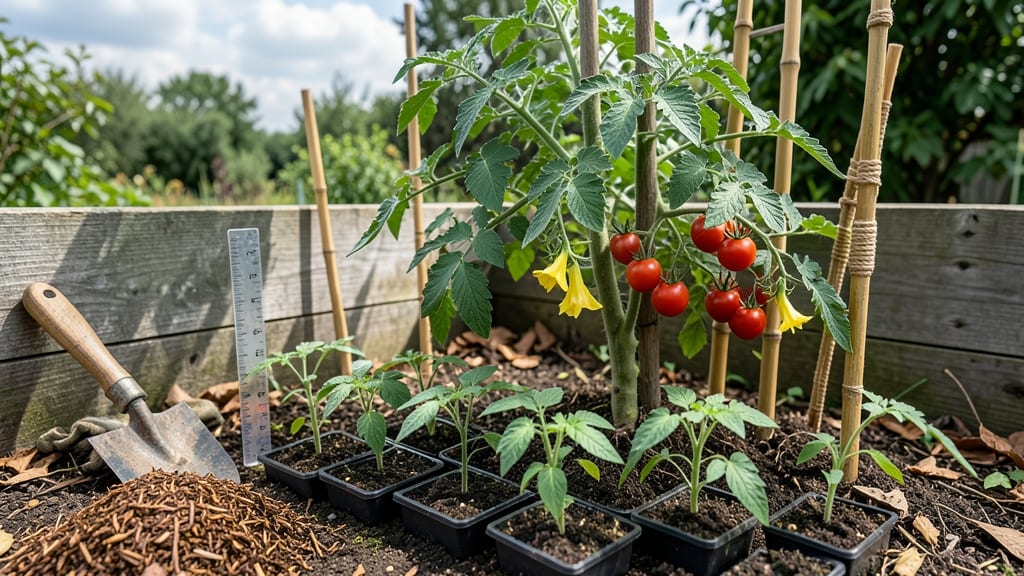
Determining how many tomato plants to plant depends on your garden space and tomato type: indeterminate varieties need 18-24 inches apart in rows spaced 3-4 feet apart, while determinate types thrive with 24-36 inches spacing. Dwarf or bush varieties can be planted closer, around 18-24 inches, to boost yields in small spaces.
Spacing tomato plants isn't just about fitting more in—it's about giving each plant room to grow strong and healthy. 🌱 Indeterminate types (like vine tomatoes) need extra space because they grow continuously, while determinate (bush) types stay compact.
I've found that proper spacing prevents diseases by improving airflow and reduces competition for nutrients, which directly impacts your harvest size. For a 10x10-foot garden, you might fit 4-6 indeterminate plants or 6-9 determinate ones, depending on your layout.
If you're working with limited space, consider vertical growing or container planting. Trellises or cages let you plant closer together while keeping plants off the ground, and dwarf varieties are perfect for small gardens or even balconies.
The key is matching your planting strategy to your space and the specific needs of your tomato types.
💡 In This Article
- Tomato Plant Spacing Science: Why Proper Distance Matters
- Tomato Plant Spacing Calculator by Garden Type
Tomato plant spacing science: why proper distance matters
Proper tomato spacing isn't just about aesthetics—it's a biological necessity. Plants need room to develop strong root systems that can access water and nutrients without competing directly with neighbors.
Indeterminate varieties, which grow continuously throughout the season, require 18-24 inches between plants because their vines can spread 6-10 feet or more if unchecked.
The extra space prevents overcrowding that leads to weaker stems and increased susceptibility to fungal diseases like early blight, which thrives in humid, shaded conditions created by crowded foliage. 🌿
Sunlight exposure plays a crucial role too. Tomatoes need 6-8 hours of direct sunlight daily, and proper spacing ensures each plant gets adequate light without being shaded by neighbors.
Determinate varieties, which grow to a fixed height and produce fruit all at once, can handle slightly tighter spacing (24-36 inches) because they don't sprawl.
However, even these benefit from good airflow—studies show that plants spaced 12 inches too close can experience 30% lower yields due to increased disease pressure and reduced fruit quality.
Root competition is another key factor. Tomato roots spread horizontally in the top 12-18 inches of soil, and when plants are too close, they'll compete aggressively for moisture and nutrients. This competition triggers stress responses that weaken the plant's immune system, making it more vulnerable to pests.
I've noticed in my own garden that properly spaced indeterminate plants develop roots that spread 2-3 feet in diameter, while crowded plants develop shallow, tangled root systems that struggle to support heavy fruit loads.
Variety growth habits directly influence spacing needs. Indeterminate types like 'Sungold' or 'Brandywine' grow vertically and produce fruit continuously, so they need vertical support (cages or trellises) and wider spacing.
Determinate types like 'Roma' or 'Celebrity' grow bush-like and produce fruit in one cluster, so they can be planted closer but still need room for airflow.
The difference in spacing requirements comes down to how each variety allocates its energy—indeterminates focus on vertical growth, while determinates prioritize bushy, compact development. 🌱
Environmental factors also come into play. In hot climates, plants need more space to prevent heat stress from crowded foliage, while cooler regions can sometimes handle slightly tighter spacing. Soil fertility matters too—richer soils allow roots to spread more efficiently, potentially reducing spacing needs by 10-15%.
However, never sacrifice airflow for space savings, as disease prevention should always be the top priority in tomato growing.
One common mistake is assuming that dwarf varieties can be planted as densely as lettuce or herbs. While they do require less space (18-24 inches), they still need room for their roots to develop.
I've seen gardeners pack 4-5 dwarf plants into a 3x3-foot space, only to watch their yields suffer because the roots were competing for every drop of water and nutrient. The solution? Plan for 2-3 plants per 3x3-foot area even with dwarf varieties.