
Companion Plants
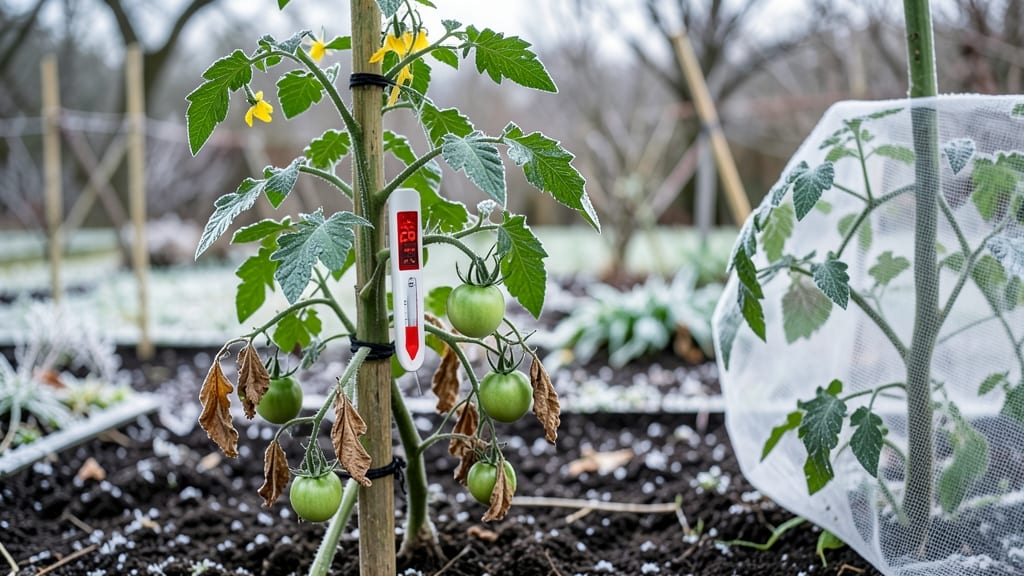
Tomato plants can handle cold down to about 50°F (10°C) before they start showing signs of stress, but frost will kill them outright—unless you take the right steps to protect them.
Picture this: you’ve nurtured your 🍅 plants all season, and then a late spring frost rolls in. Without knowing their cold limits, you might lose everything. But here’s the good news—with the right knowledge, you can shield your plants from temperature drops and even revive them after near-freezing nights.
Cold tolerance varies by growth stage, from seedlings to fruiting plants, and different varieties have different thresholds. Some can bounce back from light frosts, while others need heavy-duty protection.
Below, I’ll break down exactly how cold your tomato plants can survive, what to watch for, and how to keep them thriving even in cooler climates.
You’ll learn the temperature tipping points, the best protective tools (like frost cloths and row covers), and whether your plants can recover after a cold snap. Let’s make sure your garden stays safe no matter what Mother Nature throws at it.
Tomato plant cold tolerance by growth stage: what temperature kills them?
Tomatoes thrive in warm weather, but their cold tolerance varies dramatically depending on their growth stage. As a gardener, understanding these thresholds helps you protect your plants from unexpected chilly spells.
Seedlings are the most delicate, while mature plants can handle brief cold snaps—but there's a fine line between temporary stress and permanent damage.
Most tomato varieties originate from tropical climates, so they lack built-in cold resistance. Even a light frost can devastate young plants, while mature plants might survive brief dips into the 40s°F (4-9°C).
The key is knowing exactly how cold your tomatoes can handle at each stage to take timely action.
⚠️ Critical Note: Tomato plants will never tolerate freezing temperatures (32°F/0°C), but some stages can handle brief exposure to 40-50°F (4-10°C). Below these thresholds, damage becomes severe or irreversible. Let's break down each growth stage's cold tolerance limits.
| Growth Stage | Cold Tolerance Threshold | Irreversible Damage Point | Recovery Potential |
|---|---|---|---|
| Seedlings (<3 weeks) | Above 50°F (10°C) | 45°F (7°C) (severe stunting) | Low (roots and leaves die back) |
| Transplanting (3-6 weeks) | Above 55°F (13°C) | 48°F (9°C) (leaf blackening) | Moderate (new growth possible) |
| Vegetative Growth (6-8 weeks) | Above 50°F (10°C) | 40°F (4°C) (stem damage) | High (pruning may help) |
| Flowering/Fruiting | Above 55°F (13°C) | 45°F (7°C) (blossom drop) | Low (fruit won't develop) |
| Mature Plants (Harvest Stage) | Above 45°F (7°C) | 38°F (3°C) (cell rupture) | None (frost kills tissue) |
*Cold tolerance varies by variety—cold-hardy tomatoes (e.g., 'Stupice', 'Mountain Merit') can handle slightly lower temps.
Seedlings are the most vulnerable, with roots and tender leaves freezing at 45°F (7°C). If you're starting tomatoes indoors and transplanting early, use heat mats to keep soil temps above 60°F (15°C) until roots establish. Even a few hours below 50°F (10°C) can stunt growth permanently.
Transplanted seedlings can handle 55°F (13°C) but suffer leaf blackening at 48°F (9°C). This is where row covers become essential—lightweight fabric raises temps by 5-10°F (3-6°C) and prevents wind chill. I’ve saved countless transplants by covering them overnight during late spring cold snaps.
Once tomatoes reach the vegetative stage (6-8 weeks old), they tolerate 50°F (10°C) better but still risk stem damage at 40°F (4°C). At this point, their woody stems strengthen slightly, but cold stress can redirect energy away from fruit production.
Prune any blackened leaves to encourage new growth, but avoid heavy pruning during cold snaps.
The flowering and fruiting stages are critical for harvests, but these are also the most sensitive to cold. Temperatures below 55°F (13°C) cause blossom drop, where flowers fall off without setting fruit.
This is irreversible—once flowers abort, no amount of warmth will bring them back. Even mature plants won’t produce fruit if temps dip below 50°F (10°C) during flowering.
Mature tomato plants can survive brief exposure to 45°F (7°C), but any frost (32°F/0°C) will kill them instantly. The good news? If you’re harvesting late-season tomatoes, focus on picking ripe fruit before temps drop.
Unripe tomatoes can ripen indoors, but frost-damaged plants won’t recover—even if leaves look fine above ground, roots may be compromised.
Cold-resistant varieties like 'Stupice' or 'Mountain Merit' can handle 30-35°F (-1 to 2°C) for short periods, but most commercial varieties won’t survive below 40°F (4°C).
If you garden in Zone 5 or colder, consider these varieties or use season extenders like cold frames and black plastic mulch to insulate soil and roots.
Pro tip: Monitor your local frost dates and use a minimum-maximum thermometer near your plants. Even a 10°F (-12°C) night can kill seedlings, while mature plants might survive 40°F (4°C) if acclimated gradually. The key is acting before temps drop below each stage’s threshold.
How to protect tomato plants from cold weather: 5 proven methods
Tomatoes thrive in warmth but struggle when temperatures drop—even a light frost can devastate your plants if you're unprepared. The key to saving your harvest lies in understanding how cold tomato plants can tolerate and implementing the right protection strategies.
Whether you're dealing with an early spring chill or late-season frost, these methods will help shield your plants from damage.
Cold-sensitive at every growth stage, tomato plants face different risks: seedlings can rot in cool soil, young plants wilt in 50°F (10°C) nights, and fruiting plants suffer when temps dip below 55°F (13°C).
The good news? With the right tools and techniques, you can extend your growing season and protect your investment.
How Cold Can Tomato Plants Get?
- Seedlings: 55°F (13°C) minimum soil temp; below 50°F (10°C) causes rot. ⚠️
- Young plants: 50-55°F (10-13°C) at night triggers wilting; 40°F (4°C) causes permanent damage. ⚠️
- Flowering/fruiting: 55°F (13°C) slows growth; below 45°F (7°C) kills blossoms and fruit. ⚠️
- Frost (32°F/0°C) or below: Instant leaf burn; 28°F (-2°C) kills entire plants. ❄️
- Cold-hardy varieties: Some tolerate 40-45°F (4-7°C) briefly (e.g., 'Stupice,' 'Mountain Merit'). ✅
For short-term protection, row covers and cloches create microclimates that raise temperatures by 5-10°F (3-6°C). These lightweight fabrics block wind and trap heat without smothering plants.
I’ve used floating row covers (like Agribon) to save my cherry tomatoes during late spring chills—just secure them tightly to avoid gaps where cold air can sneak in.
Long-term solutions focus on soil insulation and mulching. A thick layer of straw or leaves (4-6 inches) keeps roots warm by moderating temperature swings. I recommend black plastic mulch in early spring to absorb sunlight and warm the soil faster.
For containers, move pots to a sheltered spot or wrap them in bubble wrap to add an extra insulating layer.
Choosing cold-resistant varieties is another game-changer. Varieties like 'Cold Set' or 'Siberian' set fruit even in cooler conditions (down to 50°F/10°C). Pair these with drip irrigation to maintain root-zone warmth—cold roots struggle to absorb water, making plants more vulnerable to stress.
If frost is forecasted, act fast: cover plants with blankets (old towels work!) and remove them during the day to prevent overheating. For a more permanent fix, consider low tunnels made from PVC pipes and row covers—these can add 10-15°F (6-9°C) of protection.
I’ve seen gardeners in Zone 5 extend their season by 3-4 weeks using this method.
Remember, prevention is easier than recovery. Start with soil prep (add compost to improve drainage) and plant spacing (taller varieties need airflow to avoid fungal issues in damp cold).
With these strategies, you’ll turn your garden into a frost-free haven—one where tomatoes thrive even when Mother Nature throws a chill your way. 🌱