
Plants
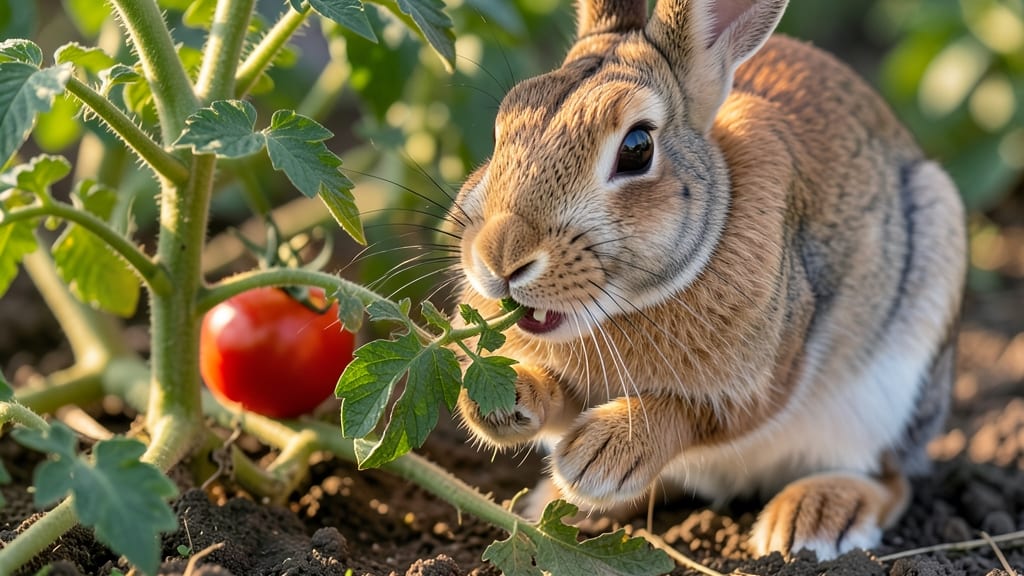
Rabbits do eat tomato plants, and their preference for your 🍅 harvest can leave you scrambling for solutions.
If you’ve ever spotted your backyard rabbits nibbling on your tomato plants, you’re not alone—many gardeners face this frustrating dilemma. But before you panic, learn whether rabbits actually eat tomatoes, what parts they avoid, and how to protect your garden without sacrificing fresh veggies for your bunnies.
The good news? Rabbits usually avoid ripe tomato fruits due to their low nutritional value, but they’ll happily munch on tender leaves and stems—especially young seedlings. Understanding their feeding habits is the first step to saving your crop while keeping your furry friends happy.
In this guide, I’ll break down which parts of tomato plants rabbits target, share 10 rabbit-safe vegetable alternatives that thrive in your garden, and walk you through 5 natural deterrents that keep both your tomatoes and bunnies content.
Do rabbits eat tomato plants? What parts are safe (or dangerous)
If you’ve ever spotted your backyard rabbits nibbling on your tomato plants, you’re not alone—many gardeners face this frustrating dilemma. The good news? Rabbits rarely target tomato plants as their primary food source, but they will snack on them when other greens are scarce.
Understanding which parts of the plant are safe—or dangerous—for rabbits can help you protect your garden while keeping your furry friends healthy.
Tomato plants contain solanine, a natural toxin found in the leaves and stems, which can cause digestive upset in rabbits. However, the ripe fruits are generally safe in moderation.
The key lies in knowing which parts rabbits prefer—and how to deter them without harming your garden or your bunnies.
| Plant Part | Toxicity Level | Rabbit Risk | Safe Amount |
|---|---|---|---|
| Leaves (Green) | High (Solanine) | Dangerous | Avoid entirely |
| Stems (Green) | High (Solanine) | Dangerous | Avoid entirely |
| Fruits (Ripe) | Low (Solanine) | Minimal | Occasional small bites |
| Roots | Low | Safe | No risk |
| Flowers | Low | Minimal | Occasional nibbles |
Rabbits are more likely to ignore tomato plants when other preferred foods like clover, dandelions, or lettuce are available. However, if your garden lacks variety, rabbits may turn to tomatoes—especially the leaves and stems, which contain higher levels of solanine.
This toxin can cause digestive issues, lethargy, or even dehydration in severe cases.
Interestingly, ripe tomato fruits are the safest part for rabbits, as they contain minimal solanine. A few small bites won’t harm them, but feeding large quantities isn’t recommended.
If you notice your rabbits chewing leaves or young stems, it’s a sign they’re desperate for greens—and your tomato plants are at risk.
Rabbits typically avoid tomato plants when they have access to clover, alfalfa, or grass, which are their natural forage. However, in urban or suburban gardens where wild greens are scarce, rabbits may target tomato plants as a last resort.
This is especially true in spring or early summer, when new growth is tender and more palatable.
To prevent damage, focus on providing alternative forage like rabbit-safe herbs (e.g., parsley, cilantro) or companion plants that rabbits dislike, such as rosemary or thyme. These plants not only deter rabbits but also enhance your garden
10 Rabbit-proof vegetables that thrive in gardens (even near bunnies)
If your backyard rabbits have a taste for your tomato plants, don’t despair—there are plenty of rabbit-resistant vegetables that can coexist peacefully in your garden.
The key is choosing herbaceous plants with strong scents or fuzzy textures that rabbits avoid, while still providing a nutritious forage area for your bunnies. Here’s how to create a rabbit-friendly garden that protects your tomatoes while keeping your furry friends happy.
Rabbits typically avoid aromatic herbs like rosemary and thyme, as well as bitter or fibrous greens like kale and Swiss chard. These plants not only deter rabbits but also enhance your garden’s flavor.
Below, I’ve curated a list of 10 rabbit-proof vegetables that thrive even when rabbits are nearby, along with planting tips to keep your garden harmonious.
- 1 Rosemary and thyme – Rabbits despise their strong scent. Plant near tomato beds to repel them naturally.
- 2 Garlic and onions – Their pungent aroma deters rabbits while boosting your garden’s pest resistance.
- 3 Swiss chard – Tough, fibrous leaves are unappealing to rabbits but packed with nutrients for you.
- 4 Kale – Rabbits usually ignore its bitter taste, making it a safe bet for your garden.
- 5 Asparagus – Once established, rabbits rarely bother its woody stems and ferns.
- 6 Brussels sprouts – Their tough leaves deter rabbits, but harvest early to avoid pest issues.
- 7 Peppers – Rabbits avoid their spicy compounds, making them a great companion to tomatoes.
- 8 Eggplant – Their glossy leaves are unappealing to rabbits, but monitor young plants.
- 9 Basil – Rabbits dislike its strong scent; plant near tomatoes to create a natural barrier.
- 10 Dill – Its feathery foliage confuses rabbits, making it a clever deterrent.
To maximize protection for your tomato plants, interplant these rabbit-resistant vegetables around the edges of your garden. Rabbits are less likely to venture into unfamiliar territory, especially if they encounter strong