
Vegetables
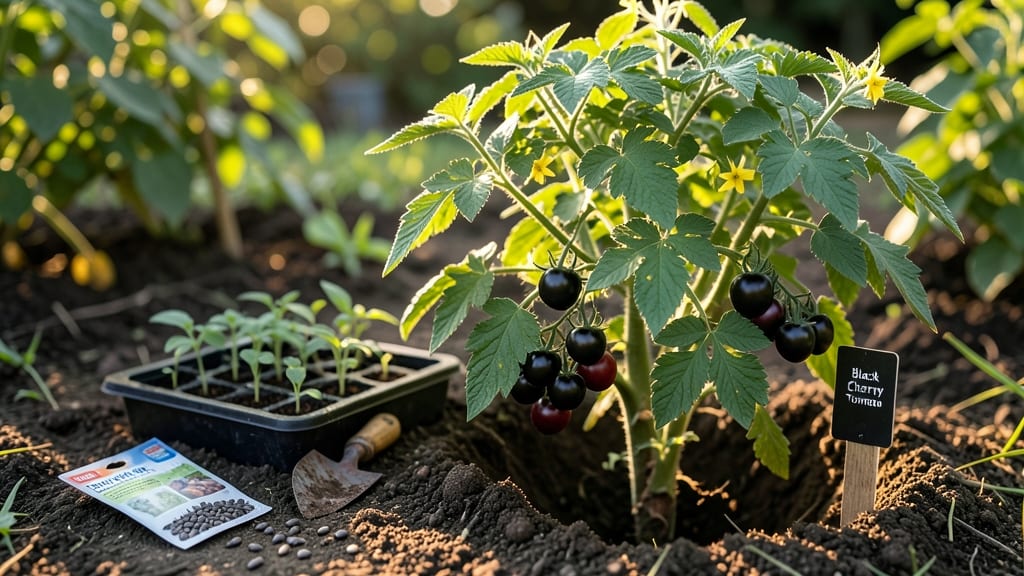
Growing Black Strawberry tomato seeds unlocks a flavor experience unlike anything from store-bought varieties. 🌱 These deep purple-black tomatoes taste like sun-ripened berries with a hint of smoky sweetness, but they demand precise care to thrive.
I’ve grown them for three seasons now, and the key to success starts with the right soil mix, timing, and patience—especially for beginners who might assume they’re just like regular tomatoes.
The hybrid nature of Black Strawberries means they’re more disease-resistant than heirlooms, but they still need full sun (6-8 hours daily), rich soil, and consistent moisture. Unlike beefsteak tomatoes, these grow in compact bushes, making them perfect for containers or small gardens.
The real game-changer? Their 90-day maturity—longer than most tomatoes, so plan your seed-starting schedule carefully to avoid late-season disappointments.
By late summer, you’ll be harvesting tomatoes that look like edible jewels and taste like nothing else. The flavor deepens when fully ripened on the vine, but even slightly underripe, they’re a standout in salads or sauces.
With proper pruning and staking, you’ll avoid the common pitfall of sprawling vines and cracked fruit—something I learned the hard way my first year.
Whether you’re a first-time grower or a seasoned gardener, this variety rewards attention to detail. The payoff? A harvest that turns heads at farmers’ markets and dinner tables alike. Let’s get those seeds started the right way—no guesswork involved.
📚 In This Guide
- What you need
- Instructions
- Tips and common mistakes
- Wrapping up and next steps
What you need
- ● Black Strawberry tomato seeds – 1 packet (20-50 seeds) (ensure they’re fresh for best germination).
- ● Seed-starting mix – 1 small bag (1-2 quarts) (sterile, peat-based or coco coir blend).
- ● Seed trays or small pots – 6-12 cell packs or 4-inch pots (with drainage holes!).
- ● Grow lights or sunny windowsill – 12-16 hours of light daily (LED grow lights work great).
- ● Watering can or spray bottle – Fine mist setting for seeds (avoid overwatering!).
- ● Plant labels – Small tags or markers (to track growth stages).
- ● Fertilizer – Balanced liquid fertilizer (5-5-5 or 10-10-10) (diluted to half-strength for seedlings).
- ● Transplanting pots or garden space – 5-gallon containers or full sun (6+ hours/day) (soil should be well-draining).
- ● Heat mat – For faster germination (70-80°F) (speeds up sprouting!).
- ● Humidity dome or plastic wrap – Keeps moisture in for early growth (remove once sprouts appear).
- ● pH testing kit – Ideal soil pH: 6.0-6.8 (tomatoes thrive in slightly acidic soil).
- ● Pruning shears – For shaping plants later (encourages bushier growth).
- ● Trellis or stakes – 3-4 ft tall (supports heavy vines and fruit).
- ● Organic mulch – Straw or shredded leaves (retains moisture and deters weeds).
Step-by-step guide to growing black strawberry tomatoes from seed
This heirloom hybrid delivers a taste experience unlike any other—here's how to coax those rich, deep fruits from tiny seeds.
🌱 Step 1: Prepare Seed-Starting Supplies and Environment
Gather 4 biodegradable seed pots (3 inches deep) and fill each with 1 cup of sterile seed-starting mix. I press the mix down gently to eliminate air pockets but keep it loose enough for delicate roots to penetrate. The key here is warmth—place your pots on a seedling heat mat set to 75-80°F to mimic the tropical conditions these seeds prefer.
Moisten the mix with warm water until it feels like a wrung-out sponge—damp but not dripping. Black strawberry tomatoes germinate best when the soil stays consistently moist, so I cover each pot with a clear plastic dome to retain humidity. This isn't just about moisture; it's about creating a mini greenhouse that encourages those first critical sprouts.
🌱 Step 2: Plant Seeds at Proper Depth and Spacing
Plant 2 seeds per pot at a depth of ¼ inch, about the diameter of a pencil eraser. Sowing too deep delays germination because the seedling must push through more soil, exhausting its energy reserves. I use a toothpick to make small holes—it's precise and prevents crushing the seeds.
Cover the seeds lightly with additional mix, then mist the surface with a spray bottle until the soil looks uniformly damp. Place the pots back under the heat mat and cover with their humidity domes. Here's where patience pays off: germination typically takes 7-14 days, but don't be surprised if some seeds take up to 21 days—these tomatoes are particular about their timing.
☀️ Step 3: Provide Optimal Light and Airflow
Once seedlings emerge, remove the humidity domes immediately to prevent damping-off disease. Black strawberry tomatoes need 14-16 hours of bright light daily, so I position them under full-spectrum LED grow lights about 2-3 inches above the plants. Without sufficient light, seedlings stretch unnaturally (called "legginess"), and the stems become weak—something you definitely don't want with this vigorous variety.
Rotate the pots a quarter turn daily so plants grow straight rather than leaning toward the light. You'll notice the first true leaves (the second set after the initial seed leaves) appear in 2-3 weeks. These leaves are your signal that the seedlings are ready for their next growth phase—thicker stems and more robust development.
🪴 Step 4: Transplant and Support for Strong Growth
When seedlings have 4-5 true leaves and are about 4-5 inches tall, transplant the stronger of the two seedlings in each pot into 5-gallon containers filled with a mix of 50% potting soil and 50% compost. Black strawberry tomatoes need deep roots, so these larger containers give them room to establish before the growing season peaks.
Plant each seedling at the same depth it was growing in the pot, then water deeply to settle the soil and eliminate air pockets. Immediately install a 6-foot tomato cage or sturdy stakes—these plants get heavy with fruit, and proper support prevents broken stems. I also add a slow-release fertilizer at this stage to ensure steady nutrient uptake as the plants ramp up growth.
✂️ Step 5: Prune and Maintain for Maximum Yield
As the plants grow, prune suckers (the small shoots that form in the leaf axils) to direct energy toward fruit production rather than foliage. Black strawberry tomatoes benefit from open-center pruning, where you remove leaves that block sunlight from the lower fruit clusters. This might seem counterintuitive, but it actually increases air circulation and reduces disease risk.
Water at the base deeply every 2-3 days, ensuring the soil stays moist but not waterlogged. These tomatoes thrive with consistent moisture, especially during flowering and fruiting. Mulch with 2 inches of straw to retain soil moisture and suppress weeds. You'll know you're on the right track when the first flowers appear in 8-10 weeks—small, vibrant blooms that signal the start of your harvest season.
Tips & tricks for perfect black strawberry tomato seedlings
These practical insights will help you nurture your black strawberry tomato seeds from delicate sprouts to thriving plants.
Environmental Consistency: Maintain the 75-80°F heat mat temperature consistently—even small fluctuations can delay germination. I place my pots on a dedicated thermostat-controlled mat and monitor with a small digital thermometer. The goal is to mimic tropical conditions these seeds crave, and every degree matters during those critical first days.
Germination Timing: While the instructions mention 7-14 days for germination, I've found these seeds often take the full 21 days when conditions aren't perfect. Mark your calendar and resist the urge to dig up seeds that haven't sprouted—patience is key. I keep a germination journal to track each pot's progress and adjust my expectations accordingly.
Light Transition Strategy: When moving seedlings from grow lights to natural sunlight, do it gradually over 5-7 days to avoid sunburn. Start with 2 hours of direct sun per day and increase by 30 minutes daily. The 14-16 hours of light requirement is non-negotiable, but sudden exposure can shock tender seedlings.
Transplanting Technique: When transplanting to 5-gallon containers, handle seedlings by their leaves rather than stems to prevent damage. I make a small hole in the soil with my finger, then gently slide the seedling out of its pot using a butter knife. This preserves the delicate root structure that's crucial for establishing these vigorous plants.
Pro Tips for Black Strawberry Tomato Seeds
- These practical insights will help you nurture your black strawberry tomato seeds from delicate sprouts to thriving plants.
- Environmental Consistency: Maintain the 75-80°F heat mat temperature consistently—even small fluctuations can delay germination.
- Germination Timing: While the instructions mention 7-14 days for germination, I've found these seeds often take the full 21 days when conditions aren't perfect.
Frequently asked questions
Got questions about growing black strawberry tomato seeds? You’re not alone! Here are some of the most common queries—plus straightforward answers to help you cultivate these bold, flavor-packed tomatoes like a pro.
How long does it take for black strawberry tomato seeds to germinate?
Black strawberry tomato seeds typically germinate in 5–14 days when kept in warm (70–85°F), moist soil. For faster sprouting, pre-soak seeds for 24 hours or use a heat mat. Patience is key—some seeds may take longer, especially in cooler conditions.
When is the best time to plant black strawberry tomato seeds indoors vs. outdoors?
Start seeds indoors 8–10 weeks before your last frost date (use grow lights if natural light is limited). Transplant seedlings outdoors after soil warms to 55°F+ and nighttime temps stay above 50°F. Black strawberries thrive in full sun (6–8 hours/day) and warm climates.
Are black strawberry tomatoes easy to grow for beginners?
While rewarding, they require more care than standard tomatoes. They’re heirloom hybrids, so they need consistent moisture, rich soil, and staking/caging (they grow 4–6 ft tall!). Beginners should start with 1–2 plants and research pest/disease prevention (e.g., blight, aphids).
What can I do if my black strawberry tomato plants aren’t fruiting?
Common culprits include overcrowding, poor pollination, or nutrient deficiencies. Try these fixes:
- Prune suckers to focus energy on fruit.
- Hand-pollinate flowers with a paintbrush if bees are scarce.
- Fertilize with low-nitrogen, high-potassium feed (like 5-10-10) when flowers appear.
- Ensure 6+ hours of sun and well-draining soil.
Can I save seeds from black strawberry tomatoes for next year?
Yes! Let a few tomatoes fully ripen on the vine, then scoop out seeds and pulp into a jar. Add water, stir, and ferment for 2–3 days (scum will rise—skim it off). Rinse seeds, dry on paper towels, and store in a cool, dark place. Note: Hybrid varieties may not reproduce true to type.
Wrapping up and next steps
Growing black strawberry tomato seeds is a rewarding adventure that brings bold, sweet flavors to your garden—and your plate! 🌱 With the right soil, sunlight, and care, you’ll soon enjoy these hybrid gems bursting with unique taste.
Whether you’re a seasoned gardener or just starting, every seed planted today could turn into tomorrow’s harvest.
Ready to take the next step? Start with just a few seeds this season, experiment with companion plants, and watch your garden thrive. Who knows? You might just discover a new favorite tomato variety to share with friends or savor in your favorite recipes. Happy growing! 🌿