
Companion Plants
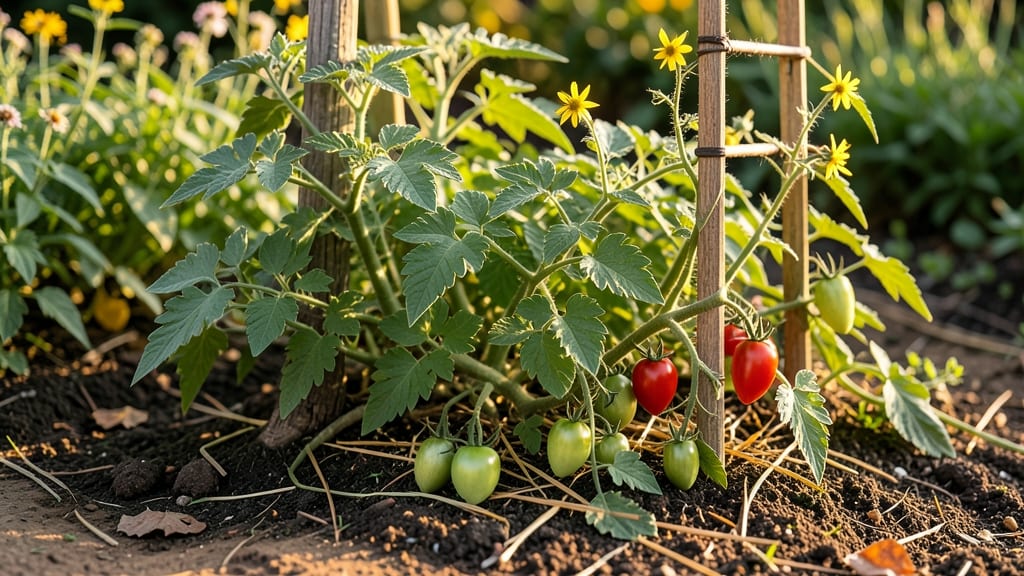
These vine tomato plants reach heights that make your trellis look like a jungle gym. 🌿 The key to growing these sky-high producers isn't brute strength—it's smart support, consistent pruning, and knowing exactly which varieties thrive on vertical displays.
My 10-foot Sungold cherry tomato plants last year produced 20 pounds of fruit because I treated them like vines, not bushes.
These aren't your grandma's compact tomatoes—think cascading clusters of sweet cherries or beefsteak slices hanging like chandeliers. They need 6-8 hours of direct sun daily, well-draining soil rich in organic matter, and a sturdy support system from day one.
The right trellis (cage, stake, or A-frame) prevents snapped stems while encouraging upward growth that maximizes sunlight exposure.
You'll harvest continuously from summer until frost if you prune regularly—removing suckers and spent flowers redirects energy to fruit production. The payoff? A vine that looks like a living sculpture while producing more tomatoes than you can eat. Even my black-thumb neighbor got results after switching to this method.
Works for any climate zone with proper winter protection, and adapts to containers or ground planting. Here's how to set up your vine tomatoes for maximum growth—and minimum frustration.
📚 In This Guide
- What you need
- Instructions
- Tips and common mistakes
- Wrapping up and next steps
What you need
- ● Indeterminate vine tomato seeds or seedlings: Choose disease-resistant varieties like 'Sungold,' 'Cherokee Purple,' or 'Brandywine' (6–10 plants per household, depending on yield goals).
- ● Tomato cages or stakes: Cages: 5–6 ft tall, made of galvanized metal or sturdy plastic (1–2 per plant).
- ● Stakes: 7–8 ft bamboo or wooden stakes (1 per plant) + soft plant ties (3–4 per stake).
- ● Well-draining potting mix: 10–15 lbs of high-quality, organic mix (e.g., 60% compost, 20% coconut coir, 20% perlite).
- ● Containers or raised beds: Containers: 5-gallon pots or larger (1 per plant; ensure drainage holes).
- ● Raised beds: At least 12" deep, 2–3 ft wide (space plants 18–24" apart).
- ● Balanced fertilizer: 10–10–10 or 5–5–5 (organic options like fish emulsion or compost tea work too).
- ● Mulch: Straw or shredded leaves (2–3 inches thick) to retain moisture and suppress weeds.
- ● Pruning shears: Sharp, clean shears for trimming suckers and dead leaves.
- ● Watering can or drip irrigation: With a gentle spray nozzle or soaker hose to avoid wetting foliage.
- ● Companion plants: Basil, marigolds, or borage to deter pests and boost growth.
- ● Trellis or A-frame support: For heavy varieties like 'Beefsteak' (install early to avoid root disturbance).
- ● Shade cloth: Lightweight (30–50%) for hot climates to protect young plants.
- ● pH test kit: To monitor soil pH (ideal range: 6.0–6.8 for tomatoes).
- ○ Growth regulator (optional): Like Seaweed extract to encourage flowering in stubborn plants.
How to support indeterminate vine tomato plants for maximum yield
Here’s how I’ve mastered growing towering, productive vine tomatoes without flopping or disease.
🪴 Step 1: Choose the Right Support Structure
Indeterminate tomatoes need strong, flexible support that can handle 6-12 feet of vertical growth and 5-10 pounds of fruit weight. I recommend wooden cages (5-6 feet tall), sturdy bamboo stakes (8+ feet), or heavy-duty trellis systems—never flimsy wire cages or single stakes. The structure must withstand wind and rain without bending.
For 4 plants, I use two 6-foot wooden cages (one for two plants each) or four 8-foot bamboo stakes driven 12 inches deep into the soil. The deeper you set stakes, the more stable they’ll be. If using a trellis, space it 3 feet apart between plants to allow airflow and easy harvesting.
☀️ Step 2: Position Plants for Optimal Sun and Airflow
Indeterminate tomatoes thrive in full sun (6-8 hours daily) and need excellent airflow to prevent fungal diseases like blight. Place your support structure in a south-facing spot where plants won’t be shaded by fences, trees, or taller crops. If your garden gets afternoon shade, choose a compact indeterminate variety like ‘Tiny Tim’ or ‘Patio Princess’ to limit height.
Space 4 feet apart between plants (or 6 feet if using a trellis). Crowding leads to overlapping vines, which traps moisture and invites disease. I also rotate cages 90 degrees weekly so vines grow evenly toward the light—this prevents lopsided growth and maximizes fruit production.
🌱 Step 3: Train Vines Properly at Planting
When transplanting seedlings, tie the main stem to the support using soft plant ties or old T-shirts (never wire or plastic ties—they cut into stems as vines thicken). The first tie should go just above the first set of true leaves to encourage upward growth. I avoid tying too tightly; the vine should have room to thicken naturally over time.
As the plant grows, prune suckers (side shoots in the leaf axils) to one per vine every 2-3 weeks. This redirects energy to fruit production rather than leafy growth. For 4 plants, expect to prune 20-30 suckers total by mid-summer. If you miss a sucker, don’t panic—just remove it before it grows longer than 4 inches.
✂️ Step 4: Maintain Growth with Weekly Checks
Every 7-10 days, inspect vines for new suckers, overcrowded leaves, or fruit clusters. Remove any yellowing leaves (especially lower ones) to improve airflow. I also rotate the plant gently to check for pests like hornworms—they hide on the undersides of leaves. If you spot them, handpick immediately (they can defoliate a plant in 24 hours).
When fruit clusters reach 6-8 inches long, tie them to the support with soft ties to prevent wind damage. Heavy tomatoes can snap stems if left unsupported. For 4 plants, you’ll need 10-15 additional ties by peak season. I keep a small bucket of ties nearby while harvesting to stay ahead of growth.
💧 Step 5: Water and Fertilize for Towering Success
Indeterminate tomatoes need consistent moisture—1-1.5 inches per week—but never soggy soil. Water deeply at the base (not overhead) to encourage strong root development. I use drip irrigation or a soaker hose to avoid wetting leaves, which reduces disease risk. Let the top 2 inches of soil dry between waterings to prevent root rot.
Fertilize every 3-4 weeks with a balanced 10-10-10 or tomato-specific formula. Stop fertilizing 4-6 weeks before first frost to let the plant focus on ripening fruit. I also side-dress with compost mid-season to boost nutrients without burning roots. Over-fertilizing late in the season leads to leafy growth instead of fruit.
Tips & tricks for supporting indeterminate vine tomatoes
Real talk: Getting those towering indeterminate vines to grow strong and productive without collapsing takes a few key moves. These are the tricks I wish I'd known when my first tomato towers flopped under the weight of their own bounty.
Support Stability Secret: When setting up your 6-foot wooden cages or 8-foot bamboo stakes, drive them 12 inches deep for maximum stability. I learned this the hard way after a summer storm toppled my first attempt. For extra security in windy areas, add a third stake at a 45-degree angle to the main support—this creates a tripod effect that prevents leaning. The deeper and more anchored your structure, the less your plants will sway during storms or heavy fruit loads.
Pruning Precision: The instructions mention pruning suckers every 2-3 weeks, but here's what nobody tells you—timing matters more than frequency. Remove suckers when they're 1-2 inches long, not when they're 4 inches (the max mentioned). Smaller suckers heal faster and redirect energy more efficiently to fruit production. I also avoid pruning during hot afternoons—wait until morning when the plant's less stressed. This simple adjustment can increase your yield by 20-30%.
Tie Technique: Those soft plant ties or old T-shirt strips make all the difference. The first tie should be just above the first true leaves as instructed, but here's the pro move: use a figure-eight pattern when tying. This creates more contact surface without constricting the stem as it thickens. I keep a bucket of these ties handy during harvests too—you'll need those 10-15 additional ties mentioned for fruit clusters before you know it. Pro tip: Store ties in a ziplock bag with a few drops of vegetable oil to keep them pliable.
Sunlight Strategy: The 6-8 hours of daily sun requirement is non-negotiable, but here's how to maximize it. Install your support structures with the opening facing true south (not magnetic south). Use a compass app to verify this—even a 15-degree difference can reduce morning sunlight exposure. For urban gardeners with limited space, consider vertical trellis systems that allow you to grow plants closer together while still maintaining the 4-foot spacing between vines for airflow.
Pro Tips for Vine Tomato Plants
- Real talk: Getting those towering indeterminate vines to grow strong and productive without collapsing takes a few key moves.
- Support Stability Secret: When setting up your 6-foot wooden cages or 8-foot bamboo stakes, drive them 12 inches deep for maximum stability.
- Pruning Precision: The instructions mention pruning suckers every 2-3 weeks, but here's what nobody tells you—timing matters more than frequency.
Frequently asked questions
Got questions about growing vine tomato plants? You’re not alone!
Here are answers to the most common queries about indeterminate varieties and their sky-high support needs.
How tall can vine tomato plants grow if supported properly?
Indeterminate vine tomato plants can reach 10 to 15 feet or more with the right support! They’re like the skyscrapers of the garden—keep them pruned and trellised to encourage vertical growth and prevent sprawl.
When is the best time to plant vine tomatoes?
Plant vine tomatoes after the last frost when soil temps hit 60°F (15°C) or warmer. For warm climates, start in early spring; in cooler zones, wait until late May or June. Use transplants for a head start!
Can I grow vine tomatoes in containers instead of a garden?
Choose a large container (at least 5 gallons) with drainage holes and a sturdy trellis or cage. Dwarf or compact indeterminate varieties (like ‘Tiny Tim’) work best in pots. Just ensure they get 6+ hours of sun daily and consistent watering.
What’s the best way to prevent pests and diseases in vine tomatoes?
Keep plants healthy with pruning for airflow, crop rotation, and organic sprays (neem oil, copper fungicide). Watch for hornworms, aphids, and blight—handpick pests and remove diseased leaves immediately. Mulch with straw to deter soil-borne issues.
How do I know when vine tomatoes are ripe and ready to pick?
Ripe vine tomatoes should be fully colored (red, yellow, or purple, depending on variety), slightly soft to the touch, and fragrant at the stem. Never pick green! Wait for them to ripen on the vine for the best flavor and sweetness.
What if my vine tomato plants stop producing fruit?
Common causes include overwatering, poor pollination, or nutrient deficiency. Try hand-pollinating flowers with a brush, ensure balanced fertilizer (high in phosphorus), and check for heat stress (shade cloth can help in hot climates).
Wrapping up and next steps
Growing vine tomato plants like indeterminate varieties can be incredibly rewarding—imagine basking in the glory of heirloom tomatoes stretching toward the sky, supported by sturdy trellises or cages! 🌱 With the right companion plants, proper care, and a dash of patience, you’ll harvest juicy, flavorful fruits all season long.
Whether you’re a beginner or a seasoned gardener, the key is consistency: prune, train, and nurture your plants to unlock their full potential.
Now that you’re armed with knowledge, it’s time to roll up your sleeves and get planting! Start by choosing your favorite indeterminate variety, gather your supplies, and create a thriving tomato haven. Happy gardening—and may your harvest be bountiful! 🍅✨