
How To
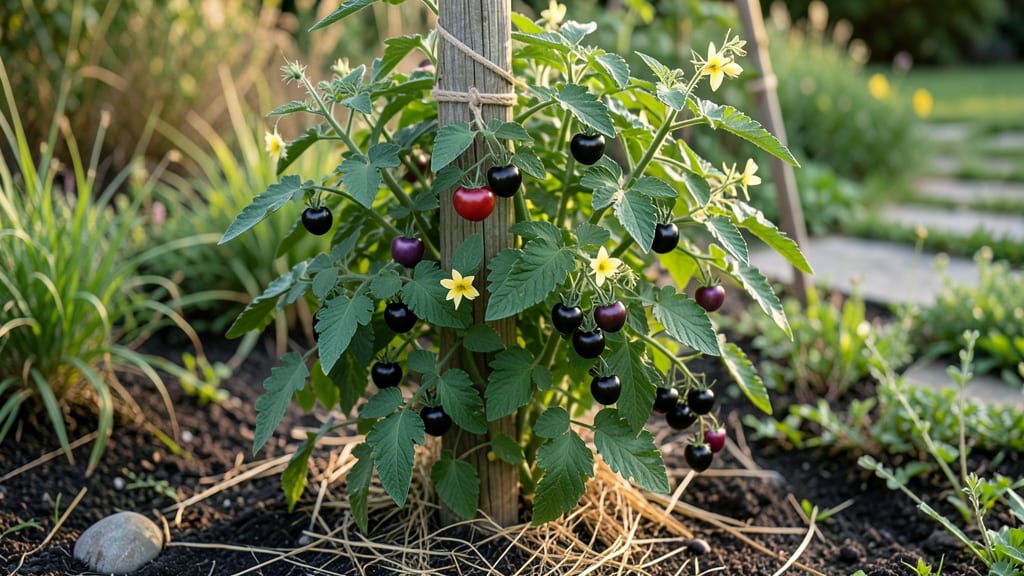
How tall do Black cherry tomato plants grow? They reach a mature height of 3 to 5 feet—sturdy enough to climb a trellis but compact enough to thrive in containers if pruned right.
If you’re dreaming of a bountiful harvest of sweet, dark 🍅 Black Cherry tomatoes but wondering how much vertical space to dedicate, you’re in the right place. These compact yet prolific plants can surprise even seasoned gardeners with their growth habits—whether left to sprawl or guided upward.
Without support, they’ll bush out to 3 to 4 feet, but with a trellis or cage, they’ll stretch toward the sky, reaching 5 to 6 feet by mid-summer. The key? Pruning early to focus energy on fruit instead of foliage.
Below, I’ll break down how to control their height for maximum yield, plus common mistakes that stunt growth—and how to fix them before they become problems.

Black Cherry tomato plant height: natural growth vs trellis support
Understanding the natural growth patterns of Black Cherry tomatoes is key to planning your garden layout. These popular heirloom varieties typically grow between 2 to 4 feet tall when left to their own devices, but their true height potential depends on whether you're growing indeterminate or determinate varieties.
Most Black Cherry tomatoes sold as seeds are indeterminate, meaning they'll keep growing and producing fruit all season long if given proper support.
The determinate versions (less common for Black Cherry) usually max out around 1 to 2 feet tall, making them ideal for container gardening or small spaces. However, even indeterminate varieties can be managed to stay more compact with the right techniques.
Without support, these vining plants will sprawl across the ground, taking up valuable garden real estate and making fruit harvesting more difficult.
When you provide trellis support for your Black Cherry tomatoes, you're not just controlling their height—you're dramatically improving their overall health. Plants grow taller with stronger stems when supported, which reduces the risk of blossom end rot and fruit rot from ground contact.
The increased airflow also helps prevent fungal diseases like early blight, which thrives in damp, crowded conditions.
For small gardens or container growing, consider using a 5-foot tomato cage or a floral wire trellis to guide the vines upward. I've had great success with a 3-foot tall obelisk trellis in my backyard, which keeps the plants contained while still allowing them to reach their full height potential.
This setup works particularly well for balcony gardens where space is limited.
The yield benefits of supporting your Black Cherry tomatoes are substantial. When given proper vertical support, these plants can produce 20-30% more fruit than when left to sprawl. The reason?
Supported plants devote more energy to fruit production rather than growing extra foliage to reach sunlight. Plus, the fruit stays cleaner and easier to harvest when elevated off the ground.
If you're growing Black Cherry tomatoes in containers, choose pots that are at least 12-15 inches deep to accommodate their root systems. For container-grown plants, use a small tomato cage or stakes to provide support.
I recommend using bamboo stakes for their flexibility and durability—simply tie the main stem to the stake as the plant grows using soft plant ties.
One common misconception is that taller tomato plants require more water. In reality, deep watering (1-2 inches per week) is more important than volume. When growing vertically, water at the base of the plant rather than overhead to prevent fungal spores from splashing onto the leaves.
I've found that using a soaker hose along the trellis line provides consistent moisture without wetting the foliage.
For maximum space efficiency in small gardens, try the "Florida Weave" trellis technique. This method involves weaving the tomato vines through a horizontal trellis grid at different heights, creating a living curtain of plants.
This approach can fit 3-4 plants in the space normally occupied by one sprawling plant, while still allowing easy access for harvesting.
Remember that pruning plays a crucial role in managing height. For indeterminate Black Cherry tomatoes, remove suckers (the small shoots that form in the leaf axils) regularly to encourage upward growth rather than bushy spread.
I prune my plants weekly during the growing season, which helps maintain a compact yet productive shape while keeping the plant's energy focused on fruit production.
Whether you choose to grow your Black Cherry tomatoes bush-style or vertically, understanding their natural growth habits will help you create a more productive and organized garden space.
With the right support system in place, you can enjoy a bountiful harvest of these sweet, dark purple-black gems without sacrificing valuable garden real estate. 🌱
How to control Black Cherry tomato plant height for maximum yield
Black Cherry tomatoes are indeterminate varieties, meaning they grow continuously until frost—often reaching 4 to 6 feet tall if left unchecked. Without proper support, their sprawling vines can waste space and reduce air circulation, leading to fewer fruits.
The key to maximizing yield lies in strategic pruning and support systems tailored to your garden layout.
For bushy growth, prune aggressively to encourage branching, while vine growth thrives with vertical trellising. Both methods boost fruit production by redirecting energy from excessive foliage to flowering and fruiting.
Whether you’re working with limited space or aiming for a lush, productive plant, these techniques will keep your Black Cherries thriving.
Step-by-Step Guide to Managing Black Cherry Tomato Height
-
Step 1: Choose Your Support System
Install a 5-foot tall trellis, cage, or bamboo stakes at planting. For compact growth, use a 3-foot stake and prune heavily.
-
Step 2: Prune for Bush Growth (Early Season)
Pinch off suckers (side shoots) below the first flower cluster to promote bushiness. Keep 3-4 main stems for balanced growth.
-
Step 3: Train Vines for Vertical Growth
Gently tie vines to supports every 10-12 inches of growth. Remove lower leaves to improve airflow and sunlight penetration.
-
Step 4: Prune for Fruit Production (Mid-Season)
Remove suckers regularly to focus energy on existing fruit. Limit 2-3 main stems for taller, more productive vines.
-
Step 5: Harvest and Prune for Late-Season Growth
Harvest ripening fruits weekly to encourage new blooms. Prune yellowing leaves and damaged vines to maintain plant health.
🌱 Pro Tip: Use soft plant ties to avoid damaging stems when training vines.
If you’re growing Black Cherries in containers, limit height to 3-4 feet by pruning aggressively and using a compact trellis. This prevents root-bound stress and ensures consistent fruiting. For ground planting, allow vines to reach their full height but prune suckers weekly to maintain manageable size.
Over-pruning can reduce yield, so strike a balance: remove only non-fruiting suckers and shady leaves. Aim to keep 6-8 leaves above each fruit cluster to support photosynthesis. With the right approach, your Black Cherry plants will produce heavier, sweeter tomatoes while staying within your desired height limits.
Remember, consistent care is key. Monitor your plants weekly for pests or disease, and adjust pruning as needed. A well-maintained Black Cherry tomato plant can yield hundreds of fruits per season—all while keeping its height in check!