
Watering
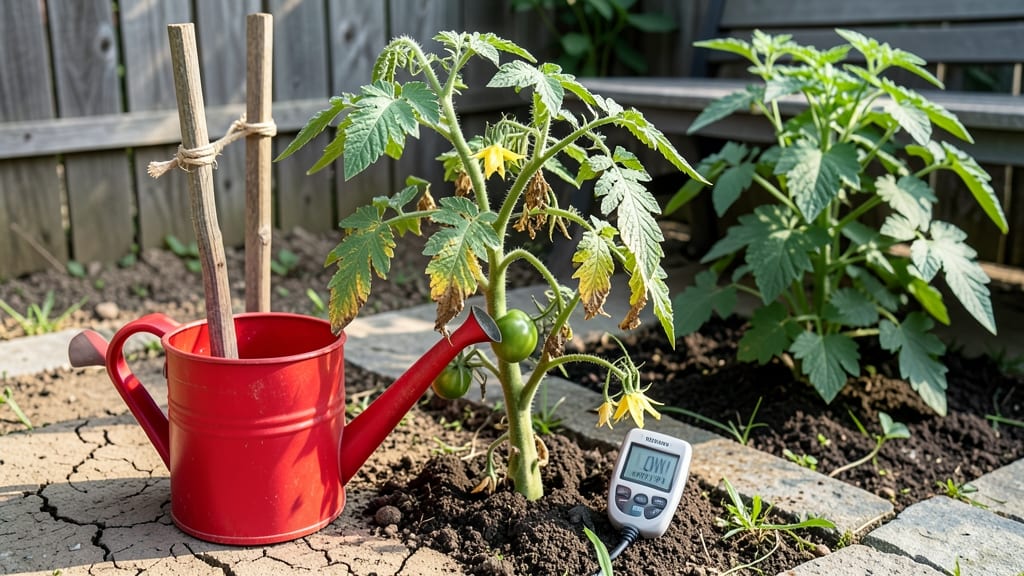
Those underwatered tomato plant pictures you’ve seen with drooping leaves aren’t just sad—they’re screaming for water. 🌱 I’ve seen this exact wilting pattern after skipping watering days, and the good news is, it’s almost always reversible with the right care.
The first sign? Leaves curling inward like they’re hiding from the sun, paired with dry, crispy edges that crunch between your fingers.
Most gardeners overwater or underwater, but tomatoes need deep, consistent moisture—about 1-2 inches per week—to thrive. Stick your finger 1-2 inches into the soil: if it feels bone-dry, that’s your cue to water thoroughly at the base, not just a quick sprinkle on top.
The goal is damp soil, not soggy.
Within 3-5 days of proper watering, you’ll see leaves perk up and new growth emerge. Mulch helps retain moisture, so spread a 2-3 inch layer around the base to keep roots happy. The key is consistency—tomatoes hate moisture swings, so check soil moisture daily during heatwaves.
This works for container tomatoes too—just ensure pots have drainage and water when the top inch feels dry. Recovery depends on how long the plant suffered, but most bounce back faster than you’d expect. Let’s turn those wilting leaves into lush, productive vines again.
Root Causes Of Thirsty Tomatoes
Underwatered tomato plants don’t just happen by accident—they’re usually the result of a mix of environmental, human, and plant-specific factors. Understanding these causes is the first step to saving your crop before it’s too late.
Let’s break down the real culprits behind wilting, yellowing, or crispy leaves in your tomato plants.
Tomatoes thrive on consistency, not bursts of water. Their deep root systems (up to 2–3 feet!) need steady moisture to absorb nutrients efficiently. Here’s why irregular watering leads to stress:
- Shallow Root Development: When you water sporadically, roots stay near the surface, making them vulnerable to drying out quickly. Think of it like a straw: if you only sip from the top of a glass, you won’t get to the bottom—just like your tomato’s roots. - Osmotic Imbalance: Sudden watering after drought causes roots to absorb water too fast, diluting the soil’s nutrient concentration.
This can lead to fertilizer burn (even if you’re not over-fertilizing) because the plant can’t process nutrients properly. - Wilting as a Survival Tactic: Tomatoes close their stomata (tiny leaf pores) to conserve water during dry spells.
When you finally water, the plant struggles to rehydrate quickly, leading to flaccid leaves that look underwatered—even if the soil is moist.
💡 Pro Tip: Use a moisture meter or the "finger test" (stick your finger 2 inches deep—if it’s dry, water deeply). Early morning watering (before 10 AM) reduces evaporation, keeping roots happy.
Not all soil is created equal—and tomatoes hate soggy feet. If water pools around roots instead of draining, or if the soil is too sandy/clay-heavy, your plants will suffer.
| Soil Type | Problem | Fix |
|---|---|---|
| Clay Soil | Holds too much water, suffocating roots | Amend with compost + perlite (50/50 mix) |
| Sandy Soil | Drains too fast, roots dry out quickly | Add organic matter (peat moss, coconut coir) |
| Compacted Soil | Blocks oxygen, roots can’t breathe | Loosen with a garden fork or mulch heavily |
🔥 Warning: Overwatering in heavy clay can drown roots just as much as underwatering. Aim for "moist but not soggy"—like a wrung-out sponge.
Tomatoes aren’t just thirsty—they’re heat-sensitive divas. High temps, wind, and even sunlight can accelerate water loss faster than your plant can replenish it.
- Extreme Heat: Temperatures above 90°F (32°C) cause leaves to transpire (sweat) aggressively, pulling moisture from roots before they can absorb it. Result: Leaves curl and crisp at the edges. - Strong Winds: Wind dries leaves faster by increasing evaporation.
Plants in exposed areas (like rooftop gardens) need 30–50% more water than sheltered ones. - Low Humidity: Dry air (common in desert climates or indoors) forces stomata to stay open longer, dehydrating the plant prematurely.
✨ Solution: Provide shade cloth during peak sun (30–50% coverage) and mulch heavily (straw or wood chips) to retain soil moisture. Grouping plants together also creates a microclimate that reduces wind stress.
Tomatoes need space to breathe—literally. When plants are too close together, they compete for water and nutrients, leading to stunted growth and underwatered symptoms.
- Root Competition: Each tomato plant needs 18–24 inches of diameter (or 3–4 feet in rows).
Crowded roots can’t spread deep, so they rely on surface water that evaporates fast. - Fungal Risks: Dense foliage traps moisture, promoting blight or root rot, which further stresses the plant. - Weak Structure: Overcrowded plants can’t support their own weight, causing stems to bend and leaves to wilt from poor circulation.
🎯 Fix It: Prune suckers (side shoots) regularly and thin seedlings so they’re spaced properly. If repotting, choose larger containers (minimum 5-gallon pots) for container-grown tomatoes.
Hidden pests and pathogens disrupt water uptake by damaging roots or blocking vascular pathways. Common culprits include:
- Root-Knot Nematodes: These microscopic worms burrow into roots, creating galls that restrict water flow.
Infected plants wilt even when soil is wet. - Aphids/Spider Mites: Sap-sucking pests clog stomata with sticky honeydew, reducing the plant’s ability to absorb CO₂ and water efficiently. - Fungal Infections (e.g., Verticillium Wilt): Fungi block xylem vessels (the plant’s "straws"), causing sudden wilting—even in well-watered soil.
💡 Early Detection: Check undersides of leaves for pests and dig up roots (gently!) to spot nematodes. Use neem oil or beneficial nematodes (like Steinernema) for organic control.
Young tomato plants (especially transplants) have underdeveloped roots that can’t keep up with their top growth. This is why seedlings often wilt despite frequent watering.
- Transplant Shock: When you move a plant, root tips get damaged, reducing the plant’s ability to absorb water for 1–2 weeks. - Slow Root Growth: Tomatoes need warm soil (70°F+) to grow roots quickly.
In cool weather, roots stay shallow, making them prone to drying out.
👨🍳 Quick Fix: Before transplanting, soak roots in water for 10 minutes to reduce shock. Use rooting hormone to encourage faster regrowth, and water deeply every 2–3 days until roots establish (test by gently tugging the plant—if it resists, roots are set!).
Revive Your Tomato Plant Now
Seeing your tomato plant droop like a sad balloon? Don’t panic—your green-thumbed superhero moment is here! 🌱💦 Whether it’s a sudden heatwave, a forgotten watering day, or poor soil drainage, underwatering can be reversed with the right care.
Below, we break down the most common causes of wilting and the practical fixes to bring your tomato plant back to life—plus tips to keep it thriving long-term.
(Yes, they look similar—but the fixes are totally different!)
If your plant’s leaves feel soft and mushy (not crispy), you might be overwatering. But if they’re dry, brittle, or curling inward, underwatering is the culprit. Stick your finger 1–2 inches into the soil:
- Dry as a bone? → Underwatered. Time to hydrate!
- Damp or soggy? → Overwatered. Hold off and check drainage.
(Emergency care in 5 easy steps!)
🔥 Step 1: Deep Water Immediately
Give your plant a slow, deep drink—not just a quick splash. Use a watering can or hose to soak the soil until water runs out of the drainage holes (if in a pot). Pro tip: Water in the morning so leaves dry by evening, preventing fungal issues. 🌞
🍳 Step 2: Check the Soil Type
Not all soil holds water the same way. If your tomatoes are in:
- Sandy soil → Water more frequently but less deeply.
- Clay soil → Water deeply but less often (it retains moisture longer).
- Potted tomatoes → Use well-draining mix (add perlite or coconut coir if needed).
👨🍳 Step 3: Mulch to Lock in Moisture
Spread 2–3 inches of mulch (straw, wood chips, or shredded leaves) around the base (but not touching the stem). This keeps soil moist and reduces evaporation. Bonus: Mulch also suppresses weeds and regulates soil temp! 🌡️
🥘 Step 4: Adjust Your Watering Schedule
Tomatoes need 1–2 inches of water per week, but frequency depends on your climate:
| Climate | Watering Frequency | Best Time |
|---|---|---|
| Hot/Dry (Summer) | Every 1–2 days (morning) | 6–8 AM |
| Warm (Spring/Fall) | Every 2–3 days | Early morning or late evening |
| Cool (Early Spring/Late Fall) | Every 3–4 days | Avoid watering at night |
⏰ Step 5: Monitor & Recover
After rehydrating, watch for:
- ✅ Leaves perking up within 24–48 hours.
- ✅ New growth in 3–5 days.
- ❌ Yellowing leaves → Could mean overwatering or nutrient deficiency (add a balanced fertilizer).
Once your plant is back in shape, prevent future wilting with these habits:
💡 Tip 1: Use a Moisture Meter
Skip the guesswork! A $10 soil moisture meter tells you exactly when to water. Stick it in the soil—if it reads "dry," hydrate. 📊
🔥 Tip 2: Group Plants Together
Plant tomatoes in clusters (not rows) to create a microclimate that retains moisture. This mimics their natural habitat and reduces stress. 🌿
🌡️ Tip 3: Water at the Base
Avoid wetting leaves to prevent disease. Use a soaker hose or drip irrigation to deliver water directly to the roots. 💦
✨ Tip 4: Fertilize for Resilience
Underwatered plants often lack nutrients. Feed them with a balanced fertilizer (10-10-10) or compost tea every 2–3 weeks during growing season. Pro move: Add a handful of Epsom salt (magnesium sulfate) to boost recovery. 💪
🎯 Tip 5: Prune for Better Airflow
Trim lower leaves and suckers (small shoots between stem and branch) to improve airflow and reduce moisture loss. Aim for an open, bushy shape—not a dense tangle. ✂️
With these fixes, your tomato plant should bounce back in no time. And remember: Consistency is key—whether it’s water, sunlight, or love. Now go forth and grow those juicy, sun-ripened tomatoes! 🍅😉
Frequently asked questions
How can I tell if my tomato plant is underwatered vs. overwatered?
Check the leaves and soil: underwatered plants have crispy, dry edges and leaves that curl inward, while overwatered ones feel soft and mushy with yellowing. Stick your finger 1-2 inches deep—if it's dry, water deeply; if damp, hold off and check drainage.
Will my tomato plant recover if it's been underwatered for a week?
Most plants recover within 3-5 days of proper care, but severe cases may take longer. Deep water immediately, mulch to retain moisture, and monitor for new growth. If leaves stay crispy or yellow, check for root damage or pests.
Can I use coffee grounds to help my underwatered tomato plant?
Yes! Mix 1 cup of used coffee grounds into the soil around your plant—they improve moisture retention and provide nitrogen. Just don't overdo it (too much can acidify soil). Pair this with deep watering for best results.
Why do my tomato leaves look underwatered even after I watered?
This could mean root damage (from overwatering or pests), poor drainage, or heat stress. Check soil moisture deeper (3+ inches) and ensure water reaches roots. If needed, add compost or perlite to improve soil structure.
How often should I water potted tomato plants?
Potted tomatoes need water when the top 1 inch of soil feels dry. In hot weather, this could be daily, while cooler months may require watering every 2-3 days. Always water until it drains from the bottom—never let them sit in soggy soil.